About Percina aurantiaca (Cope, 1868)
Taxonomy and Nomenclature
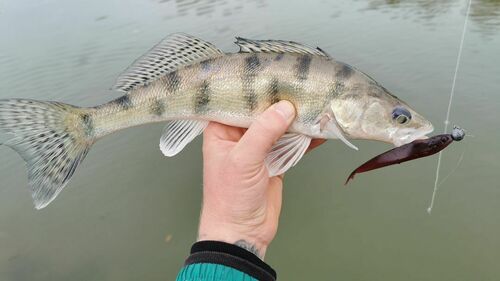
The tangerine darter, also called the river slick, has the scientific name Percina aurantiaca. It is a small species of freshwater ray-finned fish, classified as a darter in the subfamily Etheostomatinae, part of the family Percidae that also includes perches, ruffes, and pikeperches.
Size and Coloration
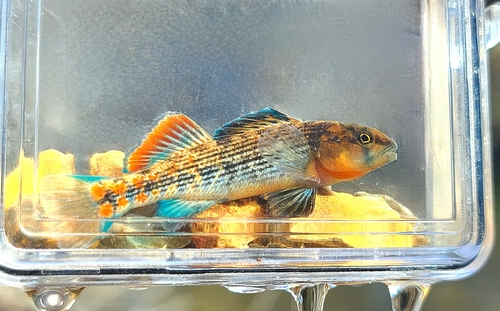
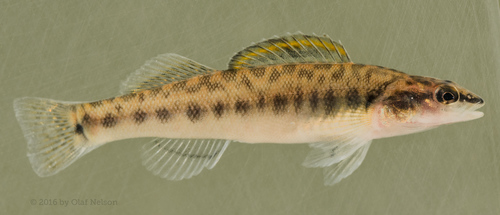
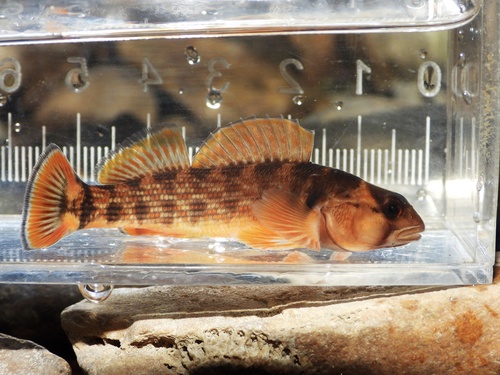
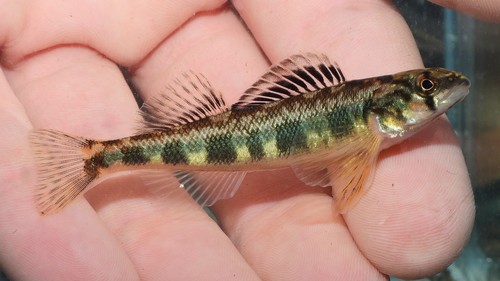
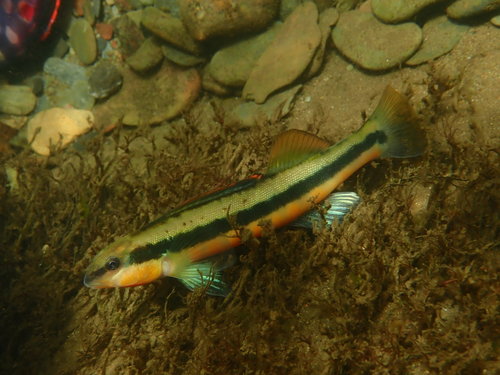
This species grows between 4.3 to 7.1 inches, or 11 to 18 cm, long; mature males are bright orange-red, while females are yellow.
Feeding Habits
It is an insectivorous species that feeds by picking insect larvae off aquatic plants and the riverbed, and will sometimes roll small stones over to uncover hidden prey.
Breeding Period Location
It breeds in late spring and early summer, usually in shallow sandy or gravelly riffles.
Global Conservation Status
While pollution and habitat degradation threaten the species in parts of its range, it is fairly common and has a wide distribution, so the International Union for Conservation of Nature has classified its conservation status as Least Concern.
Overall Range
This is a fairly common darter, but its range is restricted to clear, cool streams of the southern Appalachian Mountains. It occurs throughout the mountainous regions of the upper Tennessee River drainage, inhabiting smaller rivers, and is most abundant in the Emory, Hiwassee, Little, Little Pigeon, and Tellico rivers. It can be found in eastern Tennessee, northern Georgia, western North Carolina, and Virginia.
Regional Conservation Status
In Georgia and North Carolina, it is listed as a historic species that requires management.
Typical Habitat
The tangerine darter lives in clear, cool creeks and small rivers, where it favors areas with large boulders, bedrock, and gravel substrate, and prefers to swim in the deeper riffles of these waterways. During winter, the species moves into deeper pools.
Spawning Site Details
Spawning takes place from late spring to summer, in shallow sandy-gravel riffles with steady flowing water. The breeding season is triggered by water temperature, and runs from May through July.
Maturity and Lifespan
Spawning occurs when individuals are three to four years old, though the species reaches sexual maturity earlier: males mature at one year of age, and females mature at two years of age. The typical lifespan of the tangerine darter is around four years.
Spawning Behavior Process
During spawning, the male first mounts the female. The female then scatters her eggs across the gravel, while the male releases milt to fertilize the eggs; both the male and female make quivering motions throughout this process.
Mate Selection
Females select the most brightly colored males, which have bright orange bodies with a black line and some blue coloring where the orange meets the black.
Male Territoriality
Males become territorial during the mating season and will defend their spawning riffles.
Fecundity and Parental Care
A single female can lay between 120 and 1,100 eggs, and this species does not provide any parental care for its eggs.
Juvenile Habitat and Growth
Juvenile tangerine darters live in calmer water, and grow to between 2 and 3 inches, or 5.1 and 7.6 cm, long during their first year of growth.