About Etheostoma chlorosomum (Hay, 1881)
Size
Bluntnose darters (scientific name Etheostoma chlorosomum, Hay, 1881) reach a maximum length of 2 inches (5.1 cm).
Snout Morphology
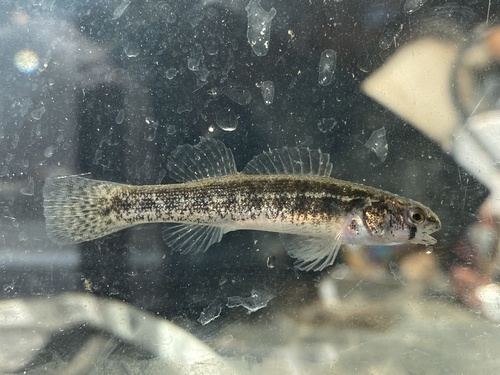
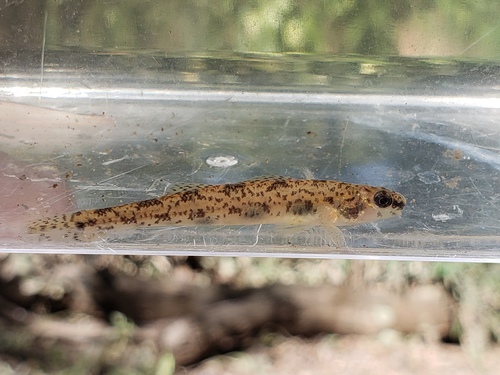
This species has a characteristic very round, blunt snout.
Dorsal Coloration
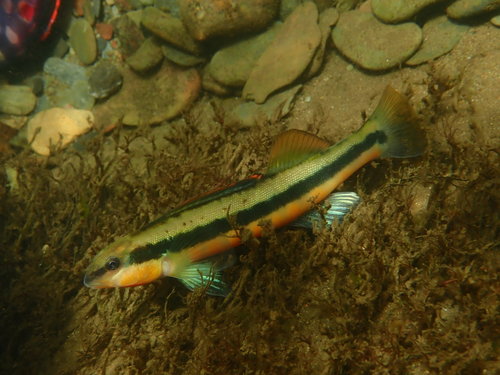
It is light yellow or olive on its dorsal side, marked with dark brown or black spots or uneven dense lines.
Ventral and Flank Markings
Its belly is white, and W-shaped marks appear on its flanks.
Snout Barring
A continuous black bar crosses the area in front of the eyes, wrapping around the snout, and this barring extends slightly onto the upper lip.
Fin Pigmentation
The dorsal and caudal fins have light brown pigmented bands, while all other fins are clear.
Anal Spine Count
The species has one anal spine.
Head and Trunk Scaling
The opercle, cheek, and prepectoral area are covered in scales; the breast may be fully or partially scaled, and scales can be embedded.
Belly Scaling
The belly is either fully scaled, or scaled on the posterior portion and unscaled on the anterior portion.
Lateral Line
Bluntnose darters have an incomplete lateral line.
Breeding Male Coloration
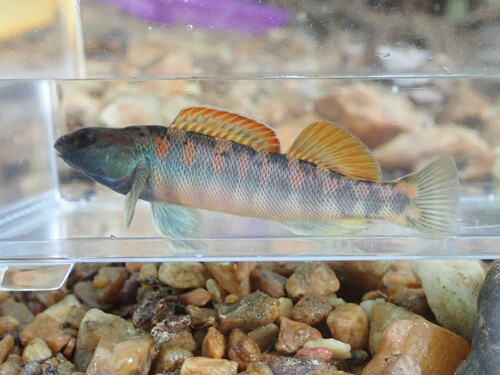
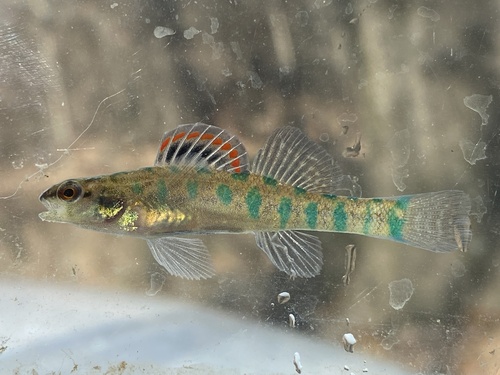
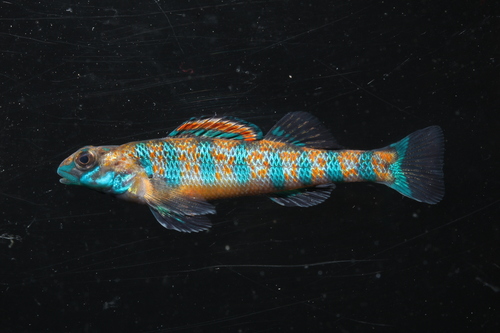
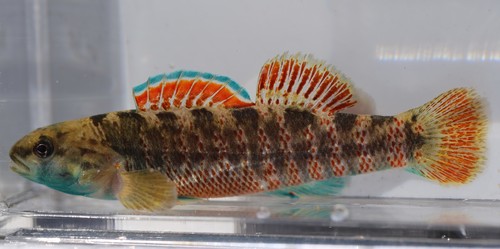
When breeding, males develop darker, dusky breeding coloration from unevenly distributed melanophores across their fins and the underside of their body.
Breeding Morphology
Breeding tubercles grow on the pelvic and anal fins of breeding individuals, and females develop a large, spatulate genital papilla.
Core Distribution Range
This species is native to North America, where it occurs from the San Antonio Bay drainage in Texas east to Mississippi, Alabama and Indiana, and north to Minnesota.
Former Distribution
It was formerly found in the Lake Michigan drainage area.
Louisiana Distribution
In Louisiana, it is one of the most widely distributed darter species, found in all river drainages, but absent from the southernmost estuarine environments.
Small Habitat Preferences
Bluntnose darters live in swamps, floodplain lakes, sloughs, and low-gradient creeks, often over substrates made of mud, clay or detritus.
Large River Habitat
They can also be found in large rivers, where they most often occupy backwaters.
Lifespan
The typical lifespan of the bluntnose darter is around three years.
Spawning Timing
Spawning timing varies across the species' range: in Texas, spawning occurs from early January to late March; in Kansas, spawning occurs in April; and in Louisiana, spawning occurs in March and April.
Male Courtship Behavior
Males court females with displays that involve posing while quivering with their fins held upright.
Spawning Site Selection
The female selects the spawning site, most commonly choosing algae, dead leaves, or a small twig.
Fertilization Process
Males mount females to fertilize eggs, fertilizing only 1 to 3 eggs per mating attempt.
Larval Development
Larval development of the bluntnose darter has not been described to date.