About Etheostoma coosae (Fowler, 1945)
Species Naming & General Morphology
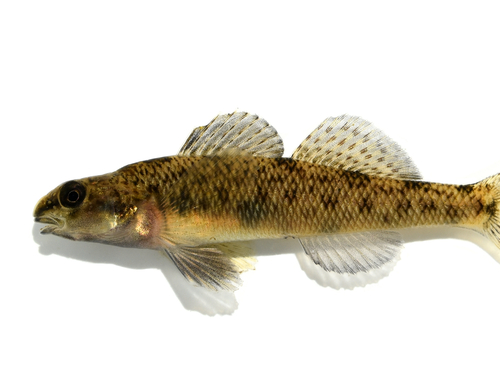
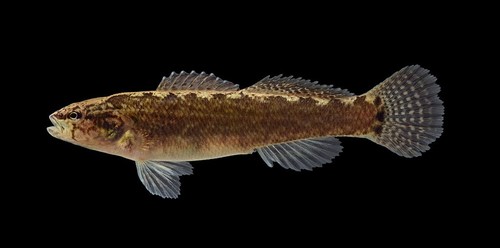
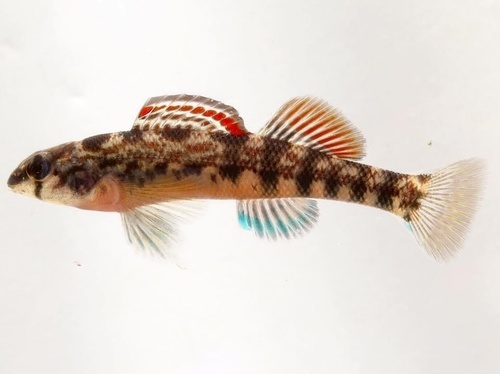
The Coosa darter, scientifically named Etheostoma coosae (Fowler, 1945), is a robust darter species identifiable by its blunt snout and small mouth.
Spiny Dorsal Fin Markings
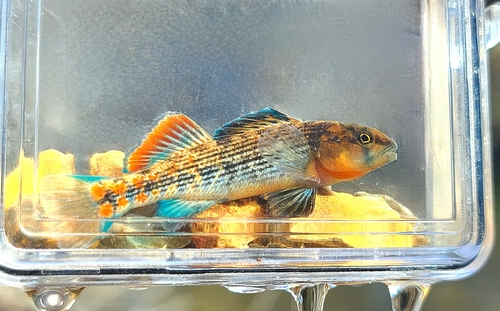
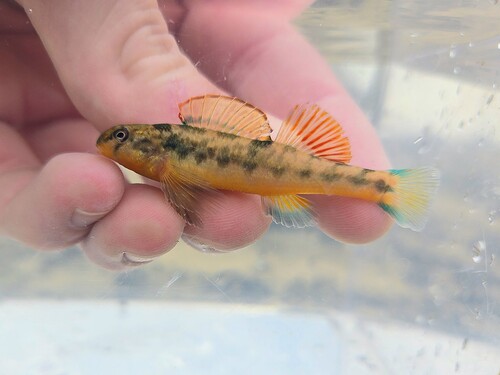
The spiny section of its dorsal fin has colored bands, including a central red band running its full length, but lacks the anterior ocellus present in many other species of the subgenus Ulocentra. Alternating clear and dark bands lie above and below this central red band.
Soft Dorsal Fin Markings
In the soft-rayed portion of the dorsal fin, the middle section of the membrane between each fin ray is red.
Body Coloration
The body of the Coosa darter is yellow-olive, marked with 8 to 9 dark blotches along its back and flanks; these flank blotches have a faint green tint. The lower snout and throat are pale green, while the anal fin and the upper and lower lobes of the caudal fin are turquoise.
Size Measurements
The maximum recorded total length for this species is 7.2 centimetres (2.8 in), though the common standard length is 4.1 centimetres (1.6 in) for males and 3.9 centimetres (1.5 in) for females.
Geographic Distribution
This species is found exclusively in the Coosa River system, which drains into Mobile Bay, across the U.S. states of Georgia, Alabama, and Tennessee.
Habitat
It inhabits rocky pools and adjacent riffles of creeks, small to medium rivers, and streams.
Diet Composition
The Coosa darter feeds primarily on midge larvae and blackfly larvae, with smaller amounts of cladocera, copepods, mayfly nymphs, and caddisfly larvae.
Seasonal Diet Variation
Insects, particularly flies, make up a larger portion of its diet in summer, while crustaceans become a more important food source in winter.
Spawning Period
Spawning occurs from mid-March to mid-May.
Egg Deposition
The female lays one egg at a time, depositing it into small cracks and crevices in wood, rocks, or other hard substrates.
Fertilization & Spawning Surfaces
The male fertilizes the egg immediately after it is laid, and spawning can take place on surfaces ranging from horizontal to vertical orientation.