About Dunckerocampus dactyliophorus (Bleeker, 1853)
Common Name & Body Size
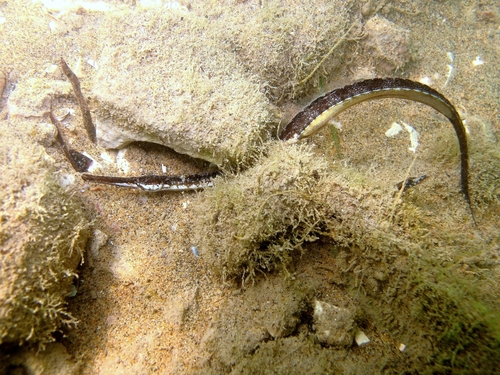
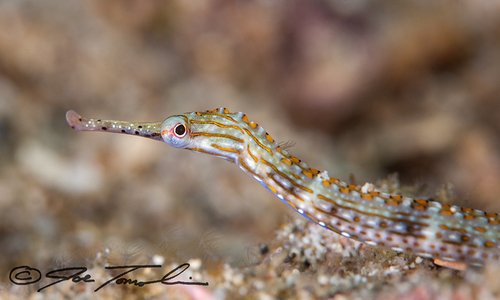
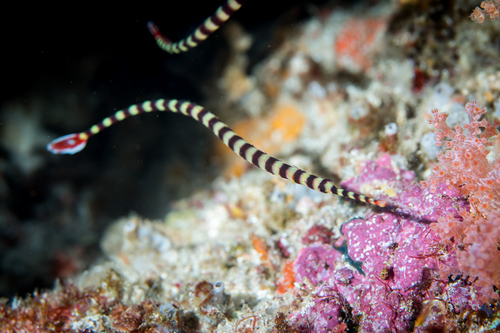
Dunckerocampus dactyliophorus, commonly called the banded pipefish, has a straight, elongated body that reaches a maximum length of 19 cm (7.4 in).
Head Growths & Camouflage
Fleshy, stream-like growths extend backward from its head; these structures are thought to act as a camouflage adaptation when the pipefish hides in reeds.
Broad Distribution Range
The banded pipefish is widespread across the tropical waters of the Indo-Pacific region, including the Red Sea.
Specific Range Locations
Its documented range covers Australia, Fiji, French Polynesia, Indonesia, Japan, the Marshall Islands, New Caledonia, the Northern Mariana Islands, Papua New Guinea, the Philippines, Samoa, the Solomon Islands, South Africa, and Taiwan.
Habitat
It lives in tide pools, lagoons, and outer reef slopes in tropical climates.
Male Reproductive Morphology
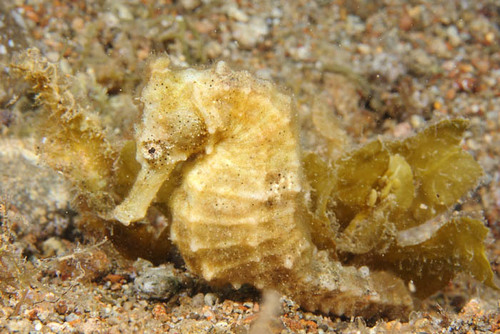
Like other pipefishes and seahorses, male banded pipefish have a specialized brood pouch that females lack.
Reproduction Process
The female deposits her eggs into the male's pouch, where the eggs develop, and the male eventually gives birth to the young.