About Hippocampus jayakari Boulenger, 1900
Taxonomy and Naming
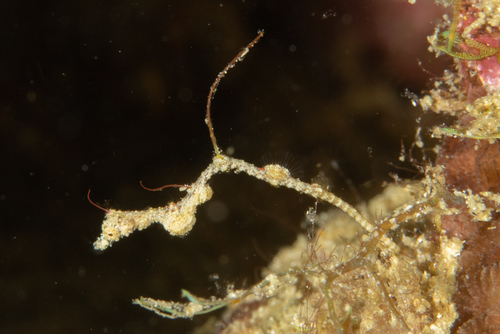
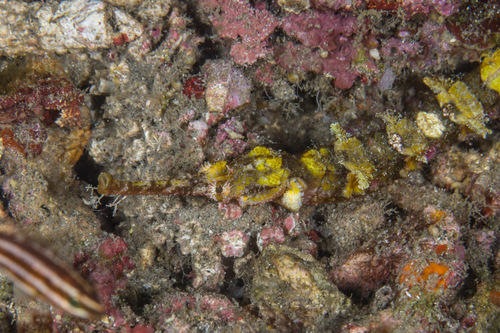
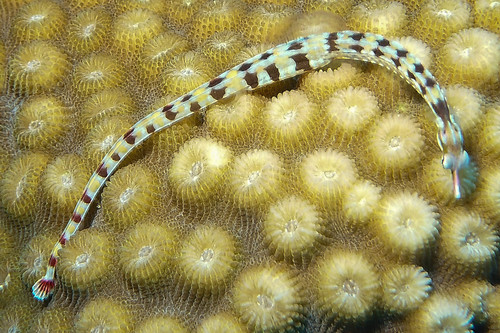
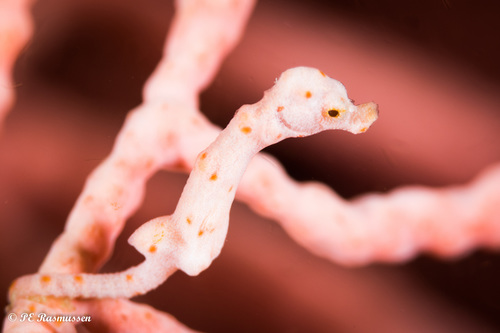
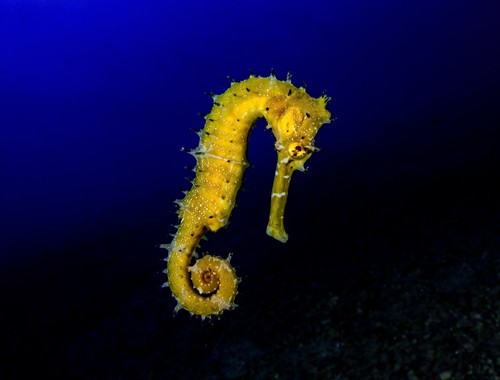
Jayakar's seahorse, whose scientific name is Hippocampus jayakari, is a coastal fish species belonging to the family Syngnathidae.
Geographic Range
It is native to the Western Indian Ocean, ranging from the Red Sea and Arabian Sea to the central coast of Pakistan.
Habitat Types
This seahorse lives in several habitat types: seagrass beds including those formed by Halophila species, algae-covered areas, soft-bottom substrates, sponges, and rocky environments.
Maximum Length
Individuals of this species can reach up to 14 centimetres (5.5 inches) in total length.
Depth Range
While the species can inhabit depths as great as 20 metres (66 feet), it is most often found at depths between 2 and 3 metres (6.6 to 9.8 feet).
Diet
Like other seahorses, it is thought to feed on small crustaceans.
Reproduction
This species is ovoviviparous; males carry eggs in a brood pouch and give birth to live young.
Sexual Maturity
Members of the species reach sexual maturity when they grow to 11 centimetres (4.3 inches) in length.
Etymology
Both the species' specific scientific epithet and its common name honor Atmaram Sadashiv "Muscati" Jayakar (1844–1911), an Indian physician, linguist, and ichthyologist who held the title of Surgeon-Major.