About Craspedocephalus malabaricus (Jerdon, 1854)
This species, scientifically known as Craspedocephalus malabaricus (Jerdon, 1854), has the following physical description.
Adult Size
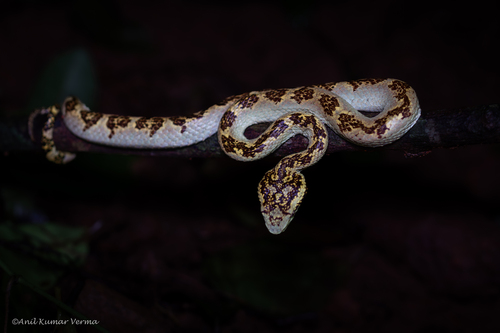
Adult individuals can reach a snout-vent length (SVL) of 105 cm (41 inches), and their tails are prehensile.
Dorsal Scales
Weakly keeled dorsal scales are arranged in either 19 or 21 rows at midbody.
Ventral Scales
Male individuals have 143 to 158 ventral scales, while female individuals have 136 to 159 ventral scales.
Anal and Subcaudal Scales
The anal scale is entire. Subcaudal scales are paired; males have 50 to 63 subcaudals, and females have 44 to 54.
Internasal Scales
The internasals are large and usually in contact with each other.
Supralabial Scales
There are 9 or 10 supralabials, and the first supralabial is completely separated from the nasal scale.
Subocular and Temporal Scales
A single row of scales sits between the supralabials and the elongated subocular. Temporal scales are either smooth or obliquely keeled.
Color Morphs
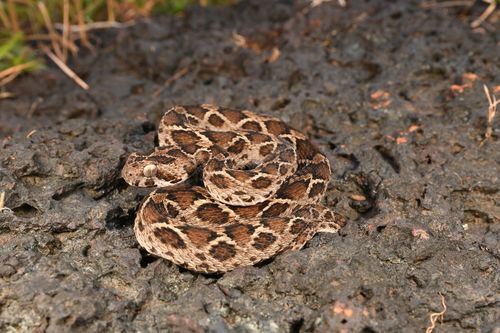
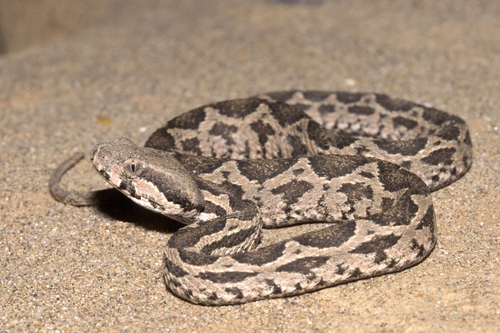
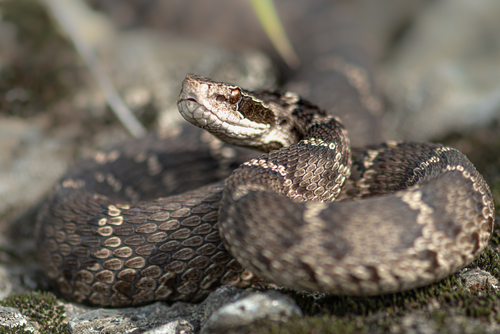
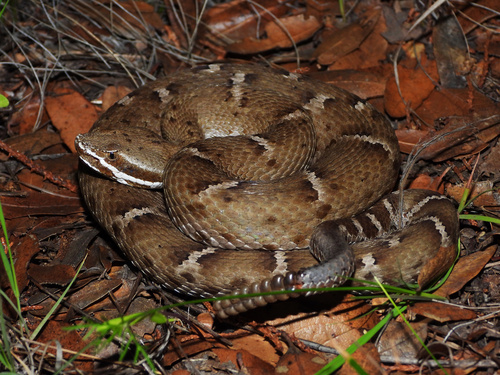
Many distinct color morphs are documented for this species, including yellow, green, and brown variants; the example noted here is a patterned brown morph.
Endemic Range
For distribution and habitat, this species is endemic to the Western Ghats mountains.
Elevation Range and Type Locality
It occurs across southern and western India at elevations between 600 and 2,000 metres (2,000 to 6,600 feet), and its type locality is the Western Ghats of southwestern India.
Confirmed Record Locations
Confirmed records of the species come from Silent Valley, western Nilgiris, Wayanad, Coorg, the Malnad region of Karnataka, Castle Rock, Goa, and the Amboli hills and Kolhapur area of northern Maharashtra.
Preferred Habitat
It lives in riparian forests, and strongly favors hill streams and torrents located within dense wet rainforests.
Additional Habitat Occurrences
It can sometimes also be found in evergreen and deciduous forests, where it may occur on the ground, on stream bed rocks, on low vegetation, or in shrubs.
Activity Patterns
In terms of ecology, the Malabar pit viper is nocturnal, and is typically inactive during the day, though it may occasionally be observed basking on rocks or trees near streams. It is most often encountered during the monsoon months.
Prey
It preys on frogs, lizards, nestling birds, musk shrews, mice, and other small animals.