About Sistrurus catenatus (Rafinesque, 1818)
Adult Size
Adults of Sistrurus catenatus, commonly called the eastern massasauga, are not large, with a total length including the tail ranging from 60 to 75 cm (24 to 30 in).
Dorsal Color Pattern
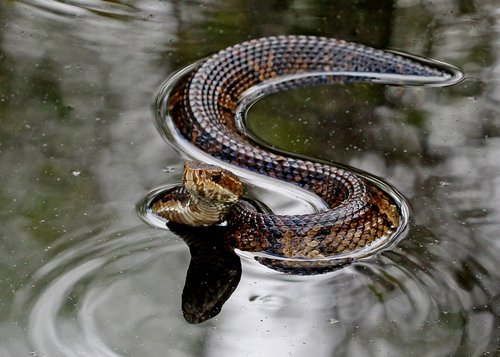
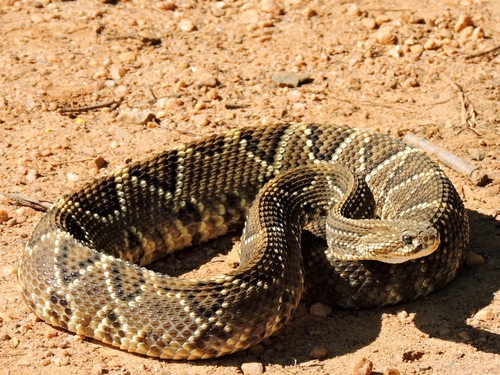
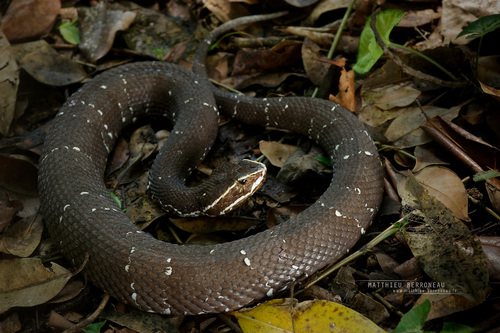
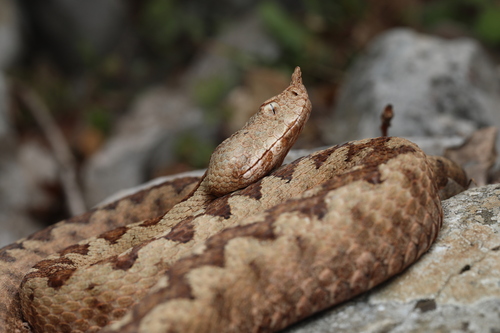
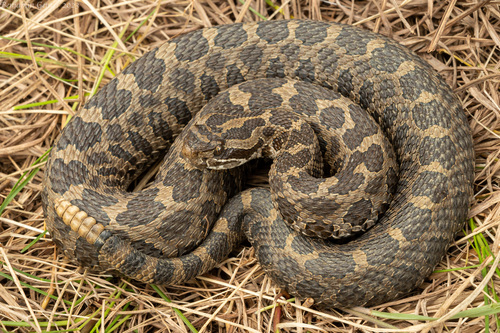
The dorsal color pattern has a gray or tan base color, with a row of large, rounded brown or black blotches or spots running down the center of the back, and three smaller alternating rows of spots along each side. Solid black fully melanistic individuals have been recorded, and cases where the back blotches join with the side spots are also documented.
Juvenile Coloration
Young massasaugas have clear patterning, but are paler than adults.
Head Sensory Features
Both adults and juveniles have heat-sensing pits on each side of their moderately sized head.
Scale Characteristics
Dorsal scales are keeled, and the anal scale is single.
Global Distribution Range
This species is endemic to North America, found in the Great Lakes region and the eastern portions of the Midwestern United States.
Historical Canadian Range
Historically, its range included southern Ontario, Canada, stretching from the area east of the North Channel, east across the northern and eastern regions of Georgian Bay and Lake Huron, across the Ontario Peninsula to the Niagara Peninsula and areas north of Lake Erie.
Historical United States Range
In the United States, it historically occurred across most of lower Michigan including several islands, the Finger Lakes and Central New York, northwest Pennsylvania, northern Ohio and Indiana, much of Illinois, southern Wisconsin, eastern Iowa, and marginal areas of extreme eastern Missouri and Minnesota.
Current Population Status
The species was lost from large areas of its original range during the 20th century, and today it is found mostly in smaller, isolated, disjunct populations within its former range.
Regional Population Decline Examples
This pattern is seen in Illinois, where it was formerly common across the northern two-thirds of the state, but now only persists in six or eight relict populations across five or six scattered counties, and in Pennsylvania, where 19 populations were recorded in six northwestern counties, but by 1977 only six populations remained in three counties.
Decline Threat Factors
Major factors driving the species' decline include wetland draining, agriculture, highway construction, and urban development.
Wetland Habitat Types
The eastern massasauga is most commonly found near wetlands, such as swamps, marshes, bogs, fens with sedges, minerotrophic shrubby peatlands, wet meadows, and floodplains. It can also occupy wetlands located within meadows, prairies, and coniferous forests.
Spring and Fall Habitat Use
In spring and fall, it usually stays close to its hibernaculum, and frequently uses crayfish burrows.
Summer Habitat Movement
During the summer, individuals may move to drier habitats, especially gravid females.
Female Reproductive Maturity
Females reach reproductive size at a minimum total length of 32.5 cm (12.8 inches), a size most individuals reach by their third or fourth year. Like many rattlesnakes, females do not usually reproduce annually, and typically follow a biennial reproductive cycle.
Reproductive Mode
Massasaugas are ovoviviparous.
Parturition Timing
Parturition usually takes place in August or September.
Litter Size Variation
Studies of Illinois populations recorded litter sizes ranging from 5 to 14, while studies in Wisconsin found litters of 6 to 19 young, with a small number of females reproducing annually in that region.
Neonate Size
Neonates have a snout-to-vent length (SVL) of 18.8–24.4 cm (7.4–9.6 in).
Post-Birth Maternal Association
Mothers and their neonates stay together for a short period, usually only a few days until the neonates complete their first skin shed.