About Crotalus willardi Meek, 1905
Size
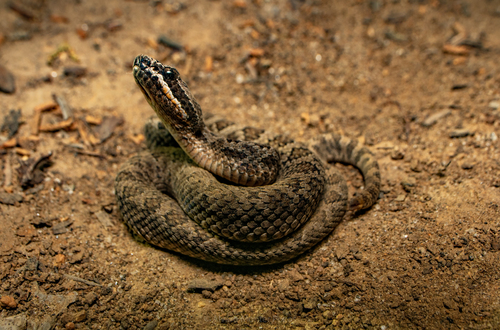
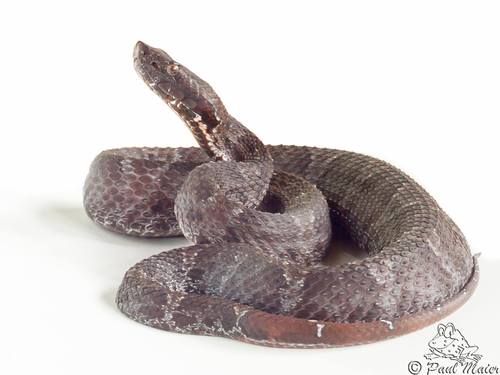
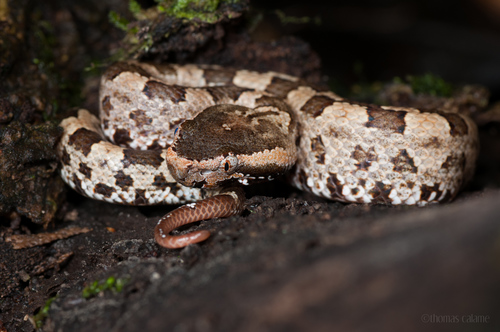
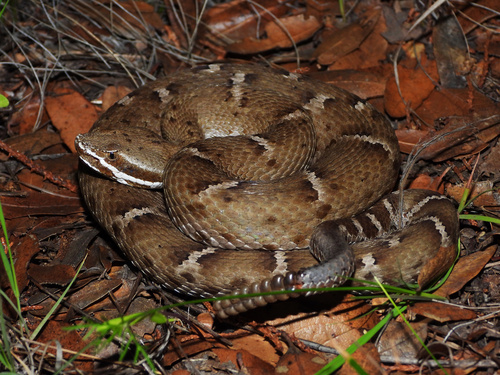
Crotalus willardi is a relatively small rattlesnake. All of its subspecies reach a total length of 1 to 2 feet, or 30 to 60 cm.
Coloration
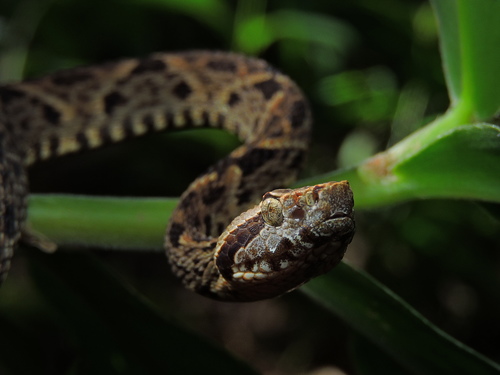
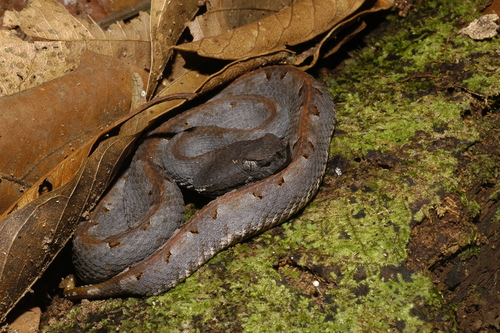
Most individuals have a dark brown base color with pale or white horizontal striping, though color patterns vary slightly between different subspecies.
Taxonomic History
It has the unusual distinction of being the last rattlesnake species to be formally described as new to science, despite having a very distinctive clearly defined ridge that follows the contour of its snout.
Snout Ridge Morphology
This ridge forms when the scales at the tip of its nose are turned upward.
Elevation Habitat Preference
Crotalus willardi is almost exclusively found in high elevation habitats.
Geographic Distribution
This reclusive species occurs in wooded mountain ranges, primarily in the southwestern United States and adjacent northern Mexico.
Subspecies Range Fragmentation
Each subspecies has a range restricted to separate, individual mountain ranges, which means encounters between this species and humans are very rare.
Reproductive Mode
Like other rattlesnakes, Crotalus willardi is ovoviviparous: it gives birth to live young instead of laying eggs. Unlike fully viviparous animals, young Crotalus willardi develop inside an egg retained within the female’s body until they are ready to be born.
Mating and Gestation
Mating copulation takes place from late summer to early fall, and gestation lasts approximately four to five months.
Litter Characteristics
Females give birth to between 2 and 9 young, with an average litter size of five, in late July or August.
Reproductive Maturity Size
Both males and females typically reach reproductive maturity when they grow to around 400 mm, or 16 inches, in snout-to-vent body length.
Reproductive Frequency
While captive Crotalus willardi have been recorded reproducing every year, wild females most likely only reproduce once every two to three years.