About Chlidonias albostriatus (G.R.Gray, 1845)
Common Name and Classification
Chlidonias albostriatus, commonly called the black-fronted tern, is a medium-small bird species.
Size Measurements
Adult black-fronted terns are 28 to 30 cm long, have a wingspan of 65 to 72 cm, and an average weight of 95 grams.
Breeding Plumage
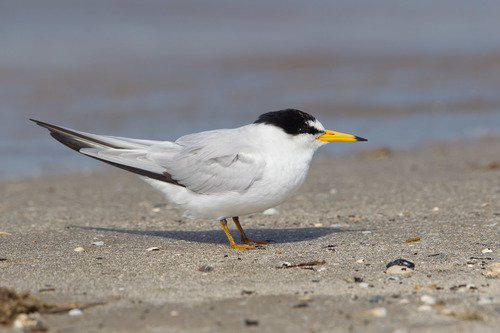
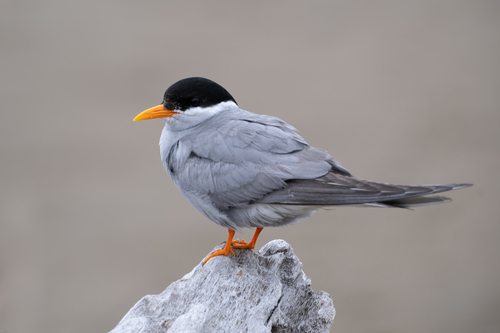
They have short orange bills and short orange legs; their upper body is dark grey, their lower body is light grey, they have a white rump, and a distinctive black cap.
Non-breeding Plumage
In the non-breeding season, the black cap recedes and becomes flecked with white.
Endemic Range
This tern species is endemic to New Zealand.
Core New Zealand Distribution
Within the country, it is found from the southern tip of the North Island, along most of the eastern South Island from Marlborough to Southland, and extending to Stewart Island.
Isolated Population Location
An isolated outlying population occurs along the Buller and upper Motueka Rivers in southern Nelson.
Inland Habitat and Foraging
Black-fronted terns live in coastal areas including estuaries and harbours, and also on farmland up to 3 km (1.86 miles) inland, where they forage for insects and small fish.
Marine Foraging Range
They will forage as far as 10 km (6.21 miles) out to sea, especially during calm weather.
Threats
Black-fronted terns face multiple significant threats, which include predation by introduced mammals, habitat loss from land use changes and weed encroachment, gravel and water resource abstraction, human disturbance, and climate change.
Conservation Measures
Current conservation practices for the species include predator control, habitat enhancement through river island modification and weed control, and the use of chick shelters.