About Chroicocephalus genei (Brème, 1839)
Common Name and Size
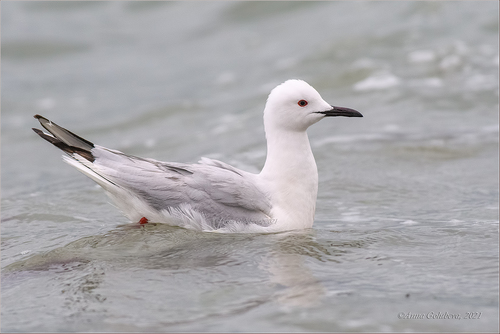
Chroicocephalus genei, commonly known as the slender-billed gull, measures 37 to 40 cm (14.6 to 15.7 in) in length, with a wingspan ranging from 90 to 102 cm (35.4 to 40.2 in). It is slightly larger than the black-headed gull, which it resembles, but does not develop a black hood during the summer breeding season.
Plumage Coloration
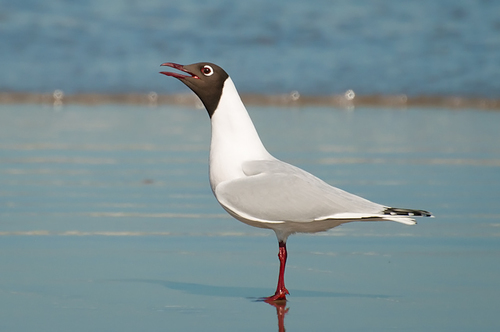
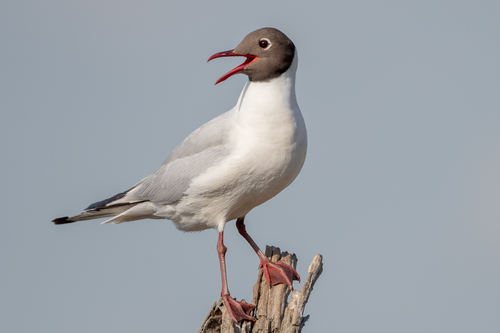
This species has a pale grey body, white head and breast, and black tips on its primary wing feathers.
Head and Bill Structure
Its head and dark red bill have an elongated, tapering shape, and the bird has a distinctly long-necked appearance.
Appendage and Iris Coloration
Its legs are dark red, and its iris is yellow.
Summer Breeding Plumage
During the summer, the breast takes on a faint pink colouration.
Maturation Period
Like most gulls, the slender-billed gull takes two years to reach full maturity.
First-Year Immature Appearance
First-year immature individuals have a black terminal band on the tail and dark patches on the wings.
Breeding Range
The slender-billed gull breeds in lagoons and lakes around the Mediterranean Sea, and in similar habitats in countries bordering the northwestern Indian Ocean.
Algerian Breeding Colony Observation
In 2010, a successful breeding colony was discovered on an island in a mountain lake in Algeria; the lack of predators and human disturbance allowed over 98% of the colony's eggs to hatch.
Overwintering and Foraging Habitats
This species overwinters on coastal estuaries and bays, and forages for food in deltas, marshes, and grassland.
Feeding Behavior
It is one of several gull species that will feed at landfill sites.