About Rhacodactylus leachianus (Cuvier, 1829)
Common Name and Notable Trait
Rhacodactylus leachianus, also known as R. leachianus, is the largest living gecko in the world, and is recognized as an example of island gigantism.
Grande Terre Locality Size
Individuals from Grande Terre localities can reach 14–17 inches (360–430 mm) in length, and weigh between 250 and 500 grams.
Insular Locality Size
Individuals from Insular localities grow to 9–12 inches (23–30 cm) long, and weigh between 150 and 300 grams.
Body Morphology
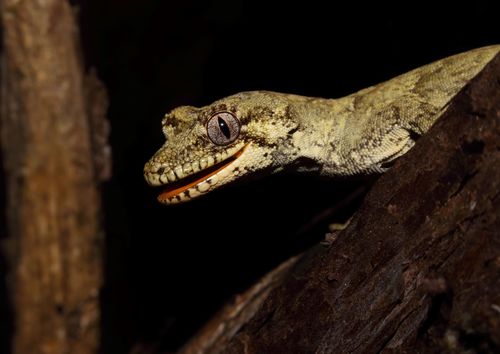
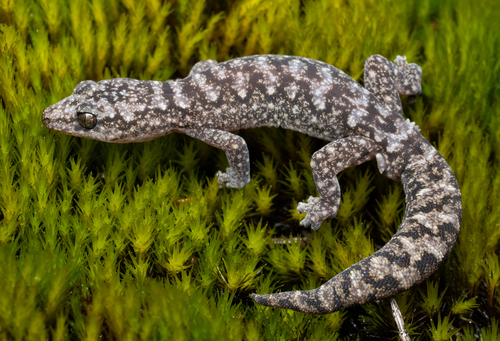
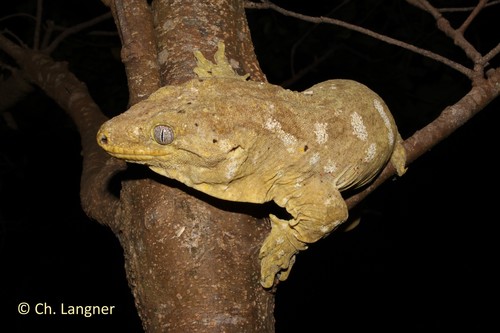
This species has a heavy body, loose skin, and a small, stumpy tail.
Coloration
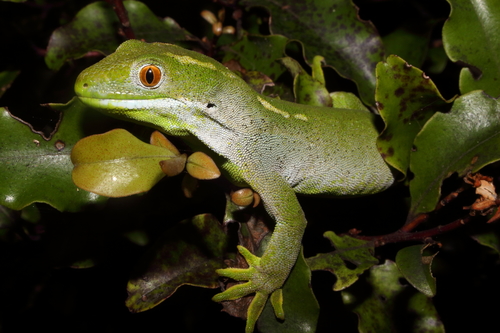
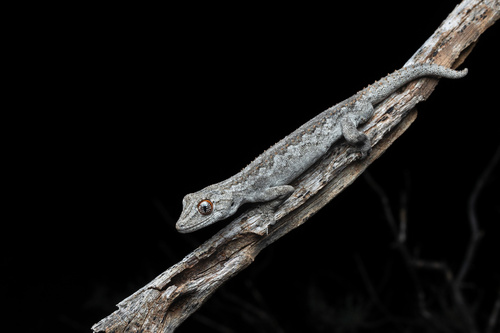
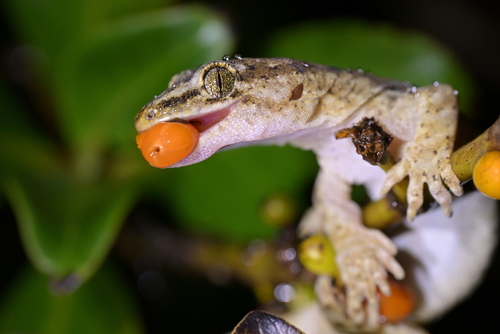
Its coloration is variable, appearing in mottled shades of green, gray, and brown, and sometimes having white, orange, and/or pink highlights.
Extinct Larger Relative
The only species to ever exceed it in size is the now-extinct Gigarcanum delcourti, which was also native to New Caledonia. The only known specimen of Gigarcanum delcourti is 50% longer and probably several times heavier than the largest recorded R. leachianus specimens.
Distribution
R. leachianus is distributed across all southern and eastern portions of the main island of New Caledonia, and also occurs on several smaller islands in the same island group.
Population Morphological Variation Drivers
Topographical and ecological differences between localities may have contributed to the observed phenotypic and morphological differences seen across R. leachianus populations.
Local Extinction Status
It is thought that R. leachianus no longer has an existing wild population at the insular locality of Duu Ana.
Hobbyist Pair-Bonding Belief
Within the hobbyist community, a popular idea claims that R. leachianus may form monogamous pairs in the wild, maintain compatibility, and establish pair-bonds that can last for a single breeding season or persist for multiple years.
Captive Pair Housing Practice
In captivity, some hobbyists follow this idea by keeping successful pairs together until the animals show incompatibility such as fighting, injury, or one individual actively avoiding the other.
Captive Pair Incompatibility Management
When incompatibility occurs, the pair is separated permanently; individuals may later be reintroduced to each other or introduced to new mates to attempt a new pair-bond.
Natural Pair-Bonding Confirmation Status
It is still unconfirmed whether pair-bonding is a real natural behavior for this species.
Pair-Bonding Field Observations
Expeditions carried out by herpetoculturalists Philippe De Vosjoli, Frank Fast, and Bill Love recorded multiple accounts of monogamous pair bonding. When the researchers investigated tree hollows, they often found a single pair of R. leachianus that remained in the hollow for several weeks.
Breeding Behavior
Breeding behavior includes biting and thrashing that can turn violent, and often involves locking of jaws. A common popular idea suggests these behaviors test pair compatibility and a mate’s physical capability.
Captive vs Wild Breeding Aggression
However, it is unknown whether the level of violence seen in captive individuals occurs in wild populations. The limited space of even a healthy captive environment may prevent natural conflict resolution between individuals; for example, the natural distance separation that wild individuals need may be larger than what a captive enclosure can provide.
Tree Hollow Habitat Behavior
In the wild, a male-female pair of R. leachianus typically lives together in an unoccupied tree hollow, and the pair defends this hollow through territorial behavior including vocalization. Their tree hollow use and behavior is similar to that of hollow-nesting birds.
Mate Identification
It is thought that individuals identify mates through the process of scent marking.
Clutch Size
Adult female R. leachianus usually lay two eggs per clutch, which is a universal trait across all geckos.
Annual Clutch Frequency
Females can produce up to 10 clutches per year.
Age-Related Reproductive Variation
Older captive females may not produce any clutches in a breeding season even when paired with a compatible male, but older females can produce clutches throughout their entire adult lifespan.
Established Pair Incompatibility
Incompatibility can develop in pairs that were previously compatible, and this is most often marked by aggressive territorial behavior and injury.
Parthenogenesis Records
There are recorded cases of parthenogenesis in unpaired captive females, and some of these parthenogenic offspring have reached maturity with no obvious defects.