About Verbascum thapsus L.
Taxonomic Identity
Verbascum thapsus L. is a dicotyledonous plant that forms a leaf rosette during its first year of growth.
First-Year Leaf Size
Its leaves are large, reaching up to 50 cm in length.
Second-Year Stem Height
In the second year, plants typically grow a single unbranched stem, usually 1 to 2 m tall; however, in the eastern part of its range in China, it has only been reported to reach a maximum height of 1.5 m.
Inflorescence Structure
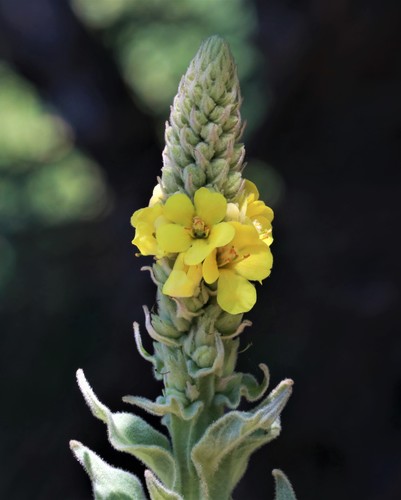
Tall, pole-like stems end in a dense spike of flowers that can make up half the total length of the stem.
Trichome Covering
All parts of the plant are covered in star-shaped trichomes, which are particularly thick on the leaves and give the leaves a silvery appearance.
Chromosome Number
The chromosome number of this species is 2n = 36.
Stem Leaf Arrangement
On flowering individuals, leaves are arranged alternately along the stem.
Stem Leaf Morphology
They are thick and decurrent, with considerable shape variation between upper and lower stem leaves, ranging from oblong to oblanceolate, and can reach up to 50 cm long and 14 cm across (19 inches long and 5 inches wide).
Upper Stem Leaf Traits
Leaves become smaller higher on the stem, and are less strongly decurrent further up.
Flowering Stem Characteristics
The flowering stem is solid and 2 to 2.5 cm (nearly an inch) across, and it may occasionally branch just below the inflorescence, usually after damage.
Post-Flowering Stem Persistence
After flowering and seed release, the stem and fruits typically persist through winter, drying into dark brown, stiff structures holding densely packed ovoid dry seed capsules.
Dried Stem Longevity
Dried stems may remain standing into the following spring or even the next summer.
Root Structure
The plant grows a shallow taproot.
Flower Morphology
Flowers are pentamerous, usually with five stamens, a five-lobed calyx tube, and a five-petalled corolla; the corolla is bright yellow and 1.5–3 cm (0.59–1.18 in) wide.
Flower Pedicel Length
Flowers are almost sessile, with very short pedicels only 2 mm (0.08 in) long.
Stamen Dimorphism
The five stamens are of two distinct types: the three upper stamens are shorter, their filaments covered in yellow or whitish hairs and bearing smaller anthers, while the lower two stamens have glabrous filaments and larger anthers.
Fruit Capsule Traits
The plant produces small, ovoid capsules 6 mm (0.24 in) long that split open along two valves to release seeds.
Seed Morphology
Each capsule holds large numbers of tiny brown seeds less than 1 mm (0.04 in) in size, marked with longitudinal ridges.
White-Flowered Form
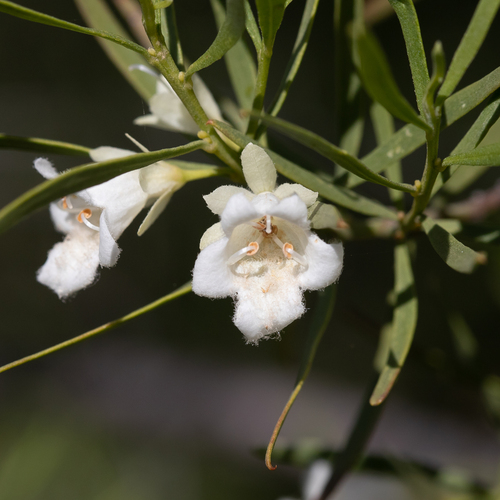
A white-flowered form, V. thapsus f. candicans, is known to exist.
Flowering Period Dynamics
Flowering can last up to three months from early to late summer (June to August in northern Europe), starting at the bottom of the spike and progressing irregularly upward; each individual flower opens for only part of a day, and only a small number of flowers open at the same time around the stem.
Native Range
V. thapsus has a wide native range covering Europe, northern Africa, and Asia, extending from the Azores and Canary Islands east to western China, north to the British Isles, Scandinavia, Siberia, and Kashmir, and south to the Himalayas.
Altitudinal Range
In northern Europe, it grows from sea level up to an altitude of 1,850 m, while in China it grows at altitudes between 1,400 and 3,200 m.
Introduced Distribution
It has been introduced across the temperate world, and is established as a weed in Australia, New Zealand, tropical Asia, La Réunion, North America, Hawaii, Chile, Hispaniola, and Argentina.
Additional Introduced Records
It has also been reported to occur in Japan.
Introduction to the United States
It was imported to the United States very early in the 18th century and cultivated for its medicinal and piscicide properties.
Early U.S. Spread
By 1818, it had spread so widely that Amos Eaton believed it was a native plant.
U.S. Regional Spread Timeline
It was already recorded in Michigan in 1839, and in California in 1876.
Current U.S. Distribution
Today it is commonly found across all U.S. states.
Canadian Distribution
In Canada, it is most common in the Maritime Provinces, southern Quebec, Ontario, and British Columbia, with scattered populations between these regions.
Habitat Preference
Great mullein most often grows as a pioneer colonizer of bare, disturbed soil, usually preferring sandy or chalky soil.
Habitat Range
It grows best in dry, sandy, or gravelly soils, though it can grow in a variety of habitats including banksides, meadows, roadsides, forest clearings, and pastures.
Phenotypic Adaptation
Its ability to grow in such a wide range of habitats is linked to strong phenotype variation rather than distinct adaptation capacities.
Flowering Dormancy Requirement
Great mullein is a biennial that generally requires winter dormancy before it can flower.
Dormancy Mechanism
This dormancy is tied to starch degradation activated by low root temperatures, and application of gibberellin can bypass this requirement.
Seed Germination Temperature Range
Seeds almost exclusively germinate in bare soil, at temperatures between 10 and 40 °C.
Germination Light Requirements
While seeds can germinate in complete darkness if other conditions are suitable, with tests recording a 35% germination rate under ideal dark conditions, in the wild they only germinate when exposed to light, or when positioned very close to the soil surface, which explains the species' observed habitat preferences.
Rosette Growth Rate
Even though it can grow in areas that already have some vegetation, rosette growth on bare soil is four to seven times faster.
Germination Season
Seeds germinate in spring and summer.
Overwintering Survival
Seeds that germinate in autumn produce plants that overwinter if they are large enough, while rosettes smaller than 15 cm (6 in) across die over winter.
Life Cycle Variation
After flowering, the entire plant usually dies at the end of its second year, but some individuals, especially in the northern parts of its range, require a longer growth period and flower in their third year.
Annual Life Cycle Occurrence
Under favorable growing conditions, some individuals even flower in their first year.
Seed Production by Life Cycle Length
Triennial individuals have been found to produce fewer seeds than biennial and annual individuals.
Genetic Trait Basis
While the year of flowering and plant size are linked to environmental conditions, most other characteristics of the species appear to be genetic.
Individual Flower Anthesis
Each individual flower is open for only one single day, opening before dawn and closing in the afternoon.
Pollination Biology
Flowers are self-fecundating and protogynous, with female parts maturing first, and will self-pollinate if they have not been pollinated by insects during the day.
Pollinator Specificity
While many insect species visit the flowers, only some types of bees actually achieve pollination.
Regional Flowering Period
In most of its range, V. thapsus flowers from June to August, extending into September or October in warmer climates.
Common Flower Visitors
Common flower visitors include halictid bees and hoverflies.
Stamen Hair Function
The hair on the lower stamens may act as a foothold for visiting pollinators.
Seed Longevity
V. thapsus seeds can retain their ability to germinate for decades, with some studies recording germination after up to 100 years.
Seed Production Capacity
Combined with the fact that the plant is extremely prolific at producing seeds, with each plant growing hundreds of capsules that each hold up to 700 seeds, for a total of up to 180,000 or 240,000 seeds per plant, this means seeds remain viable in the soil seed bank for very long periods.
Disturbance Germination
Seeds can sprout from apparently bare ground, or shortly after forest fires, long after any previous plants of the species have died.
Population Dynamics
Its typical population pattern consists of an ephemeral adult population followed by a long period of dormancy as stored seeds.
Dispersal Limitation
Great mullein rarely colonizes new areas without human intervention, because its seeds do not disperse very far.
Seed Dispersal Distance
Seed dispersion requires the stem to be moved by wind or animal movement; 75% of seeds fall within 1 m of the parent plant, and 93% fall within 5 m.
Insect Use
Megachilid bees of the genus Anthidium use the plant's hair, alongside hair from other woolly plants, to construct their nests.
Avian Seed Consumption
Seeds are generally too small for most birds to feed on, though American goldfinch have been recorded consuming them.
Other Avian Use
Other bird species have been reported to eat the leaves (Hawaiian goose) or flowers (palila), or to use the plant when foraging for insects (white-headed woodpecker).
Mammal Herbivory
Additionally, deer and elk eat the plant's leaves.
Pharmaceutical Use Status
Although V. thapsus has long been used in herbal medicine, no pharmaceutical drugs are manufactured from its components.
Historical Medicinal Use
Dioscorides first recommended the plant as a folk remedy for pulmonary diseases 2000 years ago.
Traditional Lung Remedy
Leaves were smoked to try to treat lung ailments, a tradition that was quickly transmitted to Native American peoples in North America.
Zuni Ethnobotanical Use
The Zuni people use powdered root from the plant in poultices applied to sores, rashes, and skin infections, and use a root infusion to treat athlete's foot.
Preparation Safety Note
All preparations intended for consumption must be finely filtered to remove the irritating trichomes.
Flower Oil Uses
Flower oil was used to treat catarrhs, colics, earaches, frostbite, eczema, and other external conditions.
Topical Preparation Uses
Topical application of various V. thapsus-based preparations was recommended for treating warts, boils, carbuncles, hemorrhoids, and chilblains, among other conditions.
Isolated Bioactive Compounds
Glycyrrhizin compounds with in vitro bactericide effects have been isolated from V. thapsus flowers.
Regulatory Medicinal Recognition
The German Commission E describes uses of the plant for respiratory infections.
National Formulary Inclusion
It was also included in the National Formulary of the United States and United Kingdom.
Additional Medicinal Uses
The plant has been used in attempts to treat colds, croup, sunburn, and other skin irritations.
Torch Use
Roman soldiers are said to have dipped the plant's stalks in grease to use as torches.
Wick Use
Other cultures have used the leaves as wicks.
Insulation Use
Native Americans and American colonists lined their shoes with the plant's leaves to block out cold.
Ornamental Use
Mullein may be cultivated as an ornamental plant.
Cultural Folklore
As noted by Pliny the Elder in his Naturalis Historia, great mullein was historically associated with witches, though the relationship was generally ambiguous, and the plant was also widely believed to protect against curses and evil spirits.
Piscicide Use
The seeds contain several compounds (saponins, glycosides, coumarin, rotenone) that are toxic to fish, and have been widely used as a piscicide for fishing.
Cultivation Rarity
Because it can become weedy, the plant is not often cultivated, unlike other species in the Verbascum genus such as V. phoeniceum.