About Varanus panoptes Storr, 1980
Species Identity
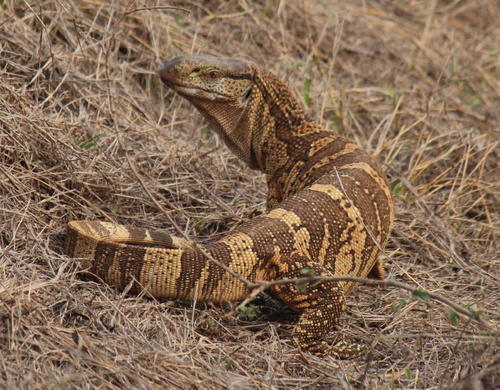
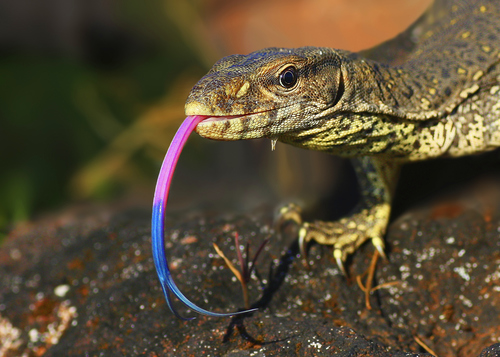
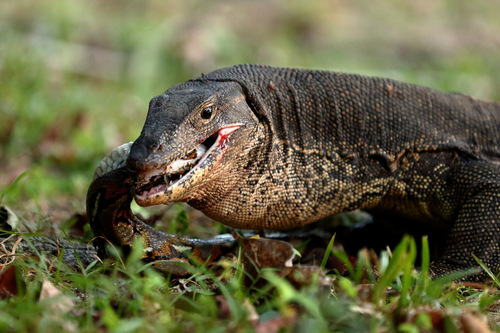
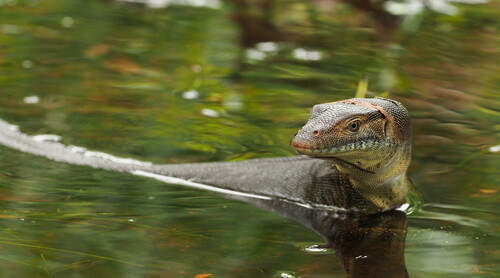
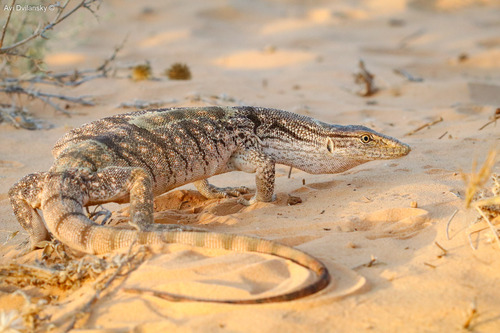
Varanus panoptes (the Argus monitor) is a ground-dwelling monitor species that somewhat resembles the widespread sand goanna (Varanus gouldii).
Dorsal Spot Pattern
Large dark spots run in rows along its back, becoming especially distinct at the center of the back, where they are interspersed with smaller, paler spots.
Tail Coloration
Color bands form toward the tip of the tail.
Subspecies Base Color
Overall body color is brownish in the nominate subspecies V. panoptes panoptes, and reddish in V. panoptes rubidus.
General Color Patterning
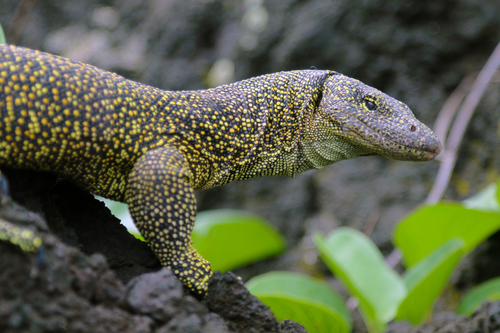
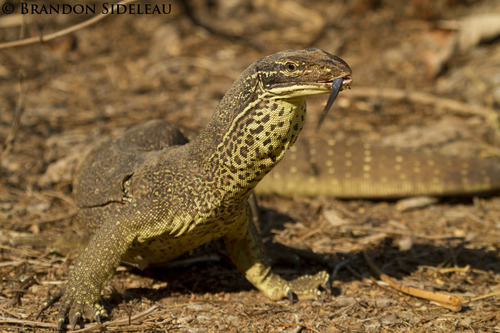
Most Argus monitors have a yellow patterning over a brown or dark tan background, though individual coloration varies between individual lizards and by region of origin.
Sexual Dimorphism in Size
This species shows strong sexual dimorphism: females reach an average total length of 3 feet (90 cm), while males reach an average of 4–5 feet (120–150 cm).
Maximum Recorded Size
The largest recorded specimens can reach 1.6 m (5 ft 3 in) in length and 7 kg (15 lb) in mass.
Australian Lizard Size Ranking
It is the third largest lizard native to Australia, after the perentie and the lace monitor.
Subspecies Size Variation
V. panoptes panoptes is the larger of the described subspecies, while V. panoptes horni is smaller.
Body Build
The Argus monitor has a reasonably lean build, and does not develop the heavy body mass seen in many African and Asian monitor species.
Life Cycle Speed
Compared to other monitor species, the Argus monitor has an unusually fast life cycle.
Sexual Maturity Timeline
While most large-bodied monitors take 2 or more years to reach sexual maturity, Argus monitors can reach maturity in less than 1 year, though this timeline varies between populations.
Sex-Specific Growth and Lifespan
Males grow faster than females and also have longer average lifespans; in the Kimberley region, male monitors have a mean age of 465 days, compared to 263 days for females.
Reproductive Output Timing
In Arnhem Land, Argus monitors lay between 6 and 13 eggs between January and February.
Interspecific Hybridization
Due to their close genetic similarity, Argus monitors can naturally hybridize with Gould's monitors, forming a stable hybrid zone.
Communal Burrow Use
Argus monitors often use communal warrens, which are interconnected systems of underground burrows sometimes shared by multiple individuals; one study recorded at least 6 individuals using the same warren.
Communal Nesting Behavior
These warrens may also support communal nesting, where multiple different females each dig their own separate egg burrows within the shared warren.
Nest Burrow Characteristics
This species digs helical nest burrows with an average depth of 2.6 meters, the deepest known burrow created by any vertebrate as of 2015.
Deep Nesting Function
This deep nesting may function to protect eggs from temperature fluctuations, dehydration, and/or cannibalism by males during the 8-month gestation period.
Ecosystem Engineer Status
Varanus panoptes acts as an ecosystem engineer.
Predator Role Context
Its high population density, high feeding rate, and generalist diet make it an important predator in its native ecosystems.
Population Prey Consumption Comparison
While individual dingoes or black kites consume more prey per individual than individual Argus monitors, the total prey consumed by the entire Argus monitor population is higher because the lizards occur at much greater population densities: 25 monitors per square kilometer, compared to 0.15 dingoes per square kilometer or 0.2 kites per square kilometer.
Cane Toad Impact on Prey Populations
When Argus monitor populations decline after the arrival of invasive cane toads, populations of their prey increase; for example, common tree snakes (Dendrelaphis punctulatus) become 26 to 46 times more abundant, though this increase may also include impacts from toad-induced declines of other monitor species.
Burrow Commensal Use
In addition to their role as predators, the burrows dug by Argus monitors are used by many other animal species.
Natural Predators
Argus monitors themselves are preyed on by black-headed pythons (Aspidites melanocephalus) and olive pythons (Lialis olivaceus).