About Varanus albigularis Daudin, 1802
Scientific Naming and Status
Varanus albigularis, scientifically named Varanus albigularis Daudin, 1802, is on average the most massive lizard in Africa.
Average Weight Range
Adult males average 6 to 8 kg (13 to 18 lb), while females weigh 3.2 to 5 kg (7.1 to 11.0 lb).
Maximum Male Weight
Large mature males can reach weights of 15 to 17 kg (33 to 37 lb), making the species slightly smaller than the Nile monitor in terms of maximum size.
Length Ranking
It is the second longest African lizard, after the Nile monitor.
Total Length Range
Mature specimens typically measure 0.85 to 1.5 meters (2 ft 9 in to 4 ft 11 in), and exceptionally large specimens can reach 2 meters (6 ft 7 in) in total length, including the tail.
Body and Tail Proportion
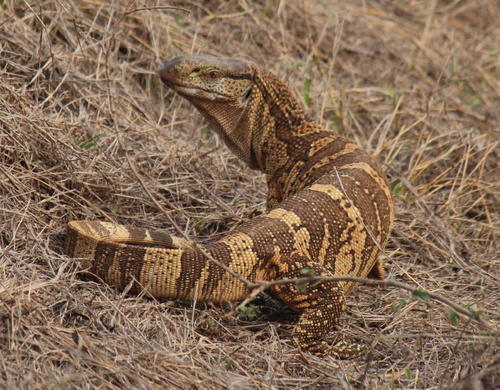
Its tail and body are equal in size.
Head and Neck Proportion
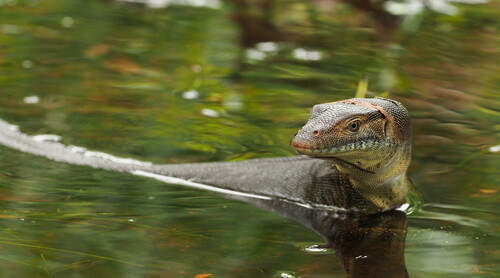
Its head and neck are the same length, and are distinct from each other.
Snout and Head Shape
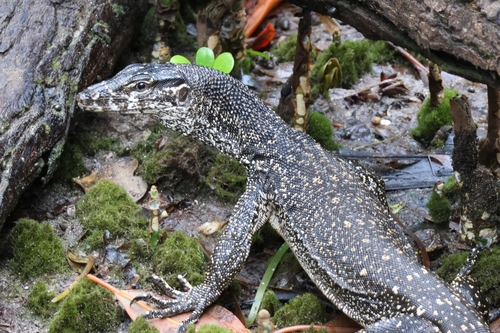
The bulbous, convex snout creates an angular, box-like head appearance.
Tongue and Scale Features
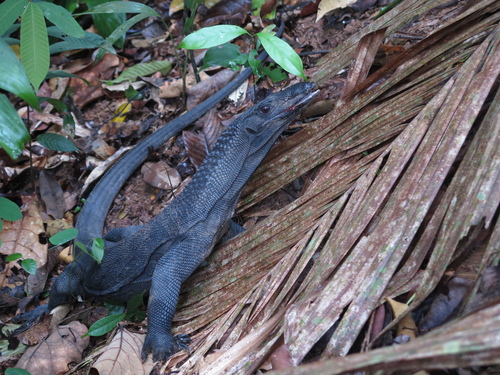
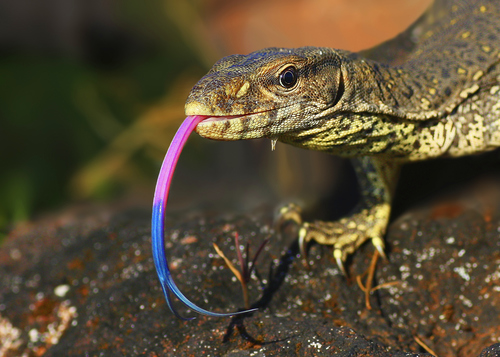
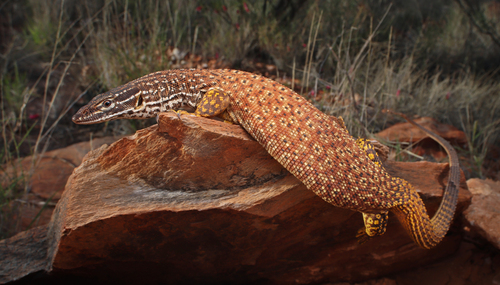
Its forked tongue is pink or bluish, and its body scales are usually a mottled gray-brown with yellowish or white markings.
Geographic Distribution
This species is found across multiple regions of Africa: Central Africa (Democratic Republic of the Congo/Zaire), Southern Africa (Namibia, Botswana, Republic of South Africa, Eswatini, Zimbabwe, Mozambique, Zambia, Angola), East Africa and the African Great Lakes region (Burundi, Kenya, Uganda, Tanzania), and the Horn of Africa (Ethiopia, Somalia).
Typical Habitat
It inhabits a variety of arid habitats, including steppes, grasslands, and savannas, and often occurs on rock kopje (inselberg) formations scattered across the landscape.
Habitat Exclusions
It is generally not found in desert interiors, rainforests, or thick scrub forests.