About Upeneichthys lineatus (Bloch & Schneider, 1801)
Mouth and Jaw Structure
Upeneichthys lineatus (Bloch & Schneider, 1801) has a small mouth with fleshy lips. Each jaw holds a single row of conical teeth.
Chin Barbels
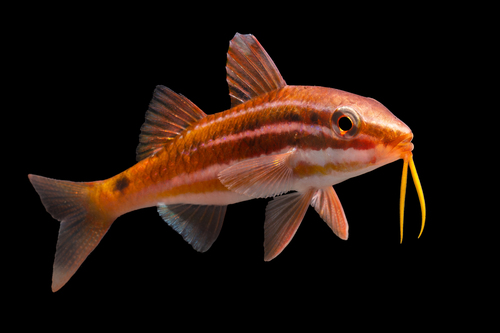
Like all other members of the family Mullidae, this species has two fleshy barbels on its chin.
Basal Body Coloration
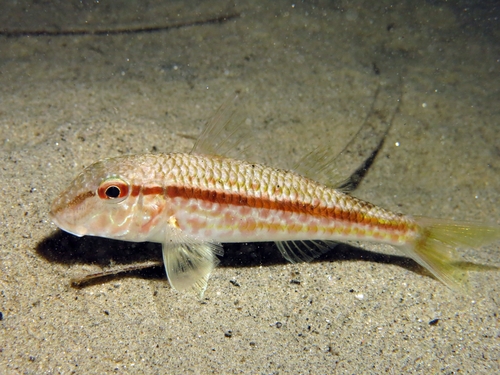
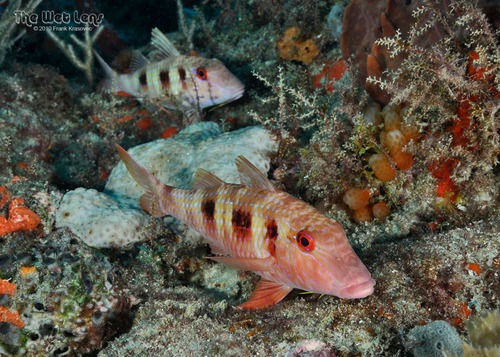
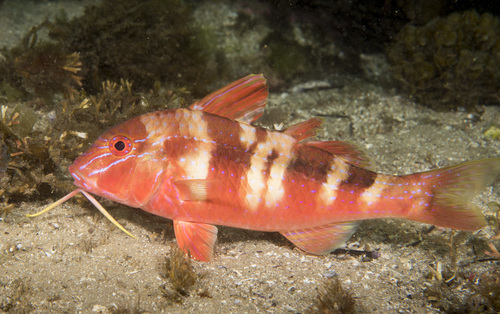
This fish shows extensive colour variation, ranging from pale cream to deep red.
Facial and Flank Markings
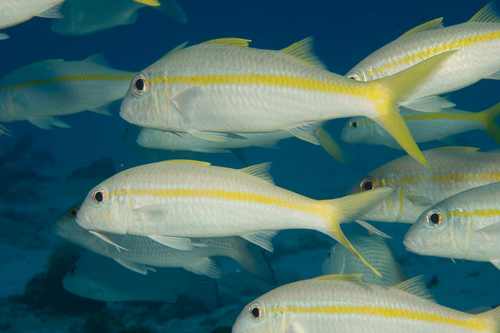
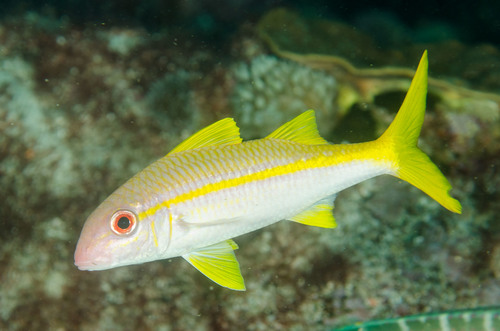
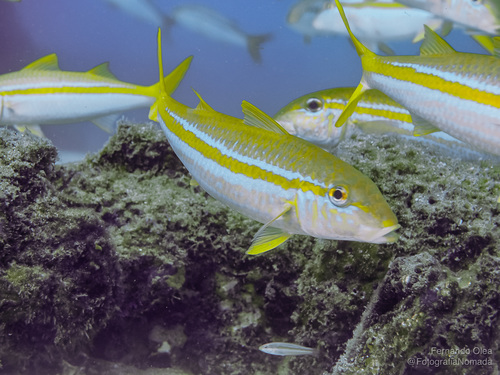
It typically has blue and gold lines on the face, plus thin yellow lines and blue dots along its flanks and tail.
Fin and Lateral Stripe Markings
It has a distinct mid-lateral stripe, and yellow stripes on its dorsal and anal fins.
Maximum Recorded Length
The maximum recorded total length for this species is 31 centimetres (12 in).
Fin Ray and Spine Count
Its dorsal fins have 9 spines and 8 rays, while its anal fins have 1 spine and 6 rays.
Endemic Range
Upeneichthys lineatus is endemic to temperate seas off eastern and southeastern Australia.
Specific Distribution Boundaries
Its range extends from around Fraser Island, Queensland in the north, south to Tasmania, and west as far as Lakes Entrance, Victoria.
Taxonomy Note
Additional potential areas of occurrence are covered in the Taxonomy section.
Habitat Substrate Type
This species lives on sandy bottoms in sheltered waters, including bays and harbours.
Barbel Function
It uses its sensory barbels to probe sediment for prey.
Substrate Variability
It can be found over a variety of substrates, from smooth bottoms to bottoms covered in rock and shell.
Foraging Depth and Schooling
It frequently forages along the seabed in small schools, at depths between 5 and 200 metres (16–656 ft).
Dental Specialization
Its teeth are relatively fine, and it lacks crushing molar-like teeth.
Diet Composition
It preys on small molluscs, crustaceans, echinoderms, and fishes, as well as larger soft-bodied animals similar to polychaetes.
Reproductive Strategy
This species has separate sexes, with external fertilisation.
Spawning and Larval Traits
Spawning takes place above the seabed, and both eggs and larvae are pelagic.