About Turdoides gymnogenys (Hartlaub, 1865)
Adult Size
Adults of Turdoides gymnogenys, the bare-cheeked babbler, measure 23–25 cm (9–10 in) in length and weigh approximately 60–70 g (2.1–2.5 oz).
Body Plumage
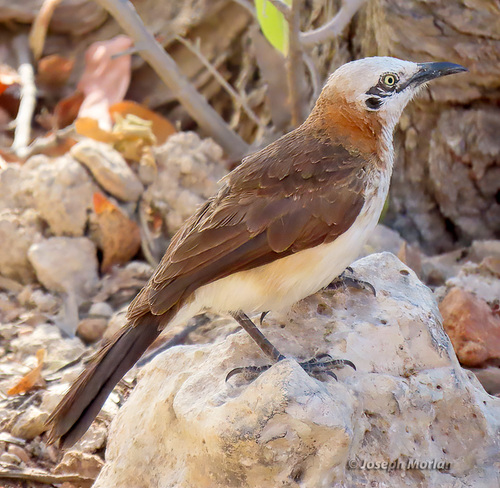
Their upperparts are medium brown, underparts are gray or white, and their crown is light gray.
Distinctive Facial Features
The most distinctive features of this species are its bare bluish gray facial skin on the cheeks and its yellow eyes.
Bill Structure
It has a dark, slightly curved bill adapted for searching through litter and soil.
Sexual Dimorphism
The sexes have similar appearance.
Juvenile Appearance
Juveniles have duller overall coloration and less prominent facial skin patches than adults.
Geographic Distribution
This species is near-endemic to southwestern Africa, confined mainly to northwestern Namibia and adjacent border areas of Angola.
Habitat Preferences
It favors Mopane woodlands, dry thorn scrub, and rocky semi-desert habitats up to an elevation of around 1,500 m (4,900 ft).
Migratory Status
The bare-cheeked babbler is non-migratory; it maintains permanent territories and lives year-round in family groups.
Local Population Hotspots
It is especially common in the Kunene Region and Etosha National Park within Namibia.
Social Group Structure
Bare-cheeked babblers live in family groups of 6 to 12 birds.
Vocalization Function
They are highly vocal, producing harsh "babbles" that help maintain group cohesion and defend their territories.
Primary Foraging Behavior
They forage on the ground, sorting through leaf litter to find insects, spiders, and other small arthropods.
Supplementary Diet
They will occasionally eat seeds and berries during the dry season.
Anti-Predator Behavior
Groups coordinate defense against predators through calls and mobbing behavior.