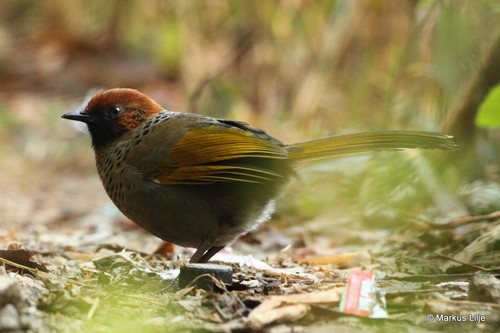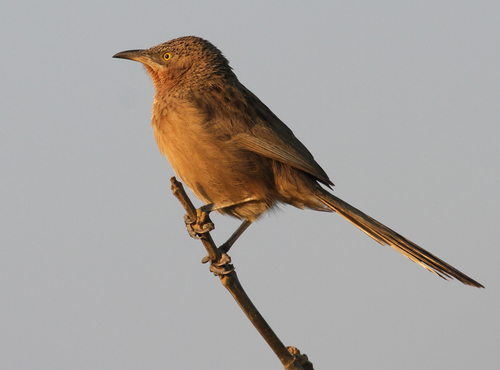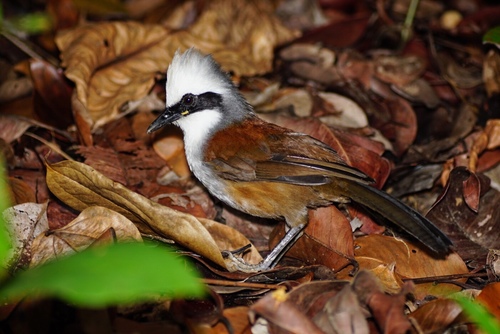
About Garrulax leucolophus (Hardwicke, 1816)
Taxonomy
The white-crested laughingthrush, with the scientific name Garrulax leucolophus (Hardwicke, 1816), is a member of the family Leiothrichidae.
Social Traits and General Range
It is a highly social, vocal bird that inhabits forests and scrub from the Himalayan foothills to Southeast Asia.
Conservation Status
G. leucolophus has one of the widest native ranges of all laughingthrushes, which means it is at minimal risk of extinction.
Native Country Distribution
It is native to India, Bangladesh, Nepal, Bhutan, Cambodia, Myanmar, Laos, China, Vietnam, and Thailand.
Subspecies Overview
The species has four recognized subspecies, each with a slightly different distribution.
Subspecies G. l. leucolophus Range
G. l. leucolophus occurs in northern India, Nepal, Bhutan, and southern Tibet (China).
Subspecies G. l. patkaicus Range
G. l. patkaicus occurs in northeastern India, Bangladesh, Myanmar, and Yunnan (southern China).
Subspecies G. l. belangeri Range
G. l. belangeri occurs in Myanmar and Thailand.
Subspecies G. l. diardi Range
G. l. diardi occurs in Myanmar, Thailand, Laos, Cambodia, Vietnam, and Yunnan (southern China).
Elevation Range
This species is most commonly found in foothill forests, at elevations up to 1600 meters.
Preferred Habitat Types
It prefers dense, moist, shady thickets and scrubs, as well as the edge and understory of broadleaved secondary forests.
Habitat Benefits
These habitats let it hide from predators and take shelter from the subtropical sun.
Feeding Location
It typically only leaves cover to feed on the ground.
Bamboo Habitat Role
Bamboos are also part of this species' ideal habitat, as they provide high-quality nesting material and camouflage.
Sexual Maturity Age
White-crested laughingthrushes begin reproducing when they are one year old (in their second year of life).
Breeding Period
They breed multiple times between February and September each year.
Nest Structure and Placement
Their nests are shallow, cup-shaped structures built in shrubs and trees at heights of 2 to 6 meters above ground.
Nest Construction Materials
Nests are constructed from bamboo leaves and grass, bound together with twigs and stems.
Clutch Details
Females lay 2 to 6 pure white eggs per nest, each estimated to weigh around 6.5 grams.
Incubation Period
Both parents incubate the eggs for 13 to 17 days.
Parental Care Post-Hatching
Males and females also share brooding and feeding duties after hatching.
Chick Development Timeline
Chicks hatch completely naked and develop into miniature adults over a 14 to 16 day period after hatching.
Cooperative Breeding Trait
White-crested laughingthrushes are cooperative breeders, so breeding tasks are not limited to the two parents.
Multi-Adult Breeding Behavior
One female may share a nest with another female, and three or more adults may take turns incubating eggs and feeding chicks.
Helper Bird Demographics
These helper individuals are not always full adults: young birds from an earlier clutch in the same breeding year will sometimes help build the nest or feed their younger siblings.