About Tringa ochropus Linnaeus, 1758
Body Shape & Plumage Overview
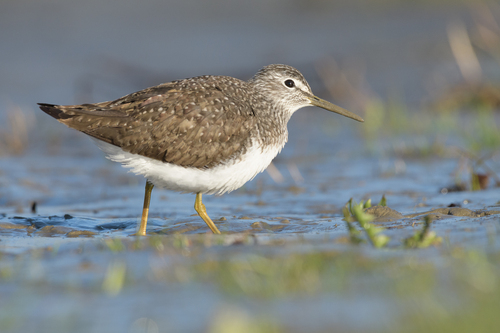
This species is a somewhat plump wader with a dark greenish-brown back and wings, a greyish head and breast, and white underparts on the rest of its body.
Back Spotting Variation
The back has white spots that vary in extent: breeding adults have the most extensive spotting, while winter adults and young birds have less.
Bill & Leg Coloration
Both its legs and short bill are dark green.
In-Flight Wing & Rump Patterning
In flight, it has a conspicuous, distinct patterning: its wings are dark on both the upper and lower sides, and it has a brilliant white rump.
Similar Species Distinction
This white rump feature reliably separates it from the slightly smaller, but otherwise very similar North American solitary sandpiper (T. solitaria).
Flight Vocalization
When flying, it produces a characteristic three-note whistle.
Breeding Range
The green sandpiper breeds across subarctic Europe and extends east across the Palearctic.
Migratory Wintering Range
It is a migratory bird, and winters in southern Europe, the Indian subcontinent, Southeast Asia, and tropical Africa.
Diet & Feeding Behavior
It feeds on small invertebrates, which it picks from mud as it moves steadily around the edges of its chosen pond.
Gregariousness
This is not a gregarious species, though small numbers will sometimes gather in good feeding areas.
Habitat Preferences
The green sandpiper is strongly associated with freshwater habitats, and is often found in sites that are too restricted for other waders, which tend to prefer areas that give a clear all-round view.