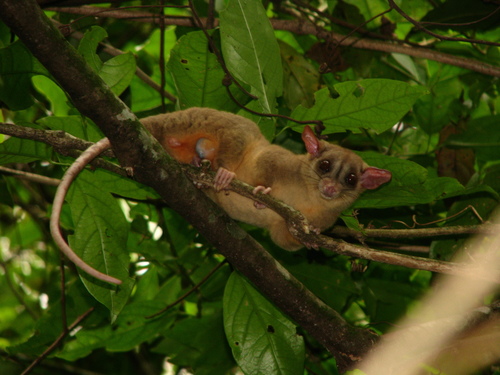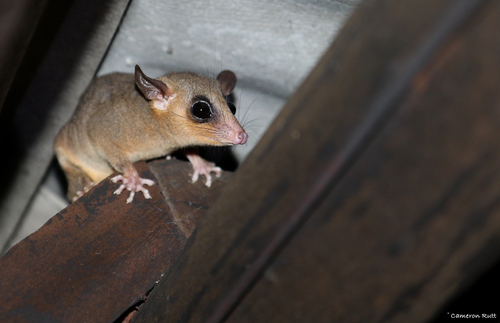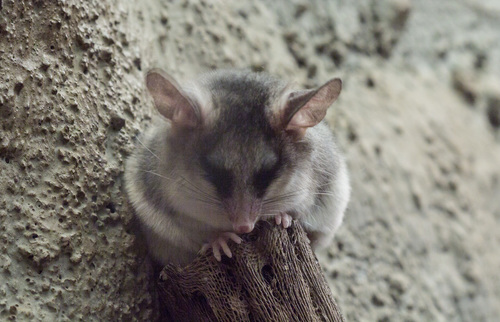
About Thylamys elegans (Waterhouse, 1839)
General Description
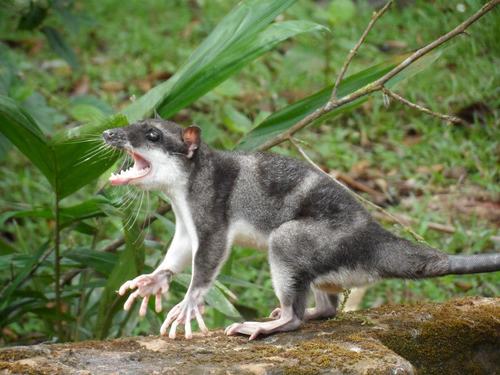
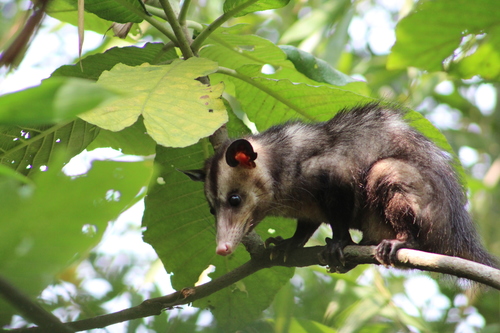
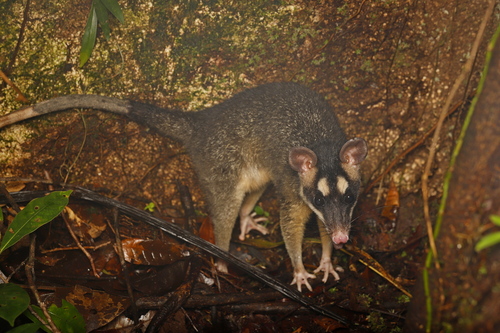
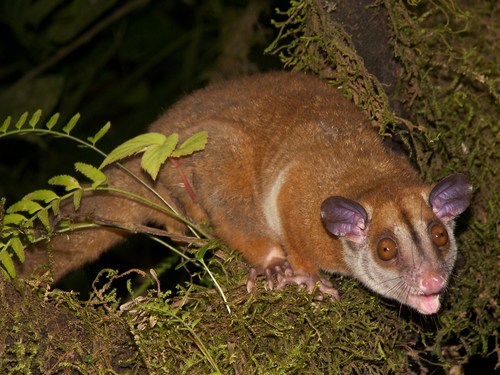
The elegant fat-tailed mouse opossum (Thylamys elegans) is a medium-sized opossum.
Coat and Tail Features
Key features of this species include white limbs, a gray to light brown coat, lighter-colored flanks and underbelly, and a thick, hairy tail that measures 12.7 to 14.6 centimetres (5.0 to 5.7 in) long.
Facial Markings
A distinct facial marking is a black ring around each eye, and these rings extend slightly toward the nose.
Geographic Coat Variation
Coat color varies across different geographic regions.
Tail Fat Storage
The tail can thicken as fat accumulates inside it, and at its base (where it connects to the body) the tail can reach 1 centimetre (0.39 in) in diameter.
Body Measurements
The head-and-body length of this opossum ranges from 11 to 13.7 centimetres (4.3 to 5.4 in); hindfeet measure 1.7 centimetres (0.67 in) on average, and ears measure 2.3 centimetres (0.91 in).
Torpor Capability
This species can enter torpor, a short-term physiological state that greatly reduces the opossum's need for food and energy, unlike the longer-term state of hibernation.
Water Conservation
When water is scarce, this opossum produces highly concentrated urine to conserve water.
Geographic Range
The elegant fat-tailed mouse opossum is found west of the Andes in central Chile, where it inhabits a range of habitats from cloud forests to chaparrals, at altitudes up to 2,500 metres (8,200 ft) above sea level.
Conservation Status
The IUCN Red List classifies this species as least concern, due to its wide distribution and assumed large total population.
Population Threats
However, population declines have been recorded in parts of its range as a result of deforestation and agricultural expansion.
Activity Pattern
Ecologically, the elegant fat-tailed mouse opossum is crepuscular, meaning it is most active around twilight.
Nesting Habits
It makes its nests in tree hollows, under rocks, and under roots; nests are either built by the opossum itself or reused from abandoned bird or rodent nests.
Habitat Use
It is both arboreal (tree-dwelling) and terrestrial (land-dwelling).
Diet
Its diet consists mainly of arthropods and larvae, and it also eats fruits, small vertebrates, and carrion.
Prehensile Tail Function
Regardless of its thickness, the prehensile tail allows this opossum to climb efficiently and grasp branches, an ability that is less developed in other small Chilean mammal species.
Nest Occupancy
Nests are usually occupied by only one individual.
Home Range Variation
In southern Chile, the opossum's home range covers 1,383 square metres (14,890 sq ft) in July, and shrinks to 781 square metres (8,410 sq ft) in December.
Predators
Known predators of this opossum include the culpeo fox, burrowing owl, and great horned owl.
Sexual Maturity
Both male and female elegant fat-tailed mouse opossums reach sexual maturity by their first year.
Breeding Season
The annual breeding season typically runs from September to March, and a female can produce one to two litters per season.
Litter Characteristics
A female can carry up to 17 embryos, but the number of surviving offspring depends on the number of functional nipples, which is usually between 11 and 13.