About Thalassarche chrysostoma (J.R.Forster, 1785)
Common Name and Body Length
Thalassarche chrysostoma, commonly known as the grey-headed albatross, has an average body length of 81 cm (32 in) and an average wingspan of 2.2 m (7.2 ft).
Weight Range
Its weight ranges from 2.8 to 4.4 kg (6.2 to 9.7 lb), with an average mass of 3.65 kg (8.0 lb).
Adult Head and Upper Body Coloration
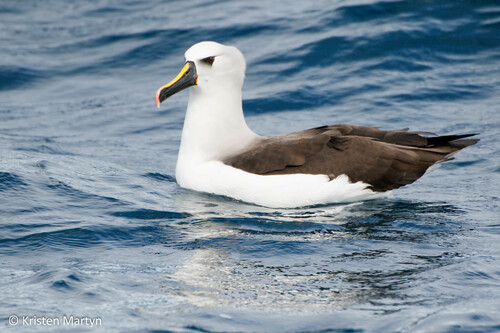
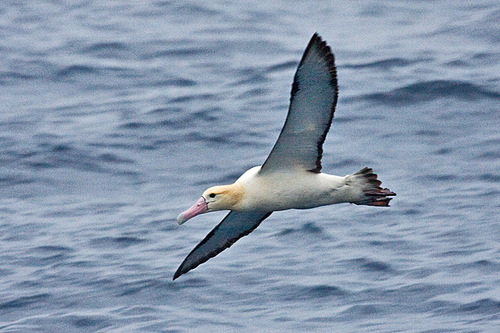
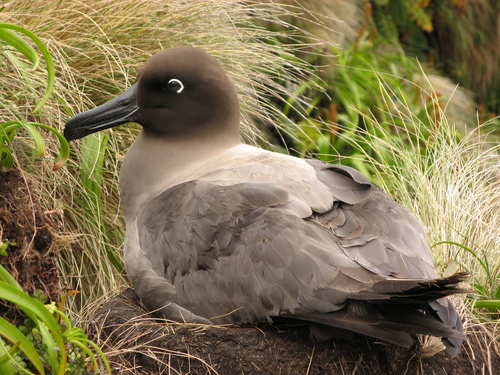
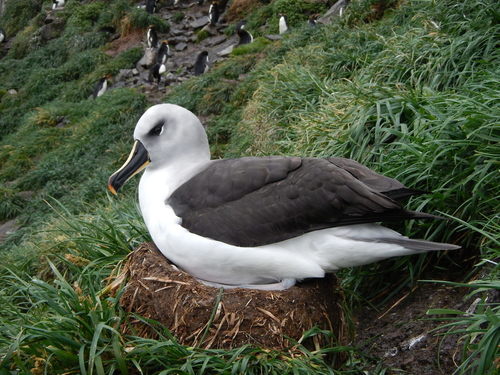
Adults have a dark ashy-grey head, throat, and upper neck; their upper wings, mantle, and tail are almost black. They have a white rump, white underparts, and a white crescent-shaped marking behind each eye.
Adult Bill Coloration
Their bill is black, with bright yellow ridges along both the upper and lower parts that fade to pink-orange at the tip.
Adult Underwing Coloration
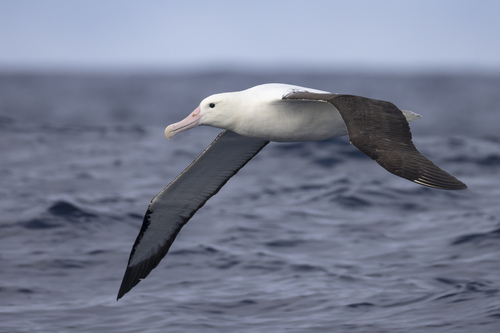
Their underwings are white, with extensive black coloring on the leading edge and less black on the trailing edge.
Juvenile Head and Bill Features
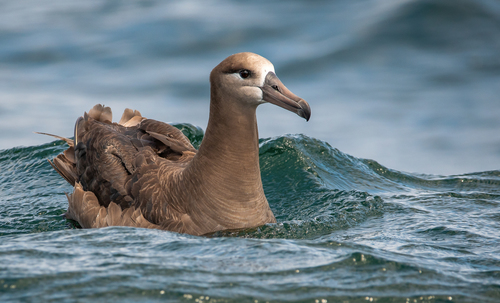
Juveniles have a black bill and black head, with a darker nape than adults.
Juvenile Marking and Underwing Features
The white eye crescent is indistinct in juveniles, and their underwings are almost completely dark.
Nesting Colony Locations
Grey-headed albatrosses nest in colonies on several islands in the Southern Ocean.
Specific Breeding Colony Sites
Large breeding colonies are found on South Georgia in the South Atlantic, and smaller colonies are located on Islas Diego Ramírez, the Kerguelen Islands, the Crozet Islands, Marion Island, and Prince Edward Islands in the Indian Ocean, Campbell Island and Macquarie Island south of New Zealand, and Chile.
Breeding Season Foraging Range
When breeding, grey-headed albatrosses forage for food within or south of the Antarctic Polar Frontal Zone. Individuals that roost in the Marion Island area forage in the sub-tropical zone.
Non-breeding Range
Juveniles and non-breeding adults fly freely across all southern oceans, ranging as far north as 35°S.
Egg Laying and Nest Characteristics
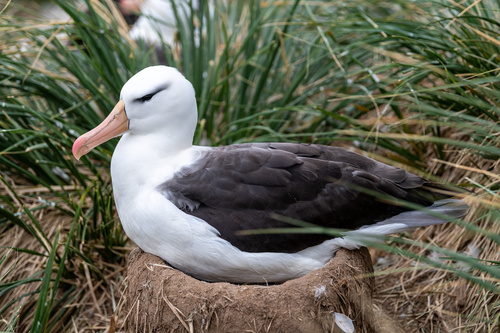
For reproduction, this albatross lays a single egg in a large nest that is typically built on steep slopes or cliffs covered in tussock grass.
Incubation Period
The egg is incubated for 72 days.
Chick Feeding Regimen
Studies conducted on South Georgia's Bird Island show that growing chicks are fed an average of 616 g (21.7 oz) of food every 1.2 days, and reach a peak weight of around 4,900 g (170 oz).
Fledging Timeline
Chicks typically lose weight before fledging, which occurs 141 days after hatching.
Pre-breeding Maturity Period
After fledging, young grey-headed albatrosses generally do not return to the colony for 6 to 7 years, and do not breed for the first time until several more years after returning.
Breeding Frequency
If a breeding pair successfully raises a chick, they will not breed in the following year, taking a full year off from breeding.
Non-colony Travel Behavior
During their time away from the colony, these albatrosses can travel great distances, often circling the globe multiple times.