About Tetracoccus hallii Brandegee
Growth Form
Tetracoccus hallii Brandegee is a bushy, branching shrub. It is hairless overall, except for its new twigs which bear rough hairs.
Leaf Characteristics
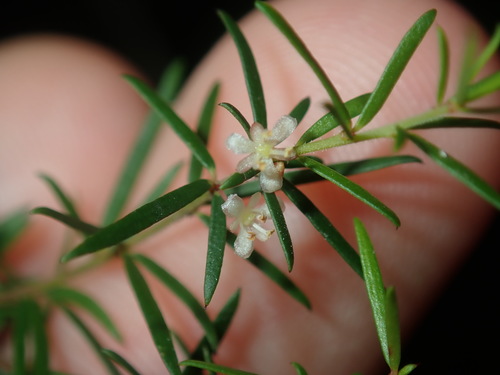
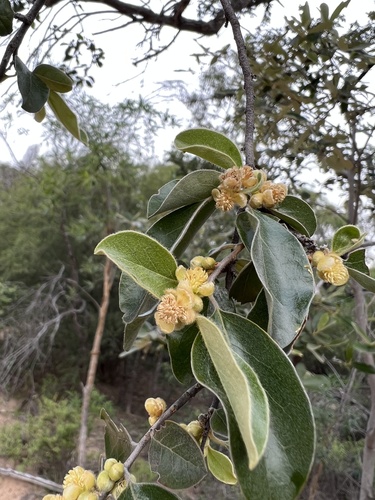
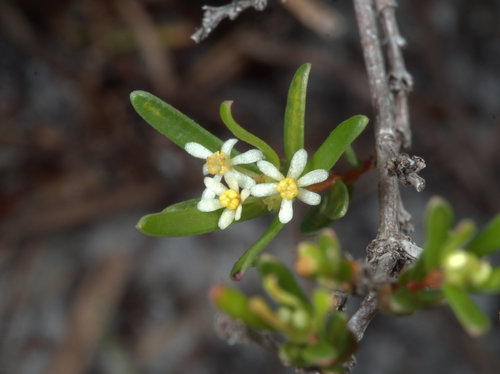
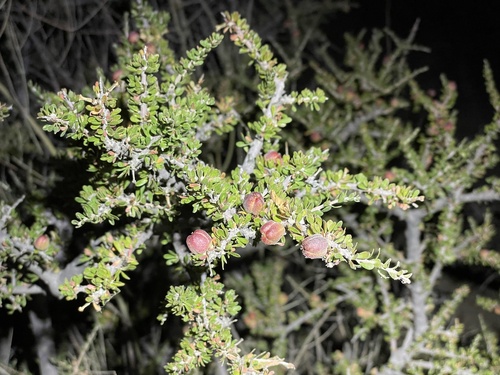
Small leaves grow in clusters along the branches; each leaf is leathery, teardrop-shaped, and only a few millimeters long.
Reproductive System
The species is dioecious, meaning male and female individual plants produce different types of flowers.
Male Flower Structure
Male (staminate) flowers grow in clusters, and each individual flower has 4 to 6 rounded sepals and 4 to 8 erect stamens.
Female Flower Structure
Female (pistillate) flowers grow singly.
Bloom Period
This species blooms from January through May, across habitats ranging from the lower Sonoran Desert to the higher Mojave Desert.
Fruit Structure
It produces a rounded, woolly fruit that usually has three chambers. When mature, the fruit is about one centimeter long, and each chamber holds one or two seeds.
Native Distribution
Tetracoccus hallii is native to the Mojave Desert and Sonoran Desert. Its range covers southeastern California, southern Nevada, and western Arizona in the United States, plus Baja California state in Mexico.
Habitat and Elevation
It grows in many types of desert habitat, including creosote bush scrub, at elevations below 1,200 metres (3,900 ft).
Local Abundance
It is abundant and widespread in Joshua Tree National Park in Southern California.