About Taricha rivularis (Twitty, 1935)
Taxonomy and Naming
Taricha rivularis, commonly called the red-bellied newt, was first described by Twitty in 1935.
Adult Size
When fully grown, this species measures 2.75 to 3.5 inches (70 to 89 mm) from snout to vent, and 5.5 to 7.5 inches (140 to 190 mm) from snout to the end of the tail.
Skin and Coloration
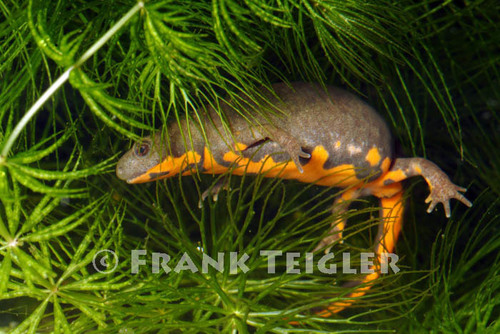
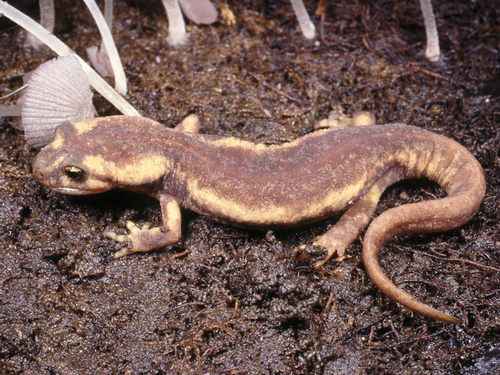
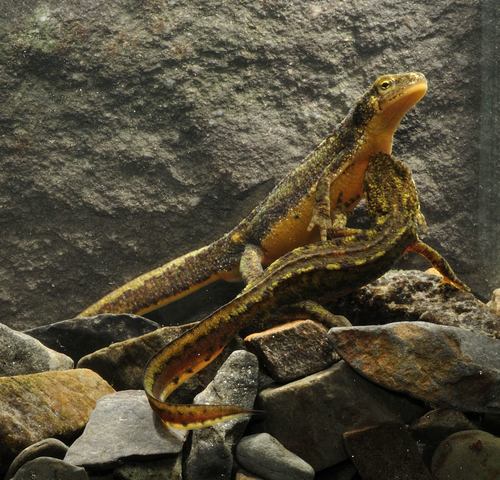
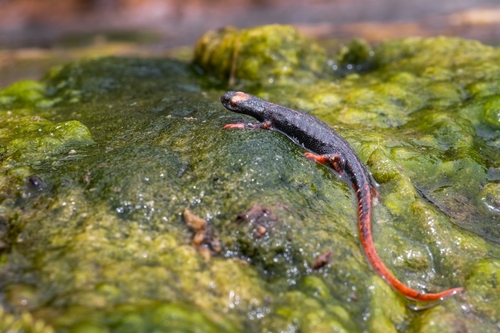
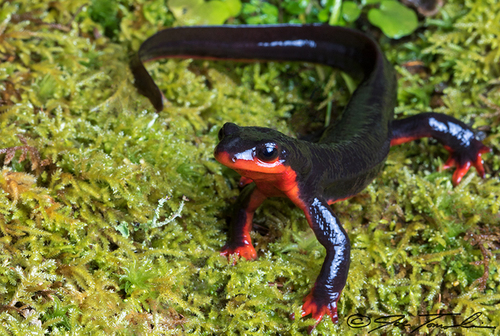
It has grainy skin, with a brownish-black dorsal side and a bright tomato-red underbelly.
Sexual Dimorphism
Males often have a broad dark color patch across the vent that females lack.
Breeding Male Morphology
Breeding males develop smooth skin and a flattened tail.
Species Distinguishing Features
This newt can be told apart from other coastal newts by its red belly and the absence of yellow in its eyes.
Native Range
The red-bellied newt is native to coastal California.
Main Distribution
Its main range extends along the coast from Bodega in Sonoma County, inland to Lower Lake, and north to Honeydew in Humboldt County.
Primary Habitat
It inhabits coastal woodlands, particularly redwood forests.
Disjunct Population
A separate disjunct population exists 130 kilometres (81 mi) south of Sonoma County in the upper Stevens Creek watershed in the Santa Cruz Mountains, and this population is genetically identical to the main Sonoma County population.
Larval Form
Red-bellied newts start life as aquatic larvae, which resemble tadpoles but are more elongated and have external gills.
Juvenile Development
After larvae mature into adult form, a process that takes around four to six months, they leave the water to live underground until they reach breeding age, which typically takes four to six years.
Adult Lifespan
Adults can live between 20 and 30 years.
Breeding Aggregation Timing
Once sexually mature, males begin gathering at stream banks as early as January or February.
Mating Period
Females join the aggregation one to three weeks later to mate.
Oviposition Habitat
Red-bellied newts lay their eggs in fast-flowing streams or rocky rivers.
Egg Clutch Characteristics
Females deposit eggs in roughly 12 streamlined clusters, each holding six to 16 eggs.
Egg Placement
Eggs are most often attached to the undersides of rocks, or to branches and roots that extend into the water.
Post-Breeding Movement
After breeding, adults leave the stream moving at an angle upstream rather than directly uphill.
Breeding Frequency
Unlike males, females do not breed every year.