About Neurergus kaiseri Schmidt, 1952
Common Names and Taxonomy
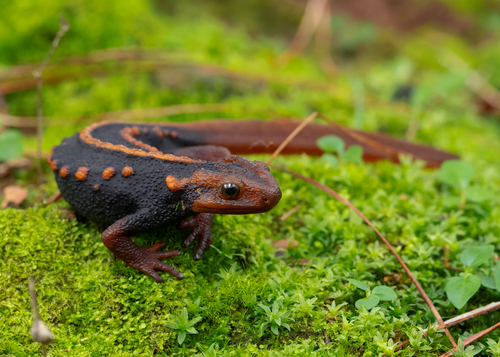
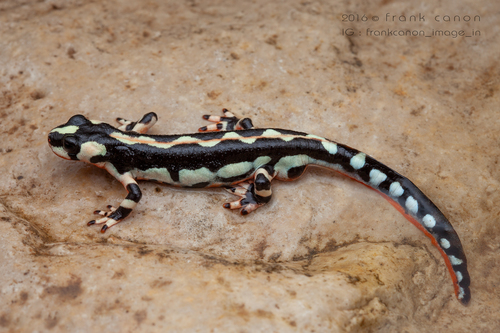
Neurergus kaiseri, commonly called the Luristan newt, Kaiser's mountain newt, Kaiser's spotted newt, or emperor spotted newt, is a species of salamander in the family Salamandridae, and should not be confused with Tylototriton shanjing.
Current Native Range
This species is endemic to the southern Zagros Mountains in Iran, where it has only been recorded from four streams.
Conservation Status
Its populations have been declining, and the International Union for Conservation of Nature has assessed its conservation status as vulnerable.
Captive Breeding Program
Multiple zoos have established a captive breeding program for the species.
Endemic Range Confirmation
The Luristan newt is endemic to the southern Zagros Mountains of Iran.
Habitat Types
It primarily lives in highland streams surrounded by arid scrubland, but can also occur in ponds and pools.
Known Inhabited Area
It is only known from four streams within a single catchment area, with a total currently inhabited area of 8,948 km² (3,454.8 mi²).
Suitable Habitat Area
A recent study found that the area of suitable habitat within the study area was 18,159 km² (7,011.2 mi²).
Dry Season Behavior
Water is not present in this newt's habitat for a large part of the year; during this dry period, the species moves out into the surrounding woodland, which is predominantly made up of oak and pistachio trees, and estivates.
Projected Distribution Shift
While the Luristan newt currently occurs in the Zagros Mountains of Iran, recent studies conclude that climate change will push the species to shift its future distribution into small portions of southern Iran including Kermanshah, Ilam, Chaharmahal-Bakhtiari, and Kohgiluye-Boyerahmad.