About Syngnathus floridae (Jordan & Gilbert, 1882)
Species Classification
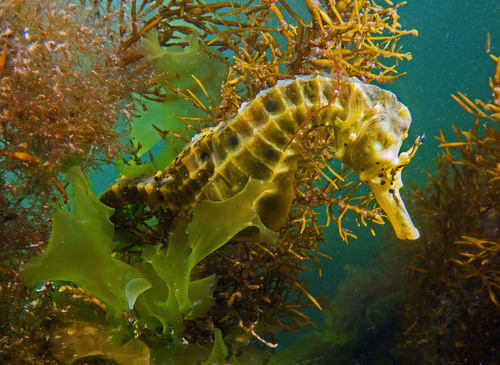
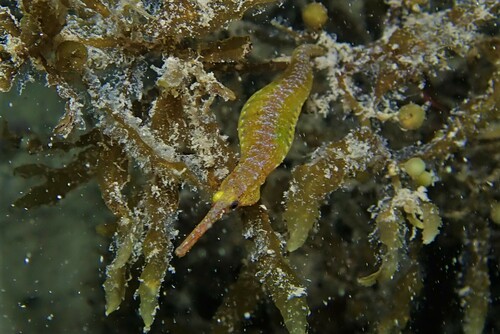
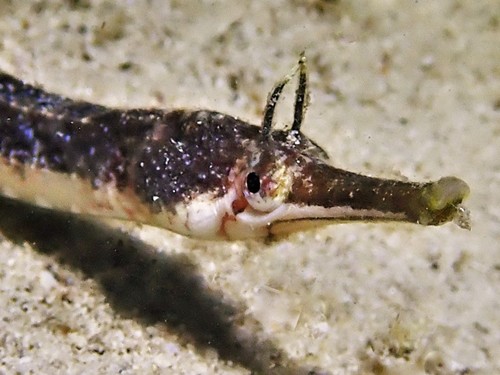
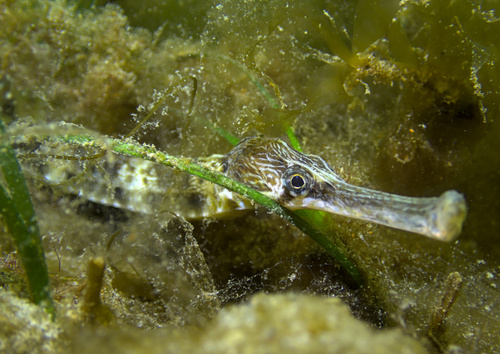
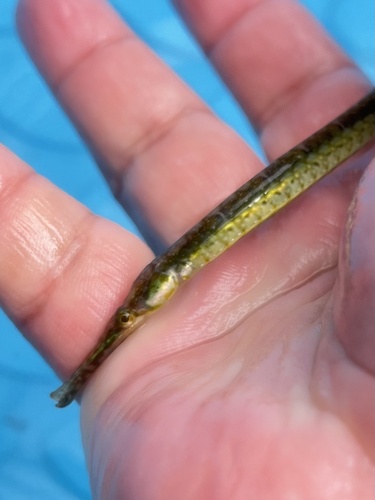
The dusky pipefish (Syngnathus floridae) is a species of pipefish.
Distribution Range
It is widespread in the western Atlantic Ocean, with a range extending from Bermuda, Chesapeake Bay (United States), the northern Gulf of Mexico, and the Bahamas, south through the western Caribbean Sea to Panama.
Habitat Type
This is a marine, subtropical, demersal fish.
Depth Range
It lives at depths of up to 22 metres (72 ft), and is most commonly found at depths no greater than 4 metres (13 ft).
Maximum Length
The maximum recorded body length of this species is 25 centimetres (9.8 in).
Sex-Role Reversal
Like other species in the genus Syngnathus, S. floridae shows sex-role reversal between males and females during mating and offspring care.
Egg Deposition Process
During copulation, females deposit their eggs into a brood pouch located on the male.
Male Parental Care
Males then fertilize the eggs and provide all post-zygotic care: they physically carry the eggs, and transfer nutrients to developing embryos through a placenta-like connection.
Hatching & Juvenile Independence
Eggs hatch approximately 10 days after fertilization, and newly hatched individuals are immediately independent of parental care.
Mating System
Dusky pipefish are polygynandrous, meaning both males and females mate with multiple partners.
Limiting Sex Rationale
Males act as the limiting sex in this species, because their brood pouch can only hold a fixed maximum number of eggs at one time.
Female Reproductive Traits
By contrast, females produce more eggs than they are able to deposit, so females have unlimited reproductive success.
Sexual Selection on Size
Sexual selection acts on body size in this species, favoring larger males.
Large Male Reproductive Advantage
Larger males can carry more eggs and attract more female mates, so larger males have higher reproductive success than smaller males.
Environmental Impacts on Reproduction
Environmental variation between dusky pipefish populations affects their reproductive success.
Temperature Effect on Sexual Selection
Water temperature plays a major role in shaping reproductive success through its impact on sexual selection.
Temperature and Reproduction Rate
As water temperature increases, the potential rate of reproduction rises for both males and females, but it increases faster for males.
Temperature Selection on Females
This means that temperature alters sexual selection by selecting against females with slower reproductive rates.
Warm Temperature Reproductive Benefits
Higher water temperatures also improve reproductive success by increasing the number of eggs a female produces, which in turn reduces the number of mates a male needs to fill his brood pouch.
Cold Temperature Reproductive Outcomes
In lower temperature environments, males have lower reproductive success, because they do not accept as many eggs in these conditions.