About Syngnathus abaster Risso, 1827
Taxonomy and Naming
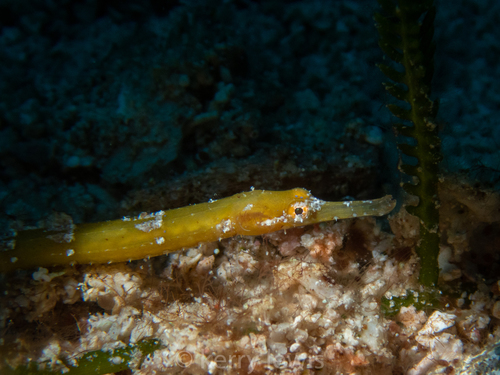
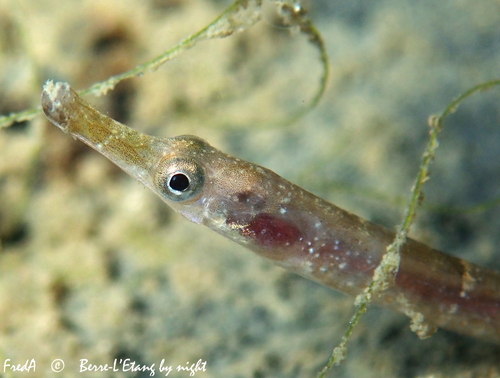
The black-striped pipefish, Syngnathus abaster Risso 1827, is a species of fish in the family Syngnathidae.
Native Range
It is native to the eastern Atlantic, ranging from the southern Gulf of Biscay to Gibraltar, and is also native to the Mediterranean and Black Seas.
Introduced Range
It has been reported as an introduced species in the Caspian Sea and the fresh waters of its basin.
Detailed Native Distribution
Its full native distribution includes coastal waters and lower river reaches in the Caspian, Black, and Mediterranean Sea basins, along the European Atlantic coast from Gibraltar north to the southern Bay of Biscay.
Inland River Range
In the Danube, it extends west to the border between Romania and Hungary, and in the Dnieper, it reaches as far upstream as Kyiv.
Introduction to Volga Reservoirs
It was introduced to reservoirs of the middle and lower Volga along with mysids transported from the Don estuary; its range is currently expanding there, and it has been recorded south of Moscow.
Habitat
While most pipefish are primarily marine, with only a small number of species occurring in freshwater, Syngnathus abaster is a marine species that inhabits shallow-water seagrass habitats in the Mediterranean Sea.
Sexual Dimorphism
Sexes of this species can usually be distinguished by the number of colored body bands: males have more colored bands than females.
Courtship Behavior
During reproduction, the pair intertwines their bodies as part of a courtship dance.
Egg Transfer
The female uses her long ovipositor to transfer eggs to a brooding pouch located near the male’s anus.
Male Brooding
The eggs remain in the male’s brooding pouch until the young develop to the point of being independent.
Juvenile Emergence
The young then exit the pouch, aided by muscular contractions of the male’s body.
Juvenile Protection Behavior
If the young sense danger or feel threatened, they are able to re-enter the male’s brooding pouch.