About Stenella longirostris (Gray, 1828)
General Morphology
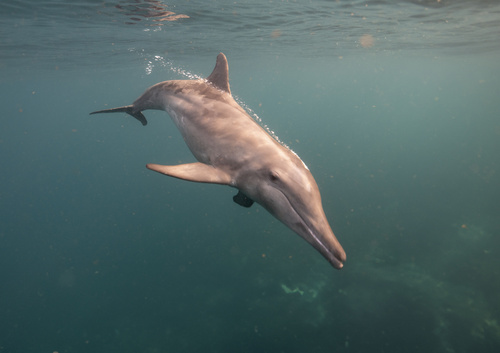
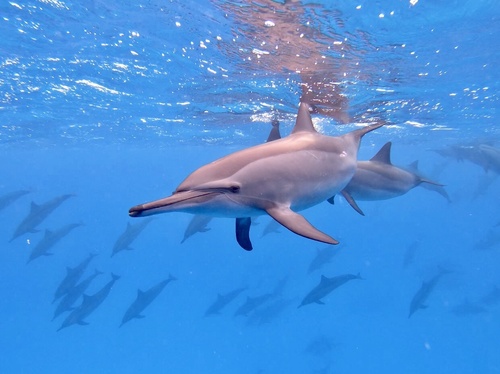
Spinner dolphins (Stenella longirostris) are small, slim-built cetaceans.
Size Measurements
Adult individuals typically measure 129–235 cm in length and have a body mass of 23–79 kg.
Distinctive Physical Features
This species has an elongated rostrum, and a triangular or subtriangular dorsal fin.
Coloration Pattern
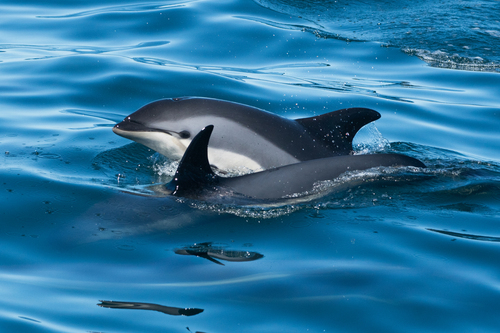
Most spinner dolphins have tripartite color patterns: the dorsal area is dark gray, the sides are light gray, and the underside is pale gray or white.
Facial Markings
A dark band runs from the eye to the flipper, which is bordered above by a thin, light line.
Geographic Variation Extent
This species shows more geographic variation in body form and coloration than other cetaceans.
Eastern Pacific Morphology
In the open waters of the eastern Pacific, these dolphins have relatively small skulls with short rostra.
Dwarf Subspecies Distribution
A dwarf form of spinner dolphin lives around Southeast Asia.
Dwarf Subspecies Coloration
In this subspecies, a dark dorsal cape softens the distinctness of their tripartite color patterns.
Offshore Subspecies Coloration
Offshore subspecies tend to have a paler cape that does not extend as far.
Male Fin Variation
In certain subspecies, some males may have upright fins that slant forward.
Eastern Pacific Male Morphology
Some eastern Pacific spinner dolphin populations have backwards-facing dorsal fins, and males can develop dorsal humps and upturned caudal flukes.
Geographic Range
The spinner dolphin inhabits nearly all tropical and subtropical waters located between 40°N and 40°S.
Typical Habitat
This species primarily lives in coastal waters, around islands, or on banks.
Eastern Pacific Habitat Exception
However, in the eastern tropical Pacific, spinner dolphins live far from shore.
Seasonal Habitat Use
Spinner dolphins may use different habitats depending on the season.
General Diet and Diving Behavior
They feed mainly on small mesopelagic fish, squids, and sergestid shrimps, and will dive 200–300 m to reach these prey items.
Hawaiian Population Feeding Habits
Hawaiian spinner dolphins are nocturnal feeders that forage in deep scattering layers, which host many prey species.
Dwarf Subspecies Diet
The dwarf spinner dolphin may feed mostly on benthic fish in reefs and shallow water.
Oahu Foraging Behavior
Off Oahu, Hawaii, spinner dolphins forage at night and cooperatively herd prey into very dense patches.
Cooperative Feeding Technique
They swim around the prey in a circle, and a pair may swim through the circle to catch prey.
Predators
Spinner dolphins are preyed on by sharks.
Additional Potential Predators
Other possible predators include killer whales, false killer whales, pygmy killer whales, and short-finned pilot whales.
Parasites
They are susceptible to both external parasites such as barnacles, and internal parasites including nematodes, trematodes, cestodes, and acanthocephalans; remoras are also found externally on the species.