About Speleomantes strinatii (Aellen, 1958)
Taxonomy and Classification
Speleomantes strinatii (Aellen, 1958) is a fully terrestrial plethodontid salamander, and one of seven plethodontid salamander species native to southern Europe.
Sexual Dimorphism and Size Variation
This species shows wide variation in adult size and strong sexual dimorphism.
Male Size
Males average around 96 millimeters in total length, and reach a maximum length of 116 millimeters.
Female Size
Females average approximately 100 millimeters in length, with a recorded maximum length of 123 millimeters.
Head Morphology
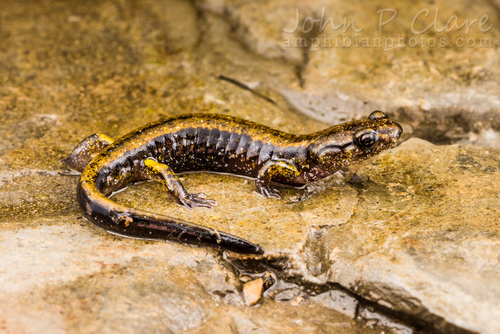
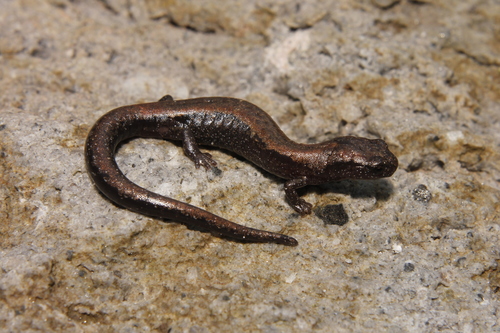
S. strinatii has an oval-shaped head, a rounded snout, and a slight overbite that is more prominent in males.
Limb and Digit Structure
Its hind limbs are slightly longer than its front limbs; each hind foot has five digits, while each front foot has only four digits.
Coloration Variability
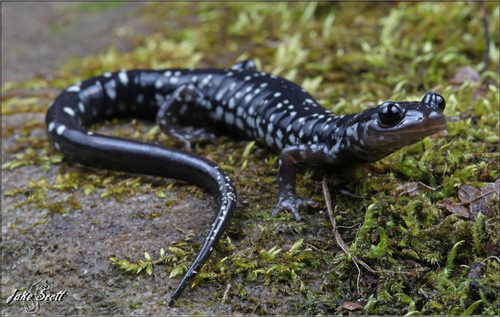
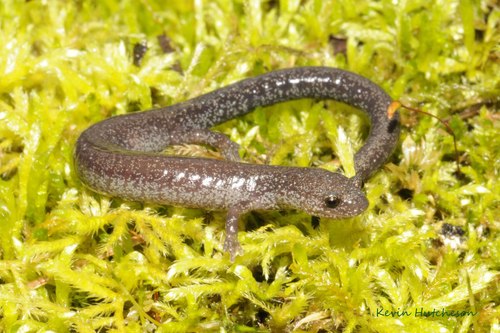
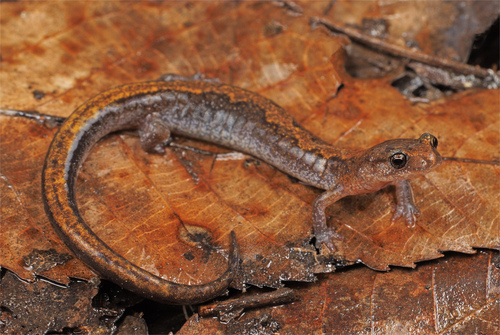
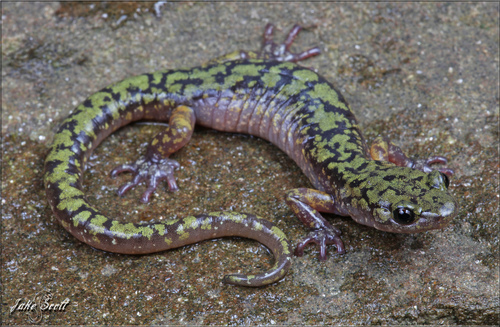
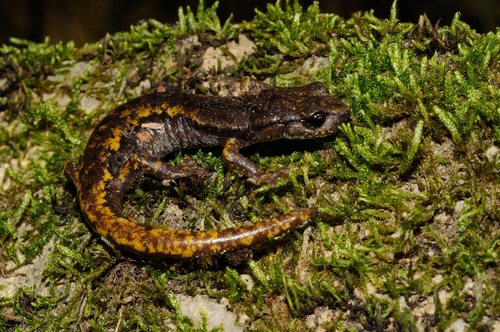
Coloration and patterning are highly variable across individuals.
Color and Pattern Morphs
Most individuals are brown and black, but some have spots, blotches, or striped reticular patterns in red, yellow, gray, or green, or exhibit a metallic sheen.
Geographic Range
S. strinatii occurs in southeastern France and northwestern Italy.
Range Extent
Its range extends from Alpes de Haute Provence to northwestern Tuscany, spanning the Maritime Alps, Ligurian Alps, and Ligurian Apennines.
Elevation Range
It is most commonly found at elevations between 0 and 2290 meters above sea level, but has been recorded at up to 2432 meters in the Maritime Alps.
Habitat Preference
The species is not an obligate cave dweller, though it prefers humid environments like the caves it is named for.
Thermal Refuge Behavior
During periods of extreme heat, individuals retreat to cooler underground spaces.
Activity and Microhabitat
S. strinatii can be active year-round, and is found in caves, crevices, and other rocky cavities from late spring through summer.