About Scorpaena scrofa Linnaeus, 1758
Species Size Status
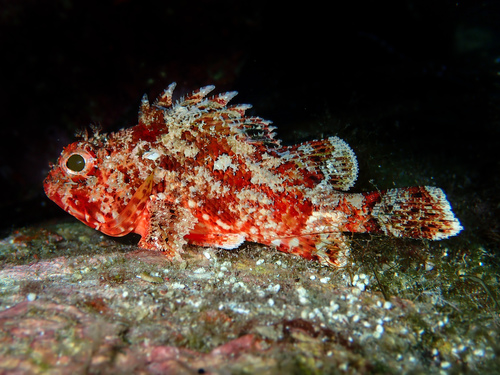
Scorpaena scrofa is the largest scorpionfish species found in the eastern Atlantic.
Body Coloration
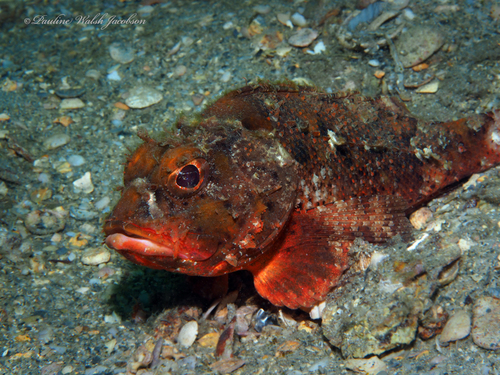
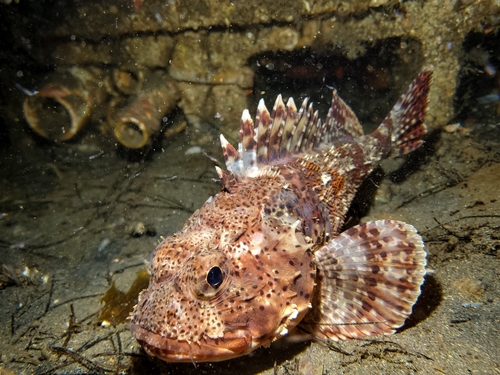
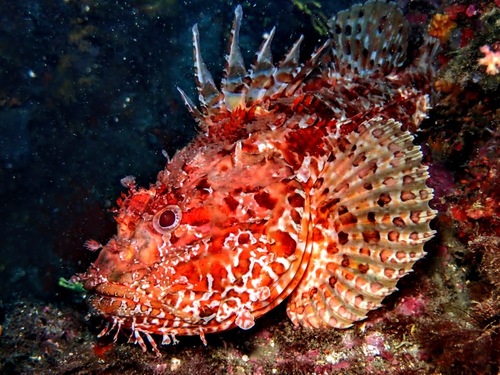
Its body coloration ranges from brick red to pale pink, marked with dark blotches.
Venom and Weight
This species has venomous spines, with a maximum recorded weight of around 3 kg (6.6 lb).
Total Length
It reaches a maximum total length of 50 cm (20 in), but most individuals grow to around 30 cm (12 in) on average.
Fin Ray and Spine Count
It has 12 dorsal spines, 9 soft dorsal rays, 3 anal spines, and 5 soft anal rays.
Distinct Markings and Appendages
A distinct dark spot commonly appears on its spinous dorsal spines between the 6th and 11th spines, and it has long supraorbital tentacles.
Mediterranean Distribution
This species occurs in the Mediterranean Sea.
Eastern Atlantic Range
It is also found in the eastern Atlantic Ocean, where it is rare around the British Isles, and ranges south from here to Senegal, the Canary Islands, and Cape Verde.
Azores Distribution
It also occurs around São Miguel Island in the Azores.
Southern African and Indian Ocean Range
An additional population exists from Namibia south and east along the coast of South Africa into the western Indian Ocean.
Distribution Gap and Related Species
Its otherwise circum-African distribution is interrupted between Guinea and Namibia, where it appears to be replaced by the related spotted-fin scorpionfish (S. stephanica).
Northern Indian Ocean Record
The northernmost confirmed record of this species in the Indian Ocean comes from the Gulf of Aqaba; based on its established occurrence elsewhere in the western Indian Ocean, researchers do not think this record stems from anti-Lessepsian migration from the Mediterranean through the Suez Canal.
Habitat and Depth Range
Scorpaena scrofa is a demersal species that lives in marine and brackish environments on rocky, sandy, or muddy bottoms, at depths between 20 m and 500 m (66 ft to 1,640 ft).
Activity Pattern
During the day, it shelters in burrows and caves, emerging at night to hunt.
Culinary Uses
This fish is a traditional ingredient in Marseille bouillabaisse and Tuscan cacciucco, and it is also widely used in Japanese cuisine.