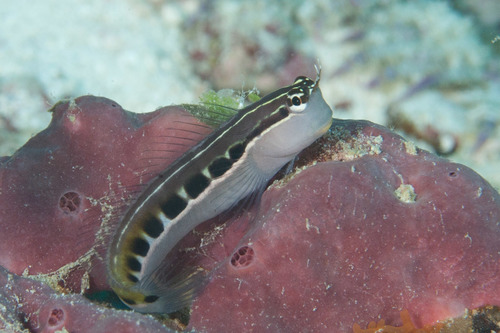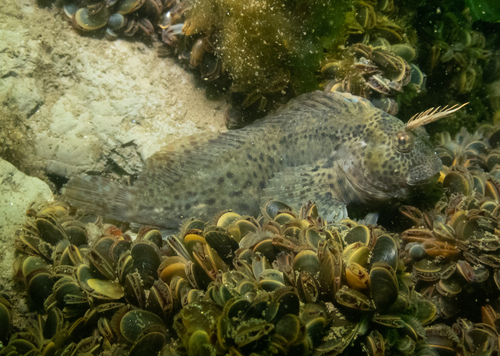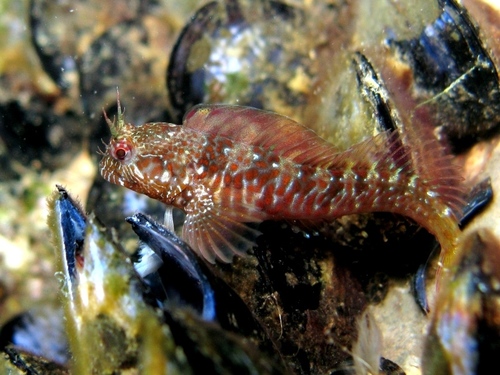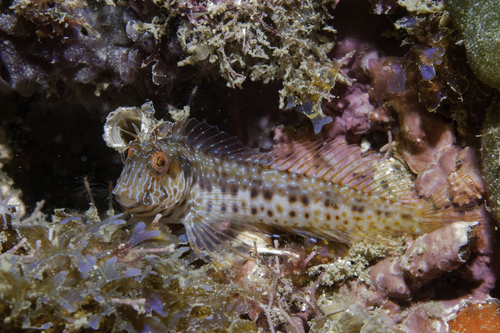
About Scartella cristata (Linnaeus, 1758)
Nomenclature and Taxonomy
Scartella cristata, first described by Linnaeus in 1758, is commonly called the molly miller or molly miller blenny. It is a species of marine ray-finned fish that belongs to the combtooth blenny family Blenniidae.
General Distribution
This species has been reported to occur in the Atlantic, Mediterranean, and northwest Pacific Oceans.
Coloration
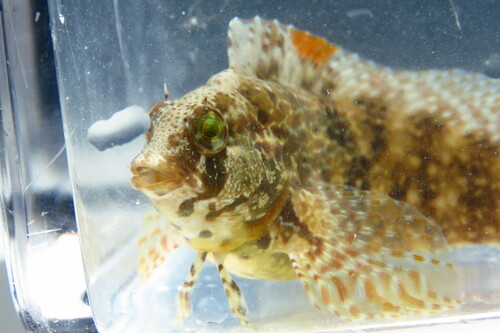
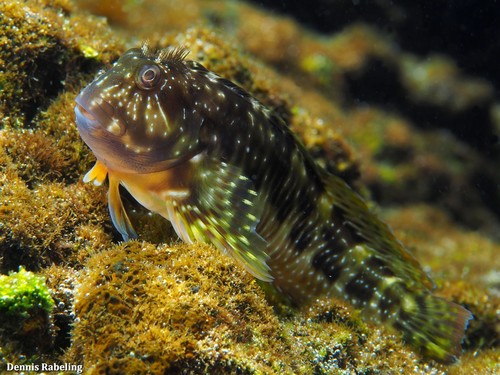
Its body and fins are covered in a mottled pattern of tan, white, and black.
Head Morphology
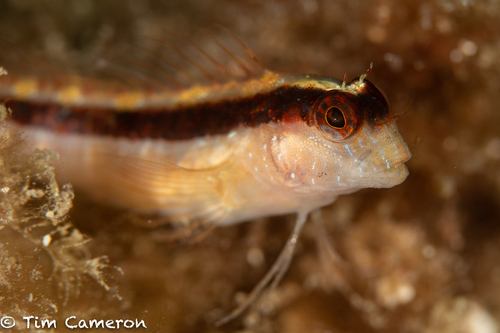
Its head is covered in short, hair-like appendages, and it has two very large eyes.
Maximum Size
This species grows to a maximum total length of 12 centimeters, or 4.7 inches.
Habitat and Depth Range
The molly miller is a tropical marine fish that inhabits rocky areas or coral reefs from the surface down to 10 meters below the surface.
Diet and Habitat Use
Coral reefs provide this species with shelter and hiding spots, as well as access to its omnivorous diet of small crustaceans and algae, which it hunts and feeds on here.
Western Atlantic Distribution
Its confirmed distribution covers the western Atlantic from Bermuda, Florida, and the northern Gulf of Mexico south to Brazil, and the eastern Atlantic from Mauritania and the Canary Islands south to Namibia.
Mediterranean Distribution
It can also be found in the southern Mediterranean, near locations including Milan, Sicily, and the Peloponnese in Greece.
Pacific Distribution Doubt
Records of this species from the western Pacific are considered doubtful, and these records may actually refer to the maned blenny Scartella emarginata.
Reproduction
This blenny is oviparous, and its eggs are demersal and adhesive.