About Saraca asoca (Roxb.) W.J.de Wilde
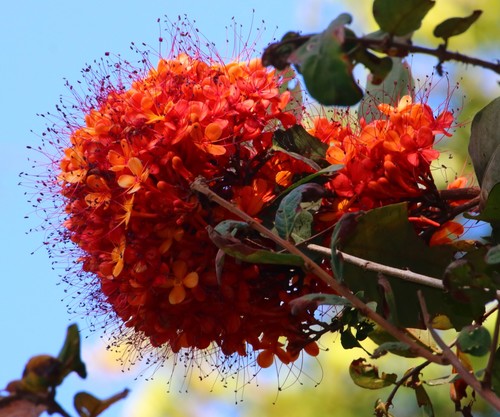
Saraca asoca, commonly known as the ashoka, is a rain-forest tree. Its original native range covers central areas of the Deccan Plateau, and the middle section of the Western Ghats in the western coastal zone of the Indian subcontinent. The ashoka is valued for its attractive foliage and sweet-scented flowers. It is a striking, small, erect evergreen tree, with deep green leaves that grow in dense clusters. Its flowering season occurs roughly from February to April. Ashoka flowers grow in heavy, full bunches. They are bright orange-yellow when blooming, and change to red before they wilt. As a wild species, the ashoka is classified as vulnerable. It is growing increasingly rare in its natural habitat, but isolated wild individuals can still be found in the foothills of the central and eastern Himalayas, scattered spots on the northern plains of India, and along the subcontinent's west coast near Mumbai. Several varieties of the ashoka tree exist. One variety grows larger and has a widely spreading growth habit. Columnar varieties are commonly grown in cultivation.