About Prosopis glandulosa Torr.
Nomenclature and Morphology
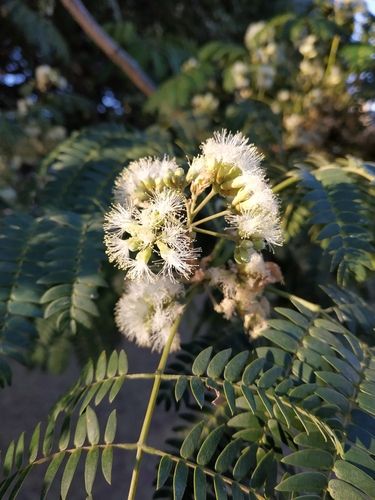
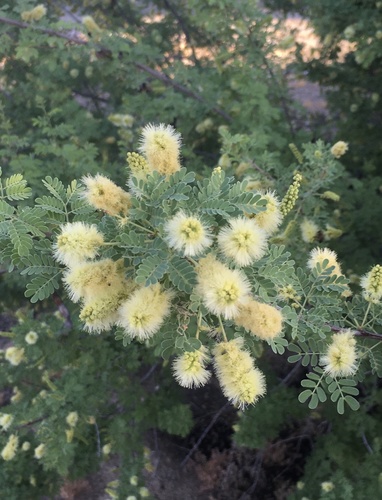
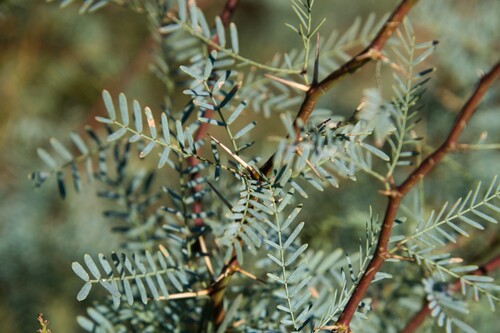
Neltuma glandulosa (formerly Prosopis glandulosa Torr.) has rounded form with large, floppy, drooping branches, feathery foliage, and straight, paired thorns on its twigs.
Size and Growth Rate
This tree typically grows 20–30 ft (6.1–9.1 m) tall, but may reach up to 50 ft (15 m), and has a medium growth rate.
Flower and Fruit Characteristics
It flowers from March to November, producing pale yellow elongated flower spikes, and bears straight yellow or maroon seedpods.
Faunal Interactions (Herbivory)
Its seeds are eaten by a variety of animals, including scaled quail; other animals such as deer, collared peccaries, coyotes, cactus mice, and jackrabbits feed on both the pods and vegetation.
Native Range Core
The plant is primarily native to the Southwestern United States and Northern Mexico.
Extended Native Range
Its range extends northeast through Texas into southwestern Kansas, Oklahoma, and northwestern Louisiana (South Central states), and west to southern California.
Habitat Plant Associations
It is a component of the Mesquite Bosque plant association community in the Sonoran Desert ecoregion of California and Arizona (U.S.) and Sonora (Mexico), as well as in the Chihuahuan Desert of New Mexico, Texas (U.S.), and Chihuahua (Mexico).
Wildlife Shelter and Food
Neltuma glandulosa shrubs and trees provide shelter and nest building material for wildlife, and produce abundant seed pods holding beans that act as seasonal food for a diverse range of birds and small mammal species.
Pollinator Support
As its common name honey mesquite suggests, it is a honey plant that supports native bee pollinator species, other insects, and cultivated honey bees.
Larval Host Role
It is also a larval host plant for the long-tailed skipper and Reakirt's blue butterflies.
Culinary Flour Use
Flour made from mesquite is high in protein, low in carbohydrates, and can be used as a gluten-free substitute for wheat flour in recipes.
Wood Smoke Flavoring Use
Within its native range, smoke from its wood is used to flavor meats cooked over mesquite fires, a practice that is particularly popular in Texas, U.S.
Invasive Range Utility
In Namibia, where it is an invasive species, it is still useful to humans: it grows extremely rapidly there, provides very dense shade, produces abundant seed pods, and supplies readily available firewood.