About Saltuarius swaini (Wells & Wellington, 1985)
Nomenclature
This species is commonly known as the southern leaf-tailed gecko, with the scientific name Saltuarius swaini (Wells & Wellington, 1985).
Coloration
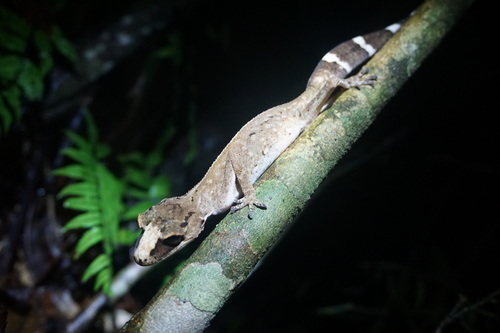
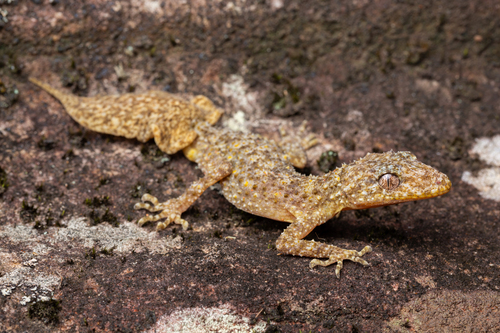
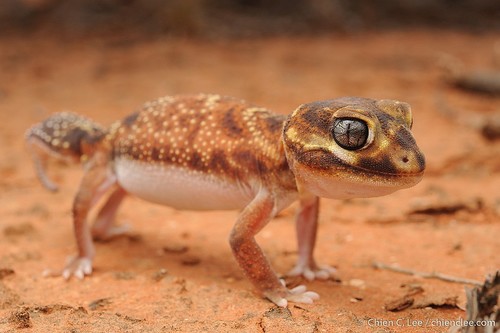
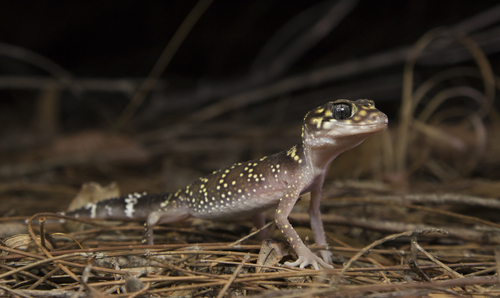
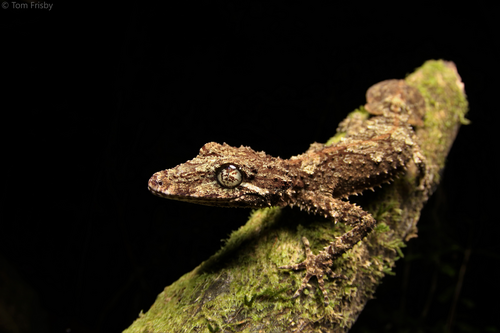
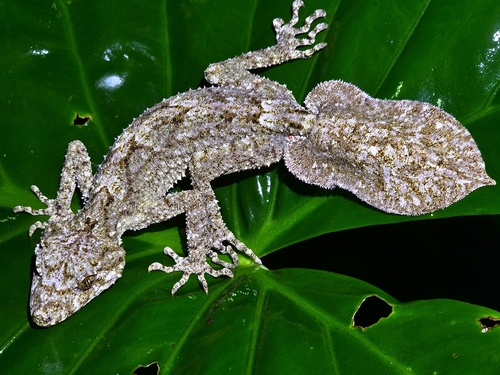
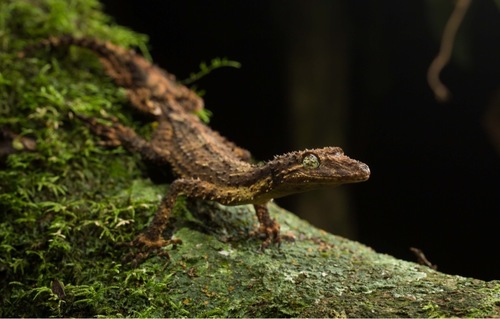
Southern leaf tailed geckos range in color from light to dark brown, with darker patterned markings across their bodies.
Snout-Vent Length
The species reaches approximately 134 mm (5.3 in) in length from snout to vent.
Tail Morphology
Their tails are broad and leaf-like, which gives the species its common name.
Anti-Predator Adaptation
When threatened or captured, these geckos can drop their tail to confuse predators.
Tail Regeneration
A new tail will eventually regenerate, but only the original tail will have tubercules and a color and pattern that matches the gecko's torso. Regenerated new tails differ noticeably from the original tail in both color and pattern.
Egg Laying
In the species' life cycle, female southern leaf-tailed geckos typically lay one or two soft-shelled eggs in late spring. These eggs can grow up to 28 mm in length.
Egg Incubation
Females bury the eggs in moist soil or leaf litter to keep them from drying out. The eggs develop without parental care, and offspring hatch approximately three months after being laid.
Hatchling Behavior
Hatchlings begin fending for themselves immediately, and are able to catch insects within just a few days of hatching.
Maturity & Lifespan
Southern leaf-tailed geckos take up to two years to reach full maturity, and can live for up to eight additional years after maturing.