About Phyllurus platurus (Shaw, 1790)
Taxonomic Naming
Phyllurus platurus (Shaw, 1790) has a snout-to-vent length of 9.5 cm, and a maximum total length of 15 cm.
Body Coloration and Texture
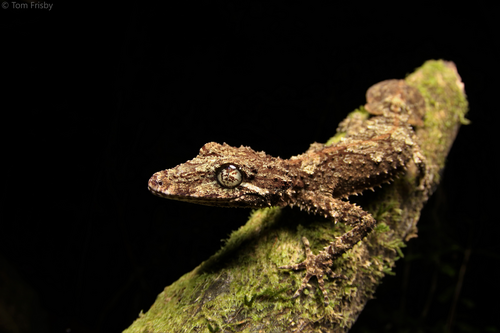
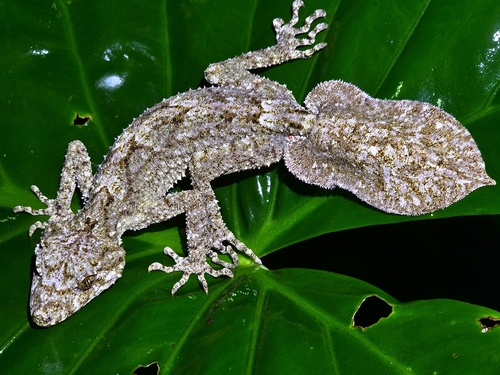
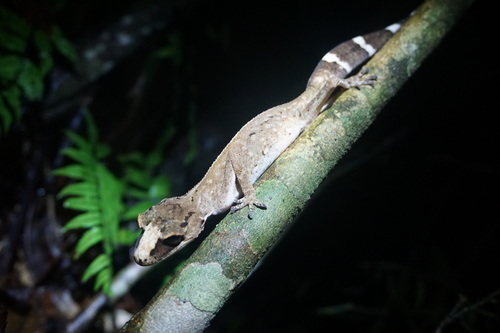
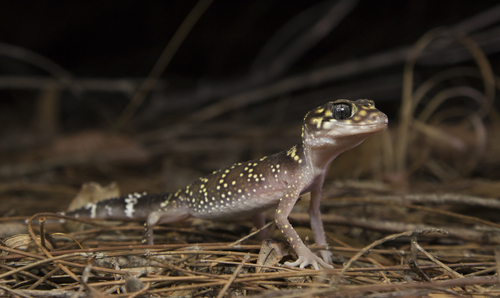
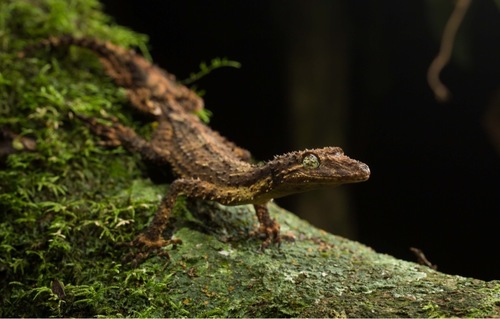
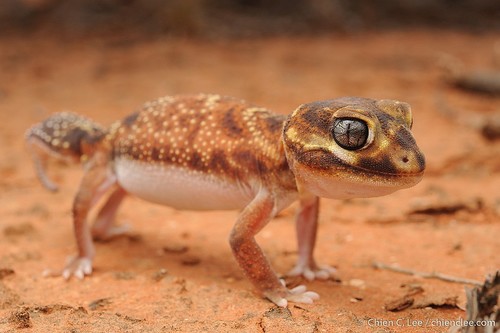
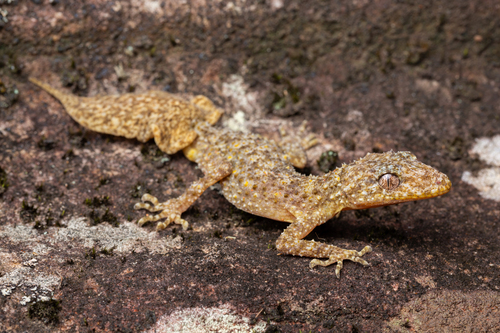
Its body is mottled brown and covered in low, bumpy tubercles.
Tail Characteristics
Original tails match the body's mottled color and have large, slightly spiny tubercles, while regenerated tails are chunkier, mottled, and smooth.
Geographic Range
This species is generally common across the greater Sydney Basin area, ranging north to Newcastle and south to the Illawarra.
Primary Habitat
It mainly inhabits rocky areas including boulders, rock faces, and small rock crevices, but can also be found naturally on trees, even in areas with no immediate rocky habitat.
Ecological Niche Range
It can occupy a wide range of ecological niches, from temperate rainforest gullies to drier sclerophyll ridge lines.
Anthropogenic Habitat Use
It has also adapted well to human-made structures, and can be found in garages, on fences, on retaining walls, and inside homes.
Reproduction
For reproduction, females lay clutches of one or two eggs, which are deposited in a crevice.
Hatching Period
Juveniles hatch eight to ten weeks after laying.