About Rhyticeros plicatus (J.R.Forster, 1781)
Common Name and Total Length
Rhyticeros plicatus, commonly called the Papuan hornbill, reaches up to 91 cm (36 inches) in total length.
Adult Male Plumage
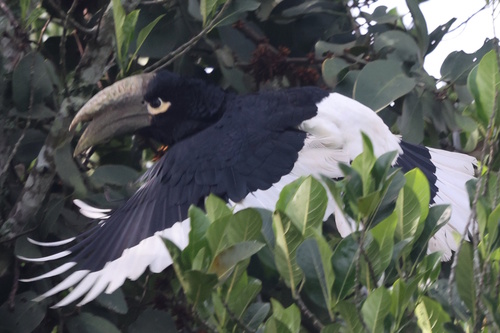
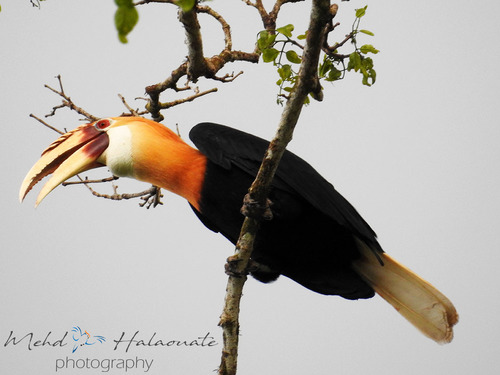
Adult males have mostly black plumage, paired with a golden or orange-buff head, white throat, and white tail.
Adult Male Eye Features
Their irises are reddish brown, and naked pale blue skin surrounds the eye.
Adult Female Plumage and Size
Females are smaller than males, and are also mostly black, with a white throat and white tail.
Adult Bill and Casque
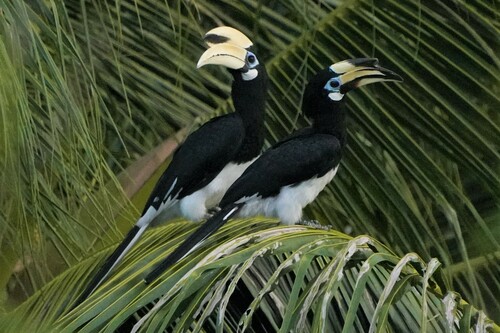
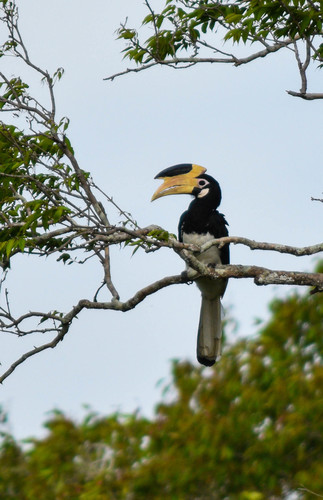
Both adult males and females have a very large horn-coloured bill and casque.
Juvenile Appearance
All juvenile birds of both sexes look similar to adult males.
Casque Fold Development
Adult Papuan hornbills develop up to eight folds on their pale casque, with the exact number depending on the bird’s age; young birds have no casque folds at all.
Flight Sound
When in flight, this species produces a loud, distinctive rushing noise with its wings, which has been compared to the sound of steam escaping a steam locomotive.
Vocalizations
It produces a range of far-carrying guttural calls, including both grunts and laughing sounds.
Habitat Elevation Range
Papuan hornbills live in lowland forests, ranging from sea level up to 1,200–1,500 m above sea level.
Geographic Distribution
Their range covers the Moluccas, New Guinea, the Bismarck Archipelago, and extends east to the Solomon Islands.
New Guinea Endemic Status
It is the only hornbill species native to New Guinea, and one of the largest flying birds found in that region.
Australian Sightings
Rare sightings have also been reported on Saibai and Boigu Islands in the Torres Strait, Queensland, Australia.
Primary Diet
The Papuan hornbill’s diet is made up mostly of fruits, particularly figs.
Supplementary Diet
Occasionally it supplements this diet with insects and other small animals.
Nest Site Characteristics
The species nests inside large tree hollows in rainforest, located between at least 18 m (59 ft) and 30 m (98 ft) above the ground.
Female Nest Confinement
Throughout incubation and the nestling period, the female remains confined entirely inside the nest cavity.
Nest Entrance Sealing
She is mostly sealed inside when the nest entrance is plastered closed with a mixture of fruit pulp and rotten wood; only a narrow opening is left, through which the male brings food to her.
Clutch Size
The typical clutch size for this species is around two eggs.