About Lophoceros nasutus (Linnaeus, 1766)
Length
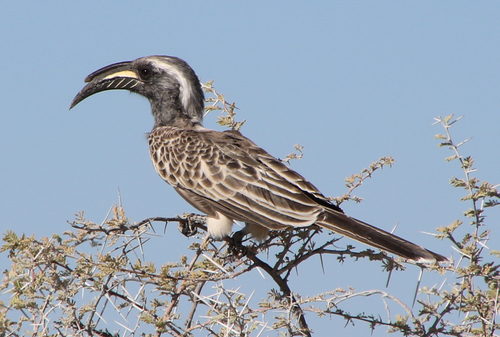
The African grey hornbill (Lophoceros nasutus) measures 45–51 cm (18–20 in) in length. It is a large bird, though it ranks among the smaller hornbill species.
Plumage Base Coloration
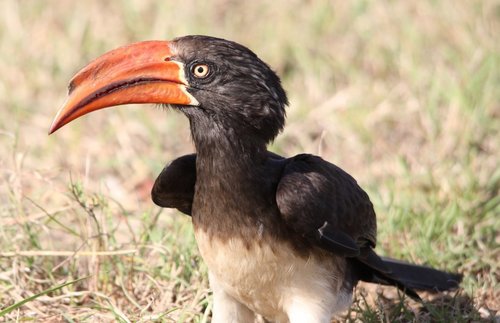
Its plumage is primarily grey and brown, with darker shades on the head, flight feathers, and long tail. A white line runs down each side of the crown, and an additional white line runs down the back, which is only visible when the bird is in flight.
Bill and Casque Morphology
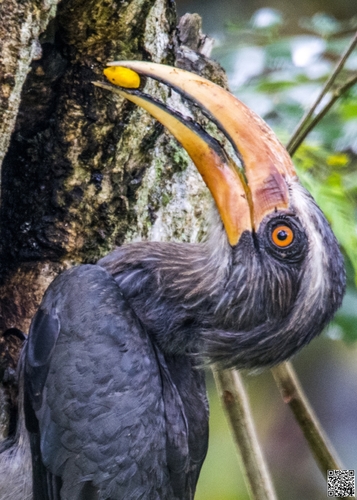
Its long, curved bill has a small casque along the upper culmen, and this casque is more prominent in males than in females. Males can be identified by a dark upper mandible with a creamy-yellow mark or horizontal stripe, while females have tricolored upper mandibles tipped with red.
Sexual and Juvenile Plumage Traits
Male and female African grey hornbills have similar plumage. Juvenile plumage does not differ greatly from that of adults, but juvenile bills are initially uniformly blackish.
Flight Pattern
This species has an undulating flight pattern.
Sympatric Similar Species
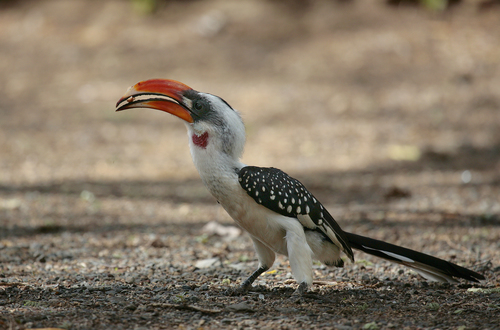
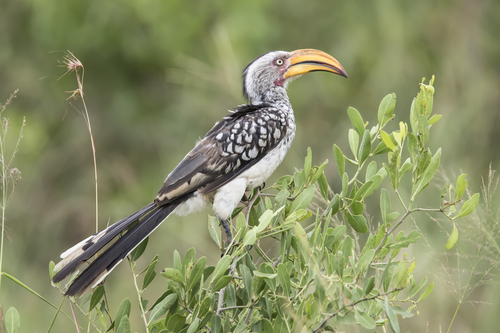
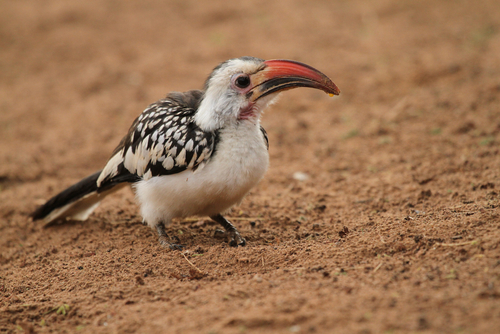
Similarly sized red-billed hornbills occupy the same savannah habitats, but they have pied plumage that distinguishes them.
Vocalization
This conspicuous species makes its presence known with a piping pee-o pee-o pee-o call.
Distribution and Habitat Preferences
The African grey hornbill is widespread across most of sub-Saharan Africa, and it prefers open woodland and savannah habitats.
Diet and Feeding Behavior
It is an omnivorous species that eats insects, fruit, and reptiles, and it feeds mainly in trees.