About Rhinacanthus nasutus (L.) Kuntze
Taxonomy and Common Names
Rhinacanthus nasutus (L.) Kuntze, commonly called snake jasmine, is a plant native to tropical Asia and the western Indian Ocean.
Growth Form
It is a slender, erect, branched, somewhat hairy shrub that grows 1 to 2 meters tall.
Leaf Characteristics
Its leaves are oblong, 4 to 10 centimeters long, and narrowed and pointed at both ends.
Inflorescence Structure
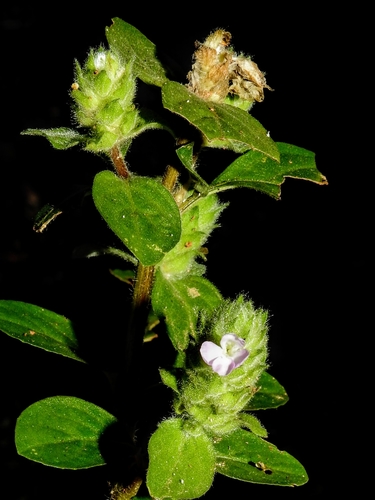
The inflorescence is a spreading, leafy, hairy panicle, with flowers usually borne in clusters.
Calyx Features
The calyx is green, hairy, and approximately 5 millimeters long.
Corolla Tube Characteristics
The corolla-tube is greenish, slender, cylindric, and around 2 centimeters long.
Upper Corolla Lip Features
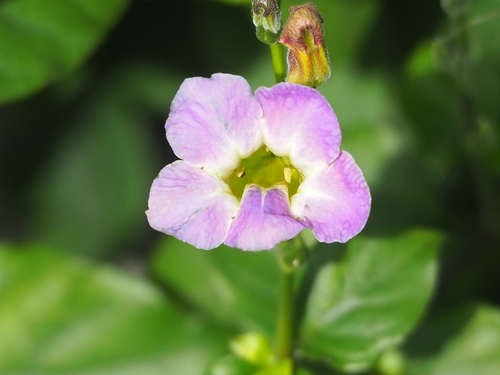
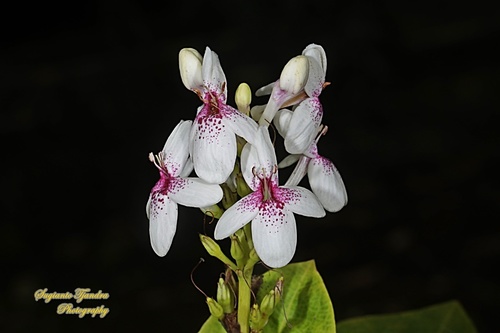
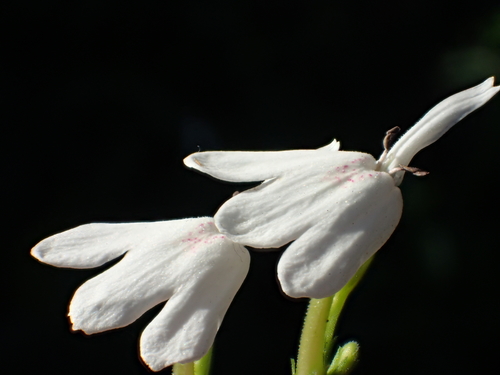
The flowers are two-lipped; the upper lip is white, erect, oblong or lance-shaped, 2-toothed at the apex, and about 3 millimeters long and 3 millimeters wide.
Lower Corolla Lip Features
The lower lip is broadly obovate, 1.1 to 1.3 centimeters long and 1.1 to 1.3 centimeters wide, 3-lobed, white, and marked with a few tiny brownish dots near its base.
Fruit Characteristics
The fruit is a club-shaped capsule that holds 4 seeds.
Traditional Use
This plant has been used in the treatment of snake bites.