About Fittonia albivenis (Lindl. ex Veitch) Brummitt
Fittonia albivenis is a creeping evergreen perennial that grows to 15 cm (6 in) high.
Leaf and Stem Features
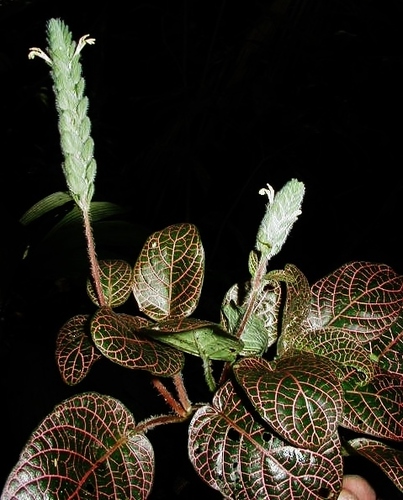
It has lush green, ovate leaves 7 to 10 cm long, with prominent veins ranging from white to deep pink, and its stems are covered in a short fuzz.
Flower Characteristics
Its flowers are small and colored white to off-white.
Cultivation Requirements
In cultivation, this species is grown as an ornamental plant, and requires fertile soil or a peat-based growing substrate.
Light and Temperature Needs
It grows best in a moist location with mild sunlight, though it does not need much light, and requires temperatures above 13 °C (55 °F).
Temperate Region Cultivation
Because of this temperature requirement, it must be grown under glass as a houseplant in temperate regions, and needs regular watering.
Watering Response
If left without water for a few days, this plant is known to wilt, or "faint", but can be easily revived by a quick watering and returns to full health.
Cultivation Tips
It is considered difficult to grow, so it is recommended to obtain an established plant from a nursery for cultivation.
Groundcover Use
Its spreading growth habit makes it ideal for use as groundcover.
Cultivar Groups
Many cultivars have been selected, which fall into two cultivar groups: the Argyroneura Group (previously classified as F. argyroneura and F. verschaffeltii var. argyroneura) with silver to white veins, and the Verschaffeltii Group (previously classified as F. verschaffeltii) with pink to red veins.
Horticultural Awards
Both of these cultivar groups have earned the Royal Horticultural Society's Award of Garden Merit.
Traditional Uses
For traditional uses, the Kofan, Siona, and Secoya tribes of the Ecuadorian Amazon use F. albivenis to treat headaches and muscular pain.
Hallucinogenic Use
Before they were introduced to Psychotria viridis, the Machiguenga people used this species' leaves as a hallucinogen, which are said to "produce visions of eyeballs."
Toothache Treatment
In the northwestern Amazon region, leaves of this species are made into a tea to treat toothache.