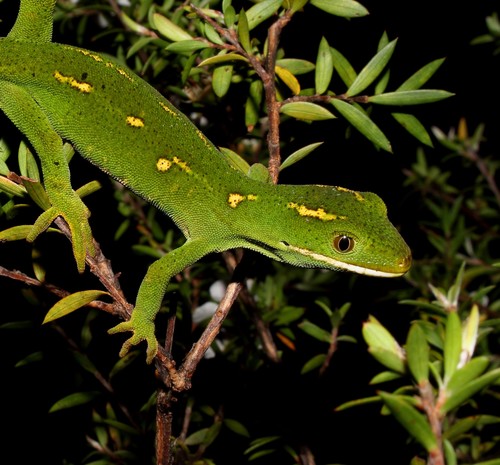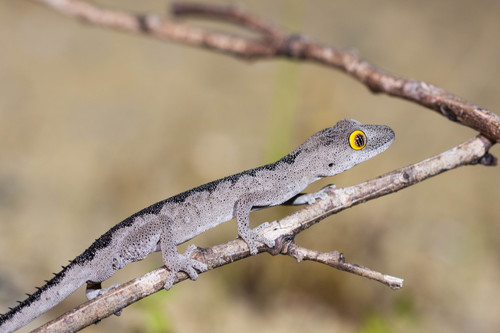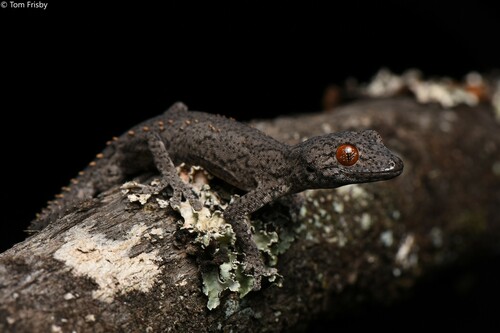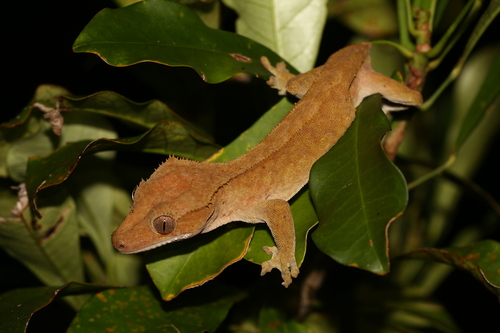
About Woodworthia maculata (Gray, 1845)
Size
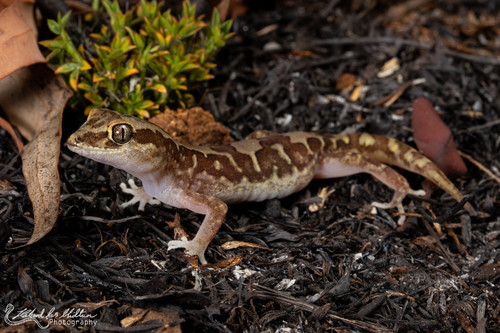
Woodworthia maculata is a small to medium-sized gecko with an average total length of 155 mm (6.1 in).
Coloration & Eye Features
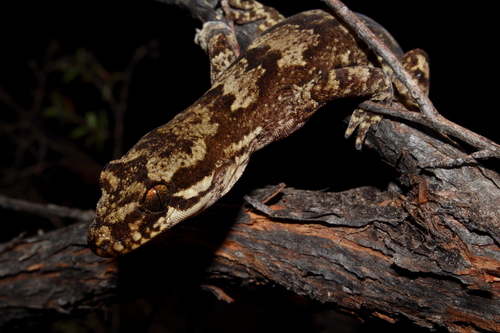
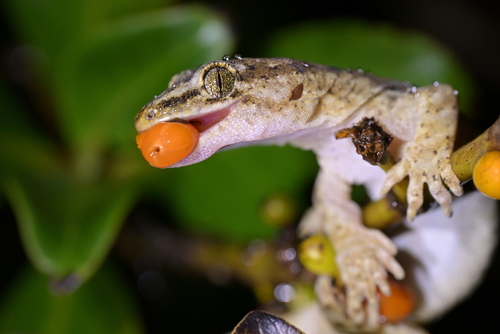
Its body is predominantly grey or brown, and its eyes are greenish brown.
Head Proportions
The distance from the snout to the eye is slightly longer than, or equal to, the distance from the eye to the ear.
Mouth & Tongue Features
Its mouth lining is pink, and its tongue is pink with a grey tip.
Sympatric Gecko Species
This species often shares the same geographic range with two other similar-looking geckos: Dactylocnemis pacificus and Woodworthia chrysosireticus.
Distinction from W. chrysosireticus
It can be distinguished from W. chrysosireticus by the absence of the black speckles that are present on W. chrysosireticus.
Distinction from D. pacificus
It differs from D. pacificus in the arrangement of the nostril scale: in W. maculata the nostril scale is not in contact with the nostril, while in D. pacificus it is.
Distinction from Korowai Gecko
W. maculata can also be told apart from the korowai gecko by both different geographic ranges and physical features: the korowai gecko occurs exclusively on the west coast of the Auckland Region, and W. maculata has longer distal phalanges than the korowai gecko.
Regional Morphological Variation (North vs South Island)
Individuals from New Zealand’s South Island are typically more slender and darker in colour than individuals from the North Island.
Overall Native Range
W. maculata is native to New Zealand, found across the North Island and the northern sections of the South Island.
Distribution in Lower North Island & Gisborne
It has a wide distribution in the lower North Island and the Gisborne District.
Distribution in Northern North Island
Further north, it is only found along the eastern Pacific coast of the Bay of Plenty, Coromandel Peninsula, Auckland Region and Northland.
Offshore Island Distribution
It also occurs on many offshore islands in the Cook Strait and Hauraki Gulf.
General Habitat Preferences
W. maculata is primarily terrestrial but is often found in trees, and only occurs within forested areas.
Rocky Habitat Usage
A 2011 study by H. Frank and DJ Wilson found that this species is also commonly found in rocky areas with cracks and crevices that lack permanent shade cover.
Grazed Area Occupancy
Very few individuals have been detected in heavily grazed areas with no remaining grass cover.
Hauraki Gulf Population Traits
In the Hauraki Gulf, these geckos are commonly found on stony beaches, are smaller in size, and have crenulated longitudinal stripes.
Coromandel & Central North Island Population Traits
Populations in the Coromandel and central North Island generally live in lowland forests, grow much larger, and display a variety of colourations.
Southern North Island Population Traits
Populations in the Southern North Island are roughly two-thirds smaller than nearby populations and exhibit sexual dimorphism.
Cook Strait Population Traits
Populations found around the Cook Strait and adjacent mainland show a mix of characteristics common to the typical Northern and Southern forms.
Lifespan Overview
W. maculata is known to have a characteristically long lifespan.
Early Lifespan Estimates
Early estimates placed its typical lifespan at 20 years, and some individuals have been aged at 29 years.
Recent Lifespan Estimate
A more recent study proposes that this species may live up to 37 years in the wild.
Lifespan Evolution Rationale
Researchers have suggested that the species’ long lifespan evolved to balance its slow reproductive rate.