About Pygopus nigriceps (Fischer, 1882)
Adult Total Length
Adults of the hooded scaly-foot (Pygopus nigriceps) range from 45 to 55 cm in total length, with an average snout-to-vent length of 22.7 cm. Females are typically larger than males.
Limb Structure
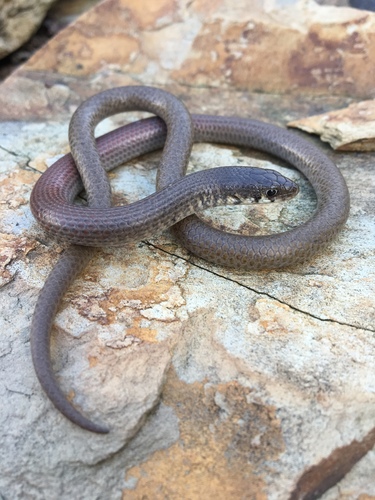
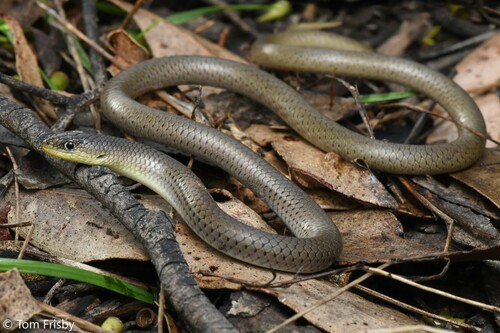
This species has no trace of forelimbs, while hind limbs are reduced to small, paddle-shaped scaly flaps. These modified hind limbs do not assist with movement.
Scale Characteristics
The species' scales are smooth and weakly glossed. It usually has 120 or more ventral scales arranged in a paired series; these ventral scales are much larger than the adjacent body scales.
Body Coloration
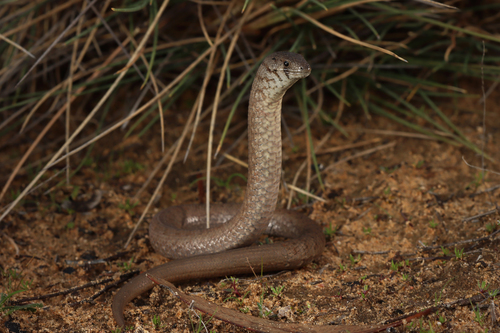
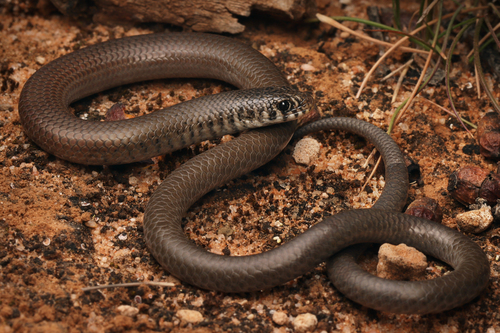
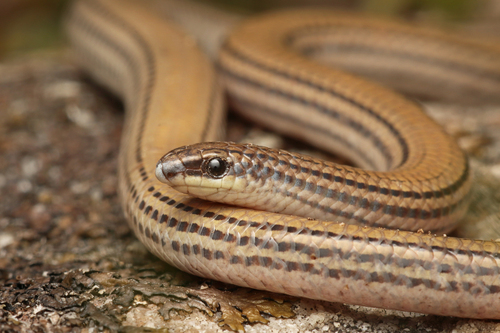
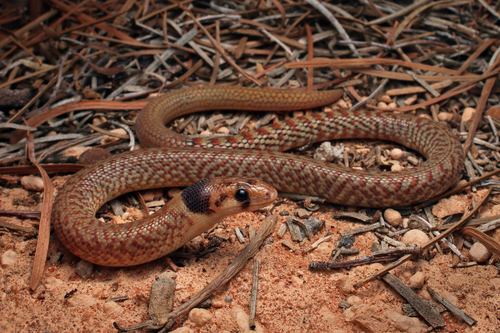
Body color ranges from brown to reddish-brown: specimens from desert regions are usually more orangish, while other individuals are duller brown. The underside is white.
Body Pattern
The species has little to no distinct body pattern, apart from oblique dark lines that converge along the mid-dorsal line.
Head and Neck Markings
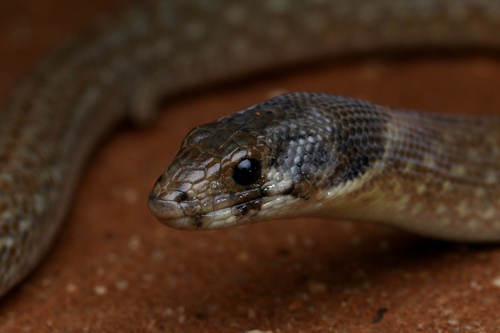
It is characterized by black bands across the head and neck that form a hood-like marking: this marking includes a band that crosses the eyes and extends onto the lips, a dark smudge on the nostrils, and a broad band across the neck. These dark bands may fade or merge together as individuals age.
Eye and Sensory Features
The well-developed eye has no eyelid, and is instead covered by a transparent spectacle. The species can lick this spectacle clean using its broad, fleshy tongue, and it retains conspicuous ear openings.
Species Diagnosis
Pygopus nigriceps can be distinguished from the four other species in the genus Pygopus by the fact that its nostril contacts the first upper labial scale.
Geographic Distribution
The hooded scaly-foot is found across most of Australia, excluding the wetter regions of southern Australia and Tasmania.
Activity Pattern
It is mostly nocturnal, an adaptation to the generally hot weather of its range, though it will forage during the day in cooler conditions.
Habitat Use Vertical Range
It is primarily a terrestrial surface-dwelling species, but individuals have been observed up to 1.5 m above ground in vegetation.
Lifespan
Captive hooded scaly-foots have lived up to seven years, but little information is available about the lifespan of wild individuals.
Habitat Preferences
This species occurs in a range of habitats, and favors dry open habitats. It is found particularly in sandy deserts vegetated with Triodia, but also occurs in open woodlands and shrublands.
Shelter Sites
It shelters under rocks and woody debris, in grass tussocks, soil cracks, abandoned burrows, insect holes, and termite mounds.
Reproductive Traits
Hooded scaly-foots are oviparous, and lay two parchment-shelled eggs per clutch. Species in the genus Pygopus have been recorded laying eggs communally, and known incubation periods for Pygopus nigriceps range from 66 to 77 days.
Male Secondary Sexual Traits
In addition to the hind limb flaps, males have modified spine-like scales called pelvic spurs, which are thought to help males grip females during mating.