About Delma australis Kluge, 1974
Nomenclature and Baseline Coloration
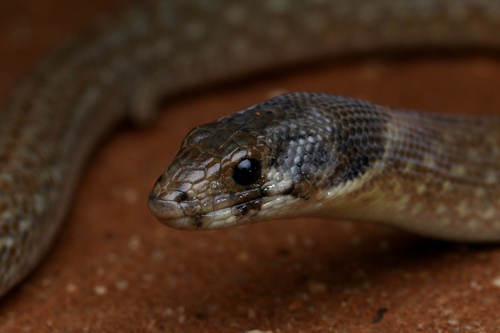
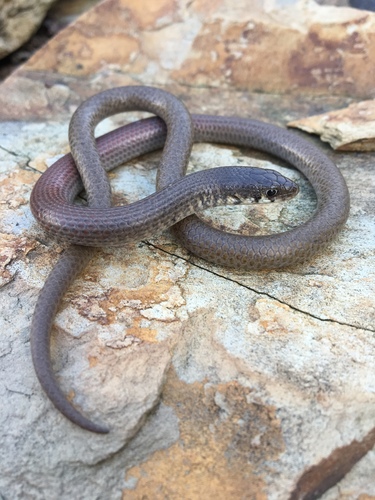
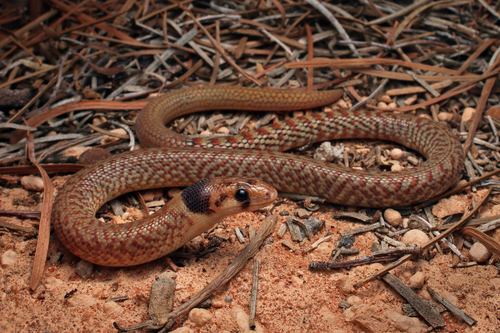
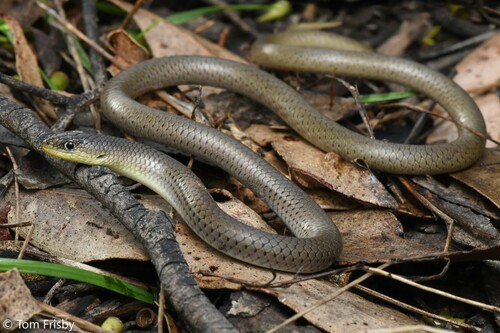
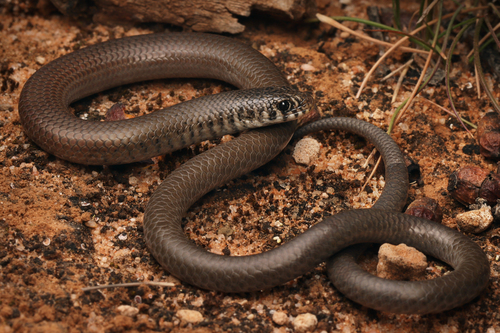
Delma australis Kluge, 1974, commonly known as the marble-faced delma, is brown to reddish brown on its upper body, with a greyish underside and greyish lips. Its common name comes from its grey-marble appearance.
Distinctive Morphological Features
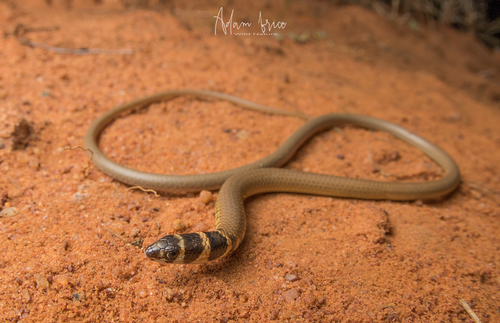
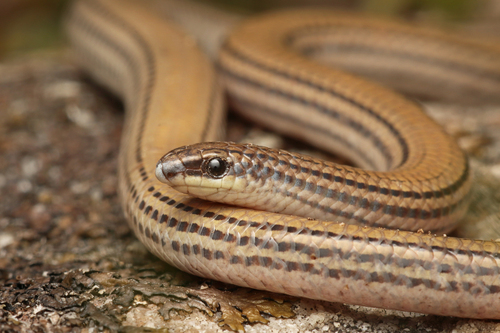
Distinctive features include black ventral bars on the top and sides of the head, a short rounded snout, and a tail that is twice the length of its body.
Geographical Variation in Populations
Geographical variation has been observed across marble-faced delma populations: the intensity of head patterning and head shape can vary between populations from different regions. Variation found in Western Australian populations has led to suggestions that multiple subspecies of D. australis may exist, but further sampling is required to confirm if these observed differences are taxonomically significant.
General Distribution
The marble-faced delma is widely distributed across southern Australia. It inhabits semi-arid to arid areas in southern Western Australia, most of South Australia, southern Northern Territory, north-west Victoria, and south-west New South Wales.
Primary Habitat Type
It is a terrestrial, land-dwelling species most commonly found in spinifex grass.
New South Wales Regional Occurrence
In New South Wales, known populations of the marble-faced delma occur in the Broken Hill Complex Interim Biogeographic Regionalisation of Australia Region, in some sub-regions of the Cobar Peneplain Interim Biogeographic Regionalisation of Australia Region, and in sub-regions of the Murray Darling Depression Interim Biogeographic Regionalisation of Australia Region.
Occupied Vegetation Formations
Within these areas, the species occurs across a range of vegetation formations and classes, including the Stony Desert Mulga Shrublands (an Acacia sub-formation), Dune Mallee Woodlands (a shrubby sub-formation), and Sand Plain Mallee Woodlands. All of these occupied areas are classified as arid to semi-arid warm zones.
Activity Patterns
The marble-faced delma is officially classified as diurnal, though individuals have been observed active at night, around dawn, and around dusk.
Microhabitat and Locomotion
Individuals are most often found in leaf litter, under rocks, or within spinifex. While it is a terrestrial species, it can successfully climb hummock grass and the branches of small shrubs.
Reproductive Strategy
The marble-faced delma reproduces sexually, and is oviparous, meaning it lays eggs. Females produce a clutch size of 2 eggs.
Egg Development and Hatchling Traits
Eggs hatch after approximately 70 days. Hatchlings are precocial: they hatch in an advanced developmental state, and are able to feed and move independently immediately after hatching.