About Pteropus scapulatus Peters, 1862
Taxonomic Classification
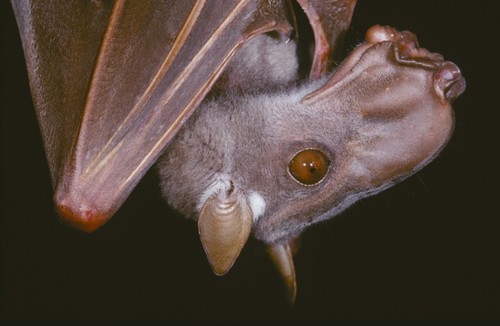
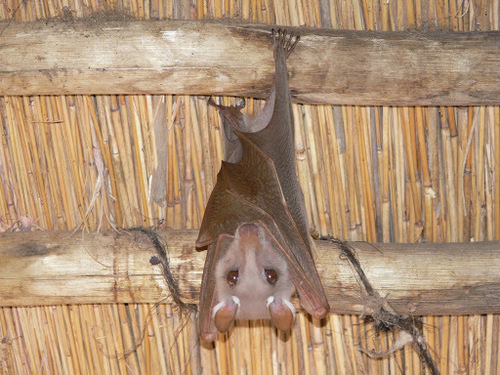
Pteropus scapulatus is a flying mammal in the pteropodid family, a group of frugivorous bats with simple dog-like heads that often roost closely together in large groups.
Distinguishing Trait (Tail)
Like other Australian flying-foxes, it lacks a tail, which distinguishes it from other Australian bats.
Body and Limb Measurements
Its extended wing has a forearm length of 120 to 150 millimetres, combined head and body length measures 125 to 200 mm, and ear length from base to tip is 29 to 40 mm; these ears are quite prominent for an Australian flying-fox.
Weight
Individuals weigh between 300 and 600 grams, for an average mass of 450 grams.
General Fur Coloration
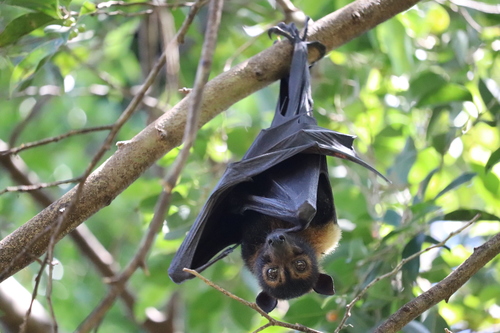
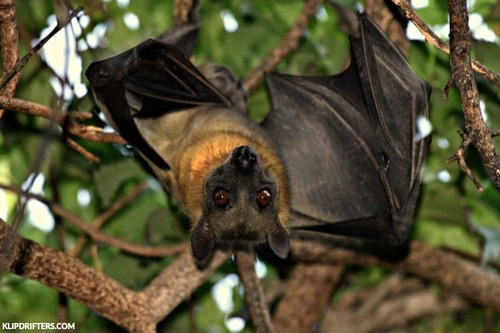
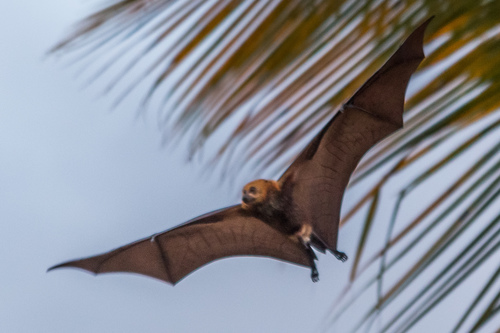
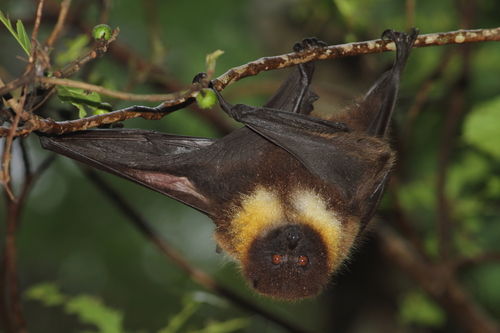
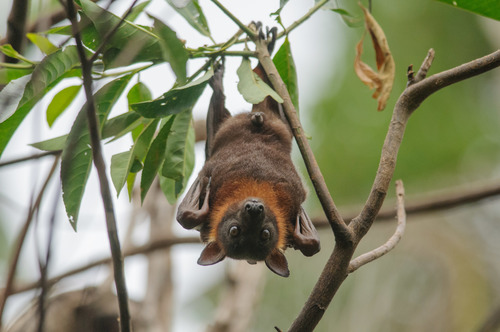
Its fur coat is reddish brown: short fur covers most of the body, and is sparser on the lower leg.
Head Fur Coloration
The fur on its head ranges from dark to light grey.
Shoulder and Upper Back Markings
Creamy-white hairs may appear on the shoulders, or a pale yellowish patch may be found between the shoulders.
Wing Membrane Characteristics
The wing membrane (patagium) is pale brown and somewhat translucent when the bat is in flight.
Vocalizations
Pteropus scapulatus produces an abrupt 'yap' sound, along with a range of high-pitched screeches, squeals, and twittering noises.
Distinction from Other Australian Flying-Foxes
It can be distinguished from other Australian flying-fox species: its bare legs, reddish fur, and paler, near-transparent wings set it apart from the grey-headed Pteropus poliocephalus and the larger black fruit-bat Pteropus alecto.
Closely Related Species
It closely resembles Pteropus macrotis, which occurs at and north of Boigu Island.
General Distribution Range
Pteropus scapulatus has a wide distribution across northern and eastern Australia, where it occupies coastal and sub-coastal regions.
Western and Eastern Range Extent
Its western range is restricted to coastal areas of northwest Australia, reaching as far south as Shark Bay, and extends through the tropical and subtropical areas of the north and east into New South Wales and Victoria.
South Australian Range
It only occasionally extends its range into the southeast of South Australia.
New Zealand Sightings
Sightings of P. scapulatus in New Zealand are considered accidental.
Southern and Western Continental Range Limit
The range of Australian pteropodid bats is bounded by areas of lower rainfall and cooler temperate climates, so this species and other flying-foxes are not found in the south and west of the Australian continent.
Roosting and Foraging Habitat
The roosting camps of P. scapulatus are located close to streams; the bats leave these camps at night to forage in woodlands and forests across temperate to tropical regions.
Mataranka Hot Springs Colony
A well-known colony exists at Mataranka Hot Springs, though authorities have discouraged the bats from inhabiting the site due to the strong odour of their camps.
Ecological Role as Pollinators
Colonies of P. scapulatus are important contributors to woodland ecology, acting as major pollinators of trees that produce nectar at night.
Murray Darling Basin Foraging
In productive seasons, the bats also visit eucalypts and other trees in riparian zones of the Murray Darling Basin.
Brisbane Summer Foraging
During the austral summer, colonies join a diverse community of other bat species around the Brisbane cityscape to feed on the blossoms of the pink bloodwood Corymbia intermedia.
Shared Roost Sites with Grey-Headed Fruit-Bat
Along the Brisbane River, they share many roost sites with the grey-headed fruit-bat, P. poliocephalus.
Indooroopilly Island Roost Site
The most notable shared site is Indooroopilly Island, a long-established bat campsite where the bats can be seen flying around the area after dusk.
Ipswich Colony
Pteropus scapulatus also holds a well-established colony in Ipswich, Queensland, close to the state capital of Brisbane.