About Gompholobium pinnatum Sm.
Nomenclature and Growth Habit
Gompholobium pinnatum Sm., commonly called pinnate wedge-pea, is an ascending to erect, often sprawling shrub. It typically grows to a height of 10–40 cm (3.9–15.7 in), and has thin, more or less hairless stems.
Leaf Structure
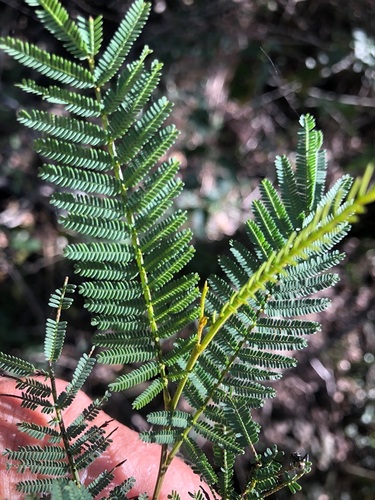
Its leaves are pinnate, with 15 to 31 narrow linear to narrow elliptic leaflets. Each leaflet is 6–12 mm (0.24–0.47 in) long and 0.5–1.5 mm (0.020–0.059 in) wide, with a tiny pointed tip and edges that are curved down or rolled under.
Flower Arrangement
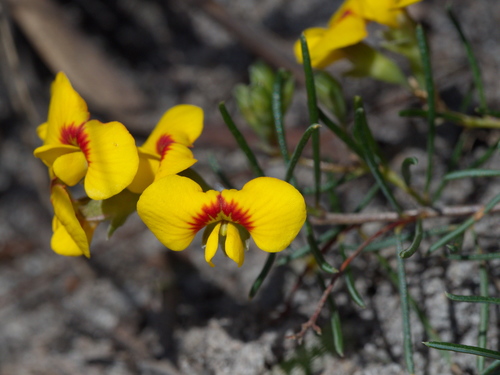
The flowers are arranged in small clusters at the ends of branchlets, with each flower borne on a stalk 5–10 mm (0.20–0.39 in) long. The sepals are 5–6 mm (0.20–0.24 in) long.
Petal Characteristics
The standard petal is yellow with red markings and 6–10 mm (0.24–0.39 in) long, the wing petals are yellow, and the keel is green.
Flowering Period and Fruit
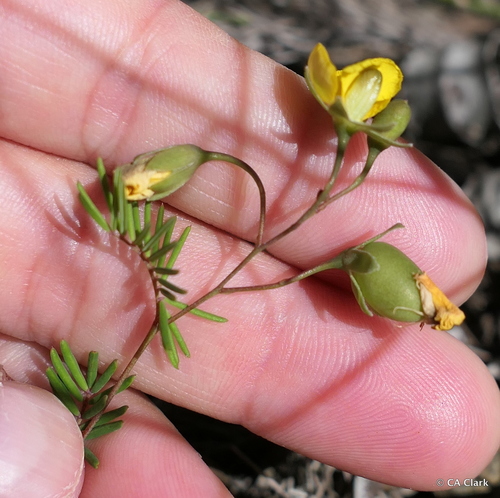
Flowering takes place in spring and summer, and the fruit is an oval or spherical pod 6–10 mm (0.24–0.39 in) long.
Habitat
This species grows in forest, woodland, heathland and shrubland, often in wet locations.
Distribution
It is widespread on the coast and nearby ranges of Queensland and New South Wales, extending south as far as Jervis Bay.