About Lotus pedunculatus Cav.
Nomenclature
Lotus pedunculatus Cav., formerly known as Lotus uliginosus, has common names including big trefoil, greater bird's-foot-trefoil, and marsh bird's-foot trefoil.
Taxonomy
It belongs to the pea plant family, Fabaceae.
Growth Habit
This is a herbaceous perennial species that grows across Europe in damp, open sites.
Size Comparison to Congeners
As one of its common names hints, it is larger than other related species in the Lotus genus.
Vegetative Size Measurements
It reaches 20–80 cm (8–30 in) tall, with leaflets measuring 10–25 mm (0.4–1 in) long and 10–20 mm (0.4–0.8 in) broad.
Flower Characteristics
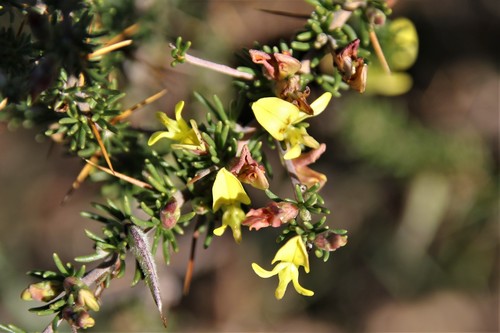
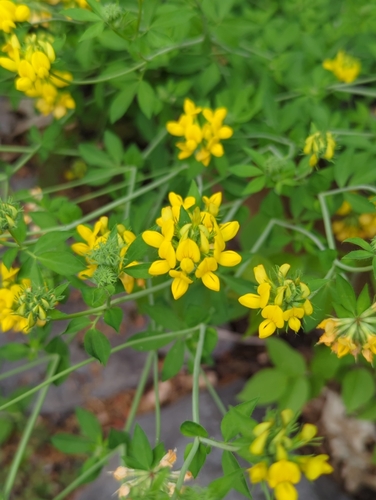
Five to twelve golden-yellow flowers, each 10–18 mm (0.4–0.7 in) long, grow in an umbel at the tip of an upright stem.
Distinguishing Morphological Features
Unlike related Lotus species, its stem is always hollow, and its sepal tips curve backward, forming a distinct "green star" at the end of unopened flower buds.
Flowering Period (UK)
In the United Kingdom, the species peaks in flowering during June and July.
Introduced Distribution (US)
It has been introduced to the western United States, where it is now a common weed in irrigated lawns and drained waste areas.
Invasive Status (US)
It is considered a problematic garden invader across the western U.S., and as a nitrogen-fixing legume, it encourages the growth of other weeds.
Habitat Preferences
It grows in a broad range of neutral, damp, open habitats, including specific fen-meadow plant associations like the Juncus subnodulosus-Cirsium palustre fen-meadow.
Host Plant Role
It also acts as a host plant for oviposition by the wood white butterfly, Leptidea sinapis.