About Podilymbus podiceps (Linnaeus, 1758)
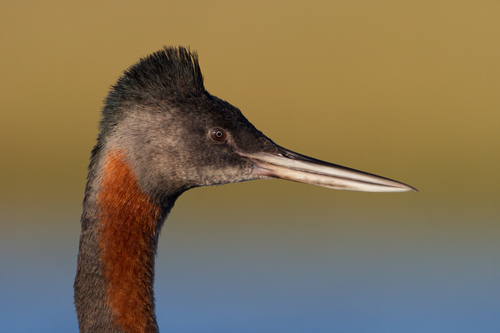
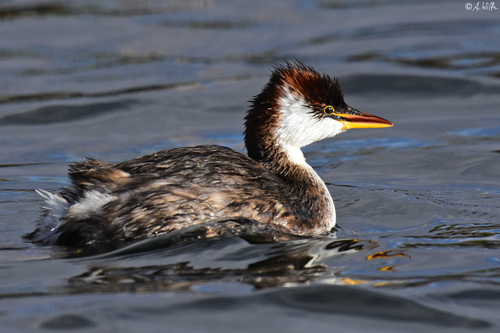
Pied-billed grebes (scientific name: Podilymbus podiceps (Linnaeus, 1758)) are small, stocky water birds with short necks.
Size Measurements
They measure 31–38 cm (12–15 in) in length, have a wingspan of 45–62 cm (18–24 in), and weigh 253–568 g (8.9–20.0 oz).
Plumage Camouflage
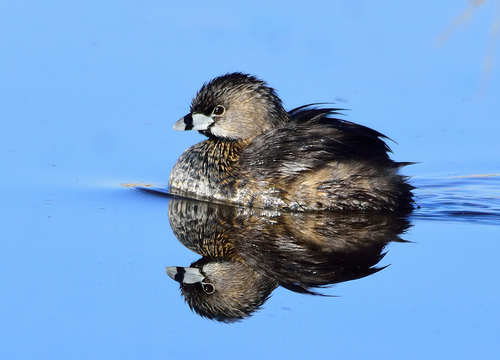
Their plumage is mainly brown, with a darker crown and back; this brown coloration acts as camouflage in the marsh habitats they occupy.
Wing Feather Trait
Unlike other grebes, they have no visible white plumage under their wings when flying.
Distinctive Bill
They have white undertail feathers, and a short, blunt, chicken-like light grey bill that is circled by a broad black band during the summer, which gives the species its common name.
Summer Adult Markings
In summer, their throat is also black. There is no sexual dimorphism between males and females.
Juvenile Appearance
Juveniles have black and white stripes and resemble winter adults more closely.
Foot Structure
This species does not have webbed feet; instead, each toe has lobes extending from its sides that enable easy paddling.
Locomotion Limitations
Their feet are positioned very far back on their body, so their feet trail behind the body when flying, and they cannot walk on land.
Least Grebe Comparison
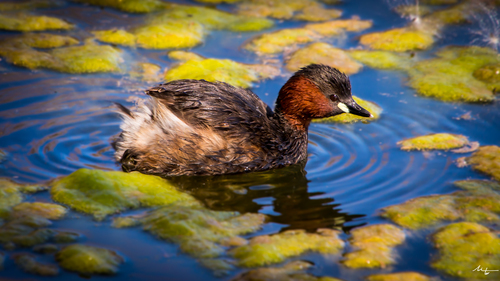
Pied-billed grebes can be confused with least grebes, but least grebes are much smaller and have thinner bills.
Eared and Horned Grebe Comparison
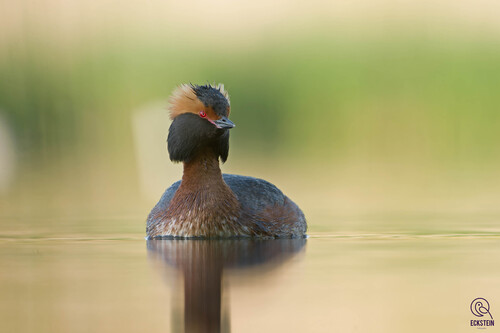
Other similarly sized grebes, such as the eared grebe and horned grebe, have very distinct plumage: both have much more colorful breeding plumage with rufous sides, golden crests along the sides of the head paired with contrasting slaty coloration (and a rufous neck for horned grebes); in winter, both eared and horned grebes have mixed slaty and cream pied plumage and red eyes.
Duck Comparison
Inexperienced observers may confuse pied-billed grebes with ducks due to their duck-like habits, but pied-billed grebes have a different bill shape (shorter, pointed at the tip, and flattened along the sides), as well as shorter necks and bodies than ducks.
Closest Relatives
Unlike ducks, the closest living relatives of the grebe family are flamingos.
For distribution and habitat
Core Year-Round Range
pied-billed grebes are most commonly found year-round throughout North America, Central America, the Caribbean, and South America.
Breeding Season Range
During the summer breeding season, they are most prevalent in central, northern, and northeastern Canada.
Migration Triggers
Individuals living in areas where water freezes in winter will migrate.
Migration Timing
Migrating birds generally join year-round resident populations in September and October, they migrate at night, and most migratory birds depart again in March or April.
Vagrant Sightings
The species makes occasional appearances in Europe and Hawaii.
United Kingdom Records
As of 2019, there have been 45 recorded sightings of visiting pied-billed grebes in the United Kingdom, generally occurring between October and January.
Hybrid Breeding Event
One individual in England bred with a little grebe, producing hybrid young.
Galapagos Record
It is the only grebe species recorded to have visited the Galapagos Islands.
General Wetland Habitat
Pied-billed grebes inhabit freshwater wetlands with emergent vegetation like cattails, and are occasionally found in salt water.
Seasonal Habitat Variation
During the breeding season, they are found in emergent vegetation near open water; in winter, they are primarily found on open water because they do not need to maintain nests.
Water Preference
They may live near rivers but prefer still water.
Elevation and Man-Made Habitats
They can be found at higher elevations during migration, and will breed in restored and man-made wetlands.
Lifespan
The typical lifespan of a pied-billed grebe is approximately 10–12 years.