About Tachybaptus ruficollis (Pallas, 1764)
The little grebe, Tachybaptus ruficollis, is a small water bird with a pointed bill.
Summer Adult Plumage
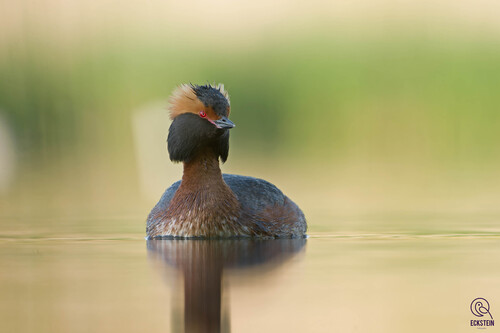
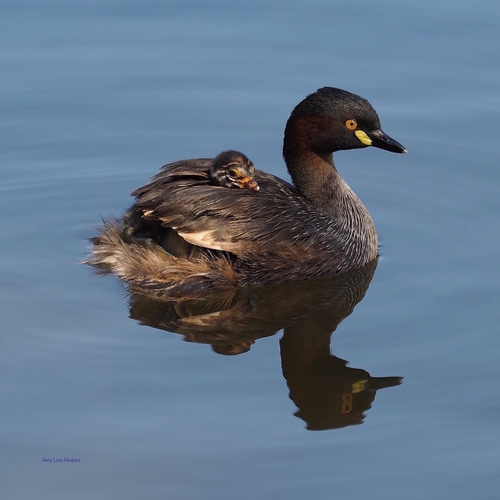
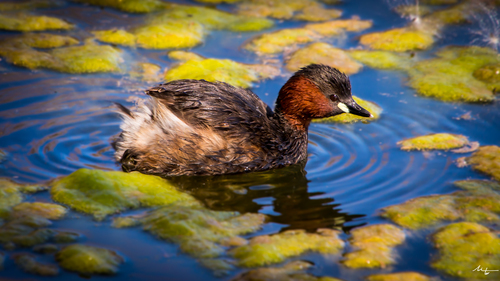
Adult little grebes are easily recognizable in summer: they are mostly dark on their upper bodies, with rich rufous coloring on the neck, cheeks, and flanks, and a bright yellow gape.
Non-Breeding And Juvenile Plumage
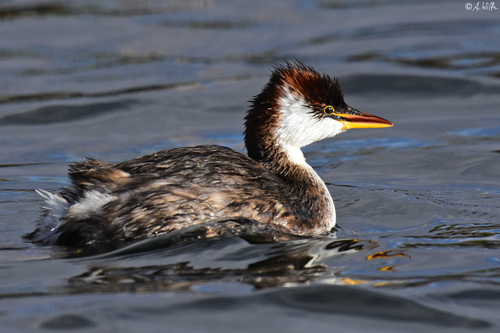
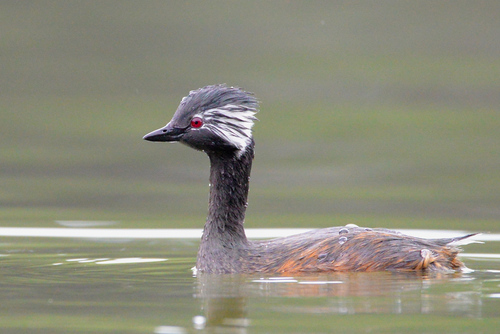
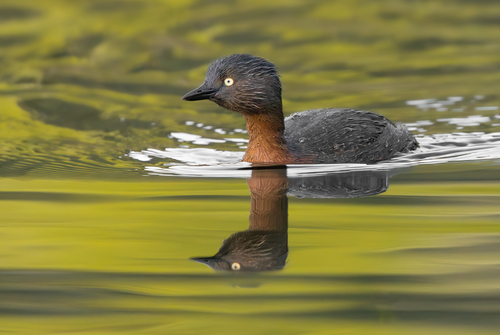
In non-breeding plumage and for juvenile birds, the rufous color is replaced by a dull brownish grey. Juvenile birds have a yellow bill with a small black tip, and black and white streaks on the cheeks and sides of the neck.
Bill Maturation
As juveniles mature, their yellow bill darkens, and it eventually turns black when they reach adulthood.
Winter Identification Features
In winter, this species can be easily identified by its size, buff plumage, darker back and cap, and characteristic "powder puff" rear end.
Breeding Call
The little grebe's breeding call, which may be given singly or as a duet, is a repeated trilled weet-weet-weet or wee-wee-wee that sounds like a horse whinnying.
Breeding Range And Habitat
The little grebe breeds in small colonies in heavily vegetated areas of freshwater lakes across Europe, most of Asia extending south to New Guinea, and most of Africa.
Migratory Behavior
Most individuals move to more open or coastal waters during winter, but the species is only migratory in parts of its range where bodies of water freeze. Outside of the breeding season, it moves into more open water, and can occasionally even be found on the coast in small bays.