About Podarcis waglerianus Gistel, 1868
Species Nomenclature and Size
Podarcis waglerianus Gistel, 1868, commonly called the Sicilian wall lizard, grows to approximately 7.5 cm (3 in) in length, with males being slightly larger than females.
Dorsal Base Coloration
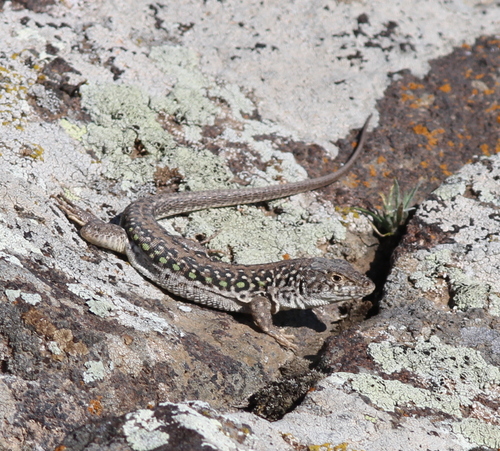
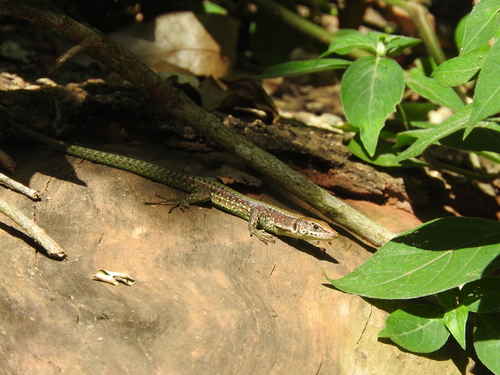
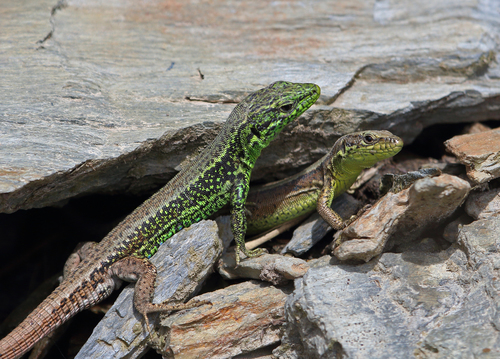
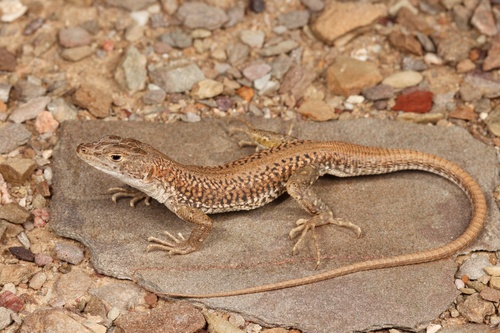
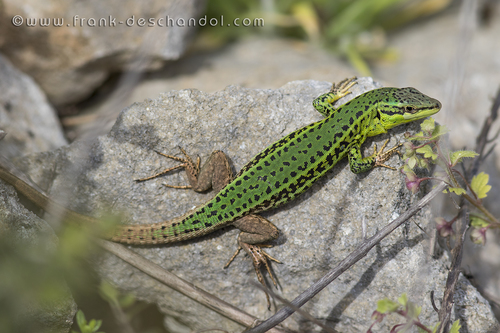
Its dorsal surface is usually green, though some females may be olive or brownish.
Dorsal Stripe Pattern
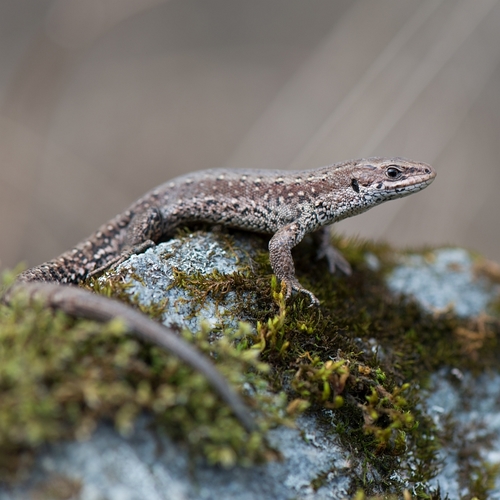
It typically has a well-defined white or yellow dorsolateral stripe, and often has a brown stripe or series of spots running along its spine.
Body Spot Pattern Dimorphism
Additional dark spots are arranged in rows on the back and flanks of males, while females often have a more uniform coloration.
Underpart Coloration
The underparts are white with a spotted throat, but breeding males may have an orange, pink, or red suffusion across these areas.
Species Morphological Distinction
Compared to island populations of the Italian wall lizard, the Sicilian wall lizard has a deeper head, a more slender body shape, speckled rather than reticulated markings, and brighter underpart coloration.
Endemic Distribution Range
This species is endemic to Sicily and the Aegadian Islands.
Natural Habitat Types
It occurs in areas with lush vegetation, including woodland edges, bushy slopes, pasture, and cultivated land.
Anthropogenic Habitat Usage
It is also frequently found in gardens, particularly irrigated gardens.
Behavior and Niche Differences
Unlike the Italian wall lizard, the Sicilian wall lizard does not climb often and occupies more densely vegetated areas.
Regional Population Abundance
It is the more common wall lizard species in inland areas, while the Italian wall lizard is more common near the coast.