About Podarcis hispanicus (Steindachner, 1870)
Common Name and Basic Dorsal Coloration
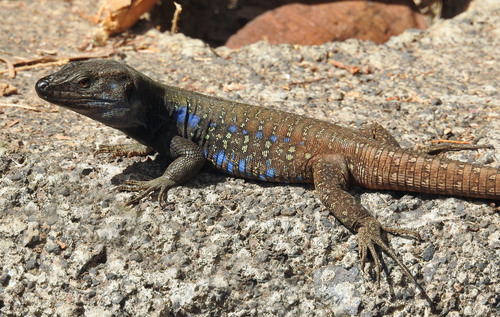
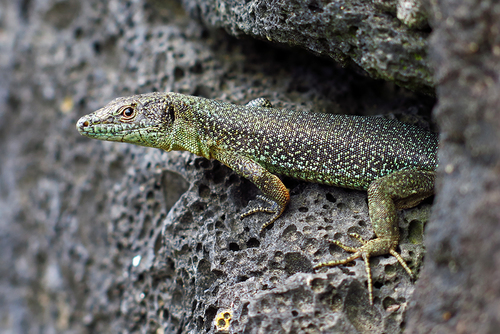
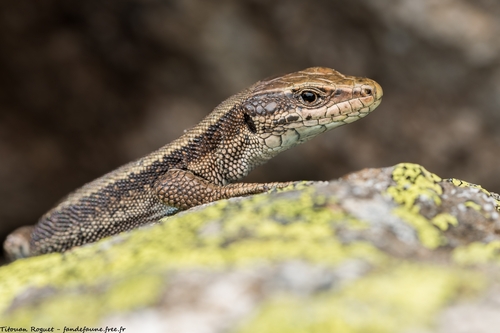
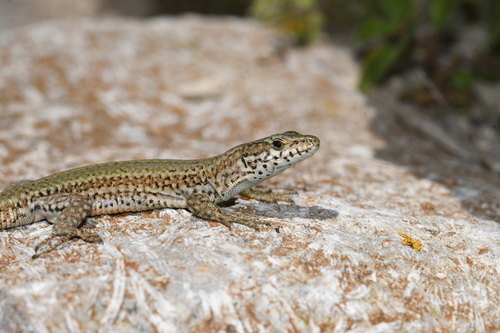
Adult Podarcis hispanicus, also called the Iberian wall lizard, have brown or grey-brown skin with darker spots or patterns on their back and flanks.
Size Variation Factor
Their overall size varies based on tail length.
Body Morphology and Standard Measurements
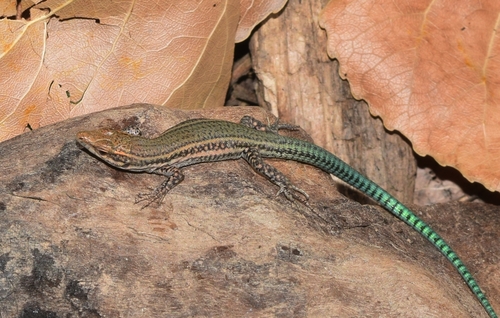
This is a fairly small, slender, somewhat flattened species, with an average snout-to-vent length (SVL) of 50–70 mm (2.0–2.8 in), and a tail twice as long as the body.
Color Diversity Range
Compared to other species, Podarcis hispanicus has limited color diversity.
Dorsal Pattern Morphs
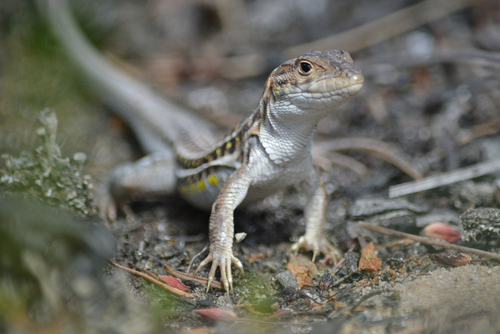
Individuals may have stripes or reticulations; striped lizards are darker and have more black coloration than reticulated ones.
Dorsal Background Color
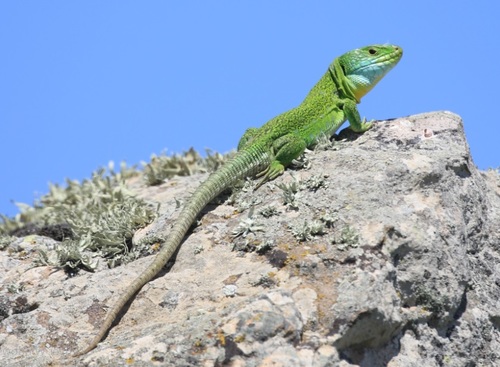
The background color is usually grey or brown, and occasionally greenish.
Typical Longitudinal Stripe Pattern
Most individuals have three narrow longitudinal stripes: one along the spine, and two more distinct stripes located on either side.
Stripe Pattern Variation
Sometimes these stripes break up into a series of streaks or marks.
Ventral Coloration
The throat is pale with scattered small spots, particularly near the sides, and the belly is usually whitish but may be pink, orange, red or buff.
Juvenile Tail Coloration
Young lizards may have blue tails.
Environmental Morphological Variation
The morphology of Podarcis hispanicus varies slightly with environment; lizards in cooler regions are typically heavier, larger, and have darker back coloration than lizards in warmer, humid environments.
General Diet
Podarcis hispanicus is insectivorous, feeding on insects, worms and other invertebrates.
Conspecific Feeding Behavior
Isolated cases of caudophagy (feeding on the tail of another conspecific individual) have been observed in the species.
Male Territorial Behavior
It is a territorial lacertid lizard; males display territorial tendencies including aggression within their resident territory, which contains their sexual partners.
Overall Species Distribution
Multiple different subspecies of the Iberian wall lizard are found in Spain and Portugal (where it is the only small lizard across most of the southern half of Iberia), southwestern France, Morocco, Algeria and Tunisia.
Insular Subspecies Distribution
One subspecies, Podarcis hispanicus atratus, inhabits the Columbretes Islands far off the eastern coast of the Iberian Peninsula.
Subspecies Genetic Interactions
Mitochondrial DNA studies have shown there is some gene flow between these subspecies, and they hybridise to some extent where their ranges meet.
Habitat and Altitude Range
It is a climbing lizard, found on rocks, cliffs, walls, parapets, road cuttings, and occasionally on tree trunks, at altitudes up to 2,500 m (8,200 ft).
Mating System Type
Podarcis hispanicus has a polygynandrous mating system, meaning individuals have multiple mating partners.
Male Reproductive Success Drivers
Male Podarcis hispanicus have greater reproductive success than females, due to their dominance and ability to perform territorial behaviors.
Dominant Male Mating Patterns
Dominant males have multiple copulating partners.
Courtship and Territorial Priority
There is little courtship prior to copulation in this species, so males are generally more territorial and defensive of their resources than of their mating partners.
Parental Care Status
It remains unknown how much parental care Podarcis hispanicus provides to its offspring.
Female Home Range Selection Cues
When searching for a home range, female lizards use chemosensory mechanisms to identify territories held by conspecific males.
Male Territory Signals for Females
The presence of a conspecific male signals to females that the territory has refuge, available resources, and low predation risk.
Reproductive Season Territory Choice
Females will also choose territories held by dominant conspecific males during the reproductive season for potential mating.
Female Mate Size Preference
While intersexual aggression is not often seen in this species, females may prefer smaller males to avoid sexual harassment from more dominant males.
Male Territory Composition
Males typically hold territories that contain multiple females.
Male Mating Preference for Resident Females
Males do not prefer unfamiliar females, because mating with an unfamiliar female requires them to leave their own territory.
Male Reproductive Success Strategy
Male Podarcis hispanicus maximize their reproductive success by preferentially mating with females already in their territory.
Intruder Male Territory Cost Assessment
For an intruder male, entering another male's territory to court a female has high costs and is usually not preferable.
Intruder Male Competition Exception
However, a stronger, larger intruder male may still enter an occupied territory to challenge the resident dominant male.
Intruder Male Female Preference
In general, intruder males also prefer and value familiar females over unfamiliar ones.
Intruder Competition Cost-Benefit Ratio
For most intruders, the cost of competing outweighs the benefit of gaining a single mating.
Reproductive Mode
Podarcis hispanicus is oviparous.