About Teira dugesii (Milne-Edwards, 1829)
Scientific Name and Size
The Madeiran wall lizard, scientifically named Teira dugesii (Milne-Edwards, 1829), reaches a snout-to-vent length (SVL) of approximately 8 cm (3.1 in), with a tail roughly 1.7 times the length of its body.
Dorsal Coloration
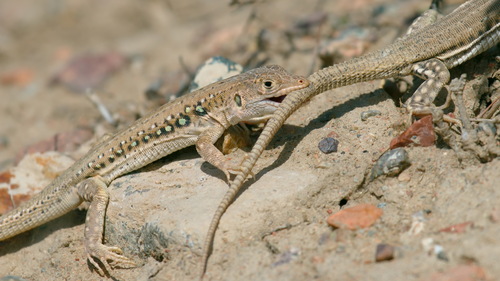
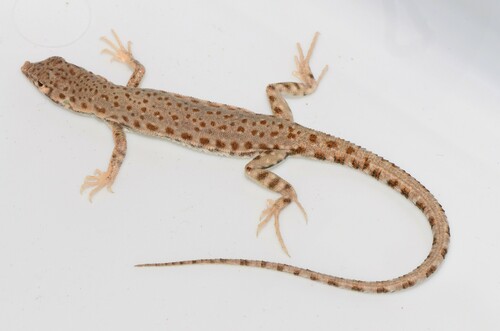
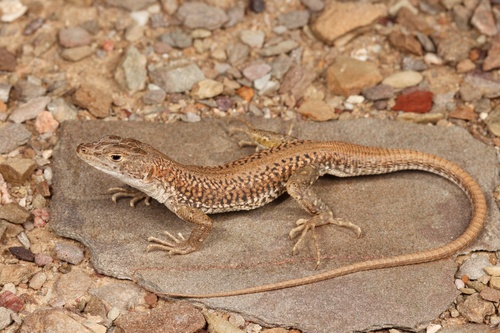
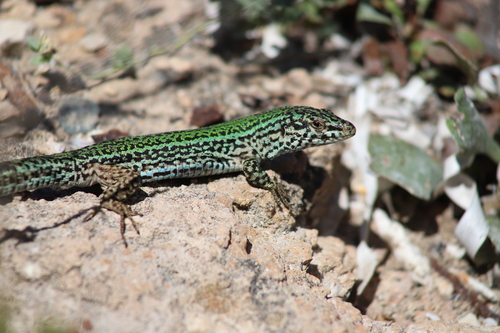
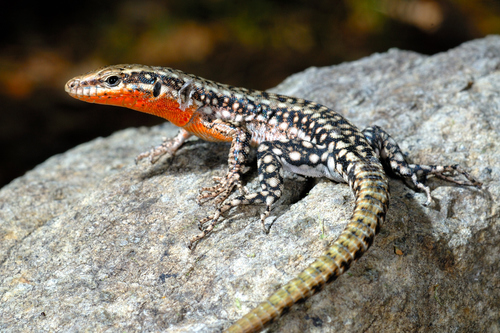
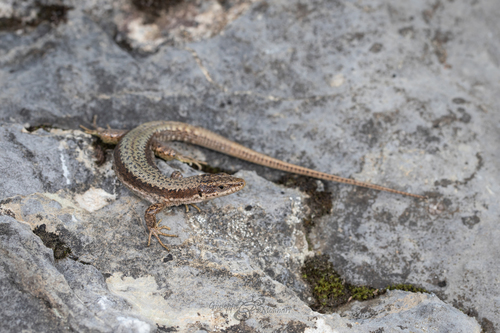
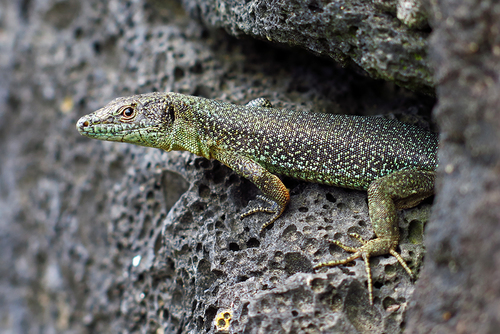
Its colouring is variable and tends to match its surroundings, typically a shade of brown or grey that occasionally has a greenish tinge. Most Madeiran wall lizards are finely flecked with darker markings, and their underparts are white or cream, sometimes with dark spots.
Ventral Coloration
Some males have orange or red underparts and blue throats, and these bright colours may fade when the lizard is disturbed.
Morphological Divergence
On the island of Madeira, individuals from shingle beaches are morphologically divergent from adjacent inland individuals that live in vegetated habitats, even despite high levels of gene flow between the two groups.
Genetic Polymorphisms
Several genomic loci that appear to be located on chromosome three show polymorphisms linked to these habitat-related differences.
Natural Habitats
The natural habitats of the Madeiran wall lizard include temperate forests, shrublands, Mediterranean-type shrubby vegetation, rocky areas, rocky shores, sandy shores, arable land, pastureland, plantations, rural gardens, and urban areas.
Reproduction and Juvenile Size
Adult female T. dugesii lay two to three clutches of eggs per year, and newly hatched juveniles measure approximately 3 cm (1.2 in) in length.