About Phyllobates terribilis Myers, Daly & Malkin, 1978
Taxonomic Classification
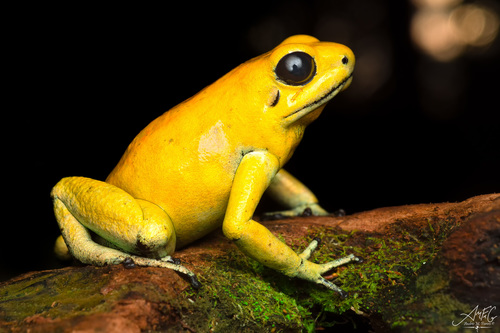
The golden poison frog (Phyllobates terribilis Myers, Daly & Malkin, 1978) is the largest species in the poison dart frog family.
Adult Size
Adult individuals can reach a length of 6 cm and a weight of nearly 30 grams, and females are typically larger than males.
Juvenile Coloration
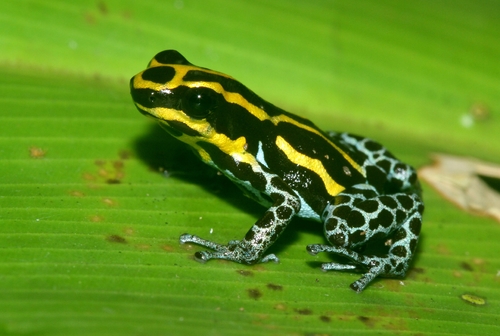
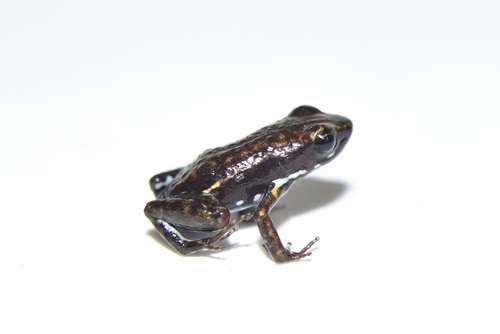
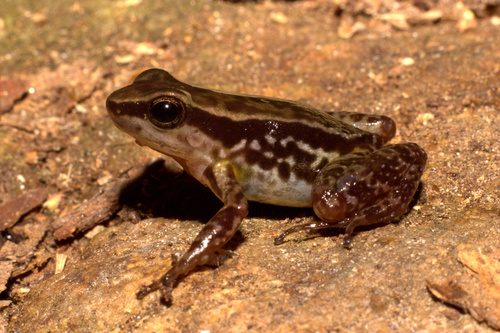
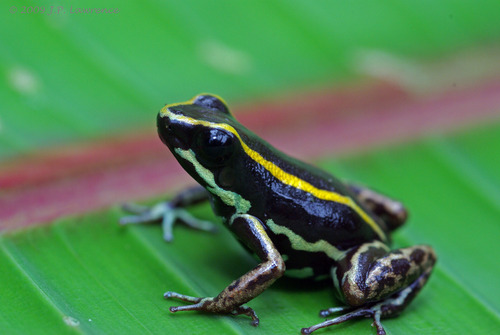
Adults have bright coloration, while juvenile frogs have mostly black bodies marked with two golden-yellow stripes running along their backs.
Color Maturation
The black color fades as the frogs mature, and they develop full adult coloration by around 18 weeks of age.
Aposematic Coloration
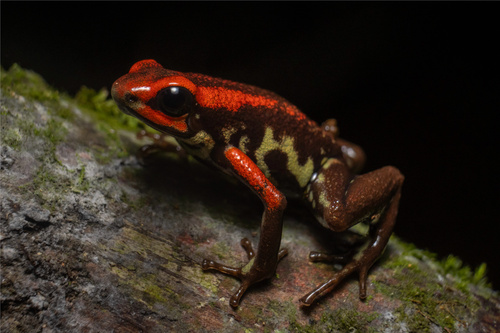
The species' color pattern is aposematic, meaning it acts as a warning of toxicity to predators.
Color Morphs
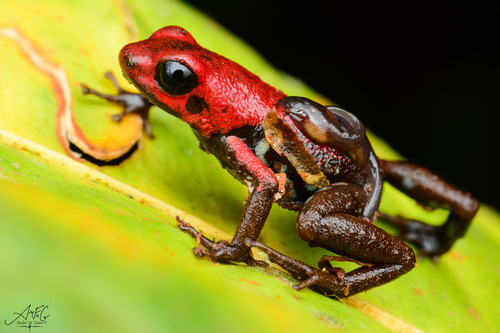
Despite its common name, the golden poison frog has four main distinct color varieties, or morphs.
Geographic Distribution
The golden poison frog is endemic to humid forests of the Pacific coast of Colombia, found in the Cauca and Valle del Cauca Departments within the Chocó Rainforest.
Habitat Characteristics
The optimal habitat for this species is rainforest with annual rainfall of 5 meters or more, located at altitudes from sea level up to 200 m, with temperatures of at least 26 °C, and relative humidity between 80% and 90%.
Tadpole Transport
Adults carry tadpoles to permanent pools.
Conservation Status
The species' entire range is less than 5,000 square kilometers, and habitat destruction has led to P. terribilis being classified as an endangered species.
Activity and Social Behavior
The golden poison frog is normally diurnal, and individuals live evenly spaced apart rather than forming large congregations.
Toxicity Level
The golden poison frog is one of the most poisonous animals on the planet.
Toxin Production
It produces deadly alkaloid batrachotoxins in its skin glands as a defense against predators.
Toxin Exposure Risk
A predator generally has to attempt to consume the frog to be poisoned, but the species is so toxic that even touching an individual frog can be dangerous.
Batrachotoxin Occurrence
This extraordinarily lethal poison is very rare. Batrachotoxin is only found in three poisonous Colombian frog species, all in the genus Phyllobates, a few bird species from Papua New Guinea, and four species of Papuan beetles in the genus Choresine of the family Melyridae.
Toxin Mechanism
Batrachotoxin affects the sodium channels of nerve cells.
Autointoxication Avoidance
While it is not known how this frog avoids poisoning itself, studies on other poisonous frog species have found that they express a "toxin sponge" protein in blood plasma, internal organs, and muscle that binds and sequesters the toxin to prevent autointoxication.
Cultural Significance
Golden poison frogs hold great importance for local indigenous cultures, such as the Emberá and Cofán peoples that live in Colombia's rainforests.
Hunting Dart Poison Source
The frog is the main source of poison for the hunting darts used by native people.
Toxin Extraction Method
The Emberá people carefully expose the frog to the heat of a fire, which prompts the frog to exude small amounts of poisonous fluid.
Dart Poison Longevity
The tips of arrows and darts are soaked in this fluid, and the darts remain deadly for two years or longer.