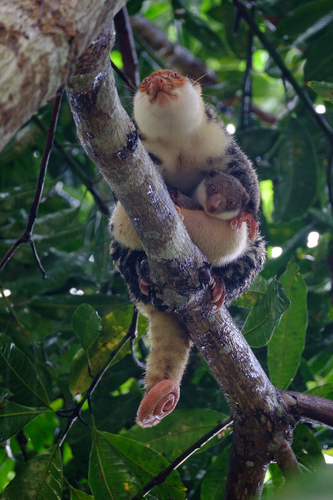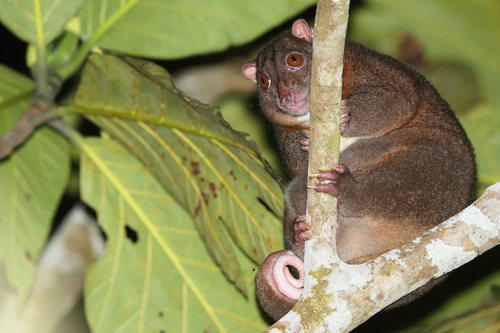
About Phalanger orientalis (Pallas, 1766)
Nomenclature
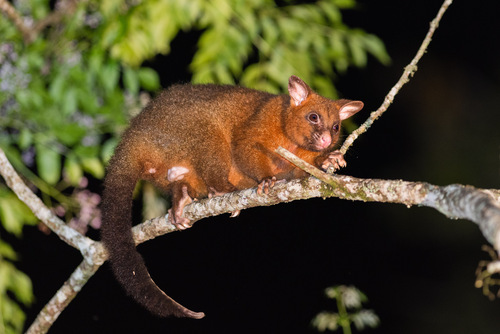
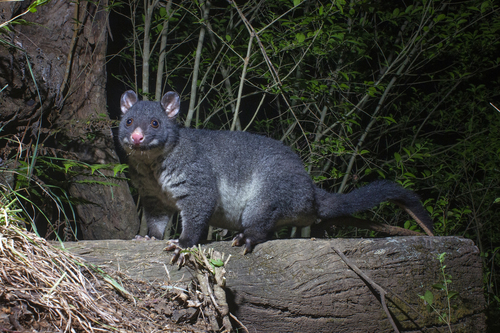
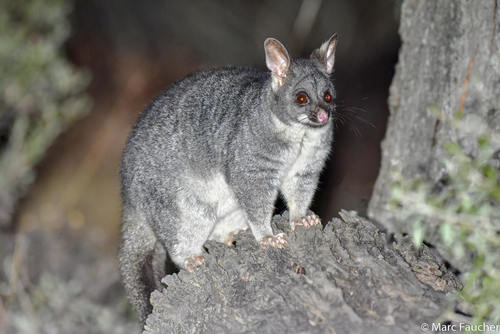
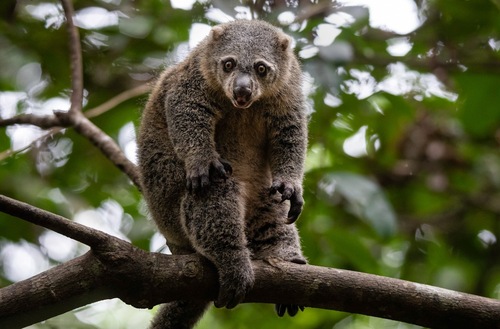
The northern common cuscus, scientifically named Phalanger orientalis (Pallas, 1766), is also commonly called the gray cuscus. It is a marsupial species belonging to the family Phalangeridae.
Native Distribution
This species is native to northern New Guinea and nearby smaller islands, but it is now also found in the Bismarck Archipelago, southeast and central Moluccas, the Solomon Islands, and Timor. It is thought that these populations outside its native range were introduced from New Guinea in prehistoric times.
Taxonomic History
Formerly, it was classified as the same species as the allopatric species P. intercastellanus and P. mimicus.
Human Use
In New Guinea, the northern common cuscus is hunted for human food.
Habitat Types
The northern common cuscus typically lives in disturbed habitats, such as secondary forest, plantations, and gardens. It can also be found in undisturbed primary tropical forests.
Arboreal Habits
It is an arboreal species that lives in trees, and local hunters report that tree hollows are its preferred denning site.
Forest Habitat Range
Local villagers state that the northern common cuscus occurs in any substantially forested areas, ranging from coastal monsoon rainforest and gallery forest to remnant montane rainforest.
Timor and Indonesian Island Range
Geographically, the northern common cuscus lives on the island of Timor, which is split between Indonesia and Timor-Leste, as well as the Indonesian islands of Wetar, Leti, Kai, Ambon, Buru, Seram, Misool, Waigeo, Batanta, and Salawati.
New Guinea Range
It also ranges across most of northern New Guinea (shared by Indonesia and Papua New Guinea), including many of New Guinea's offshore islands.
Eastern Island Range
Its range extends east to the Bismarck Archipelago in Papua New Guinea, where it lives on many islands including New Britain and New Ireland. It is also present across many of the Solomon Islands.
Prehistoric Introduction Origins
Most of its populations on separate islands are thought to stem from prehistoric human introductions; this likely includes populations on Timor, Seram, Buru, Sanana, the Kai Islands, the Bismarck Archipelago, and the entire Solomon Island chain.
Introduction Timeline
The species was introduced to New Ireland between 10,000 and 20,000 years ago, and to the Solomon Islands after 6,000 years ago.
Additional Introduced Populations
It is also an introduced species on Indonesia's Biak Island and Supiori Island.